

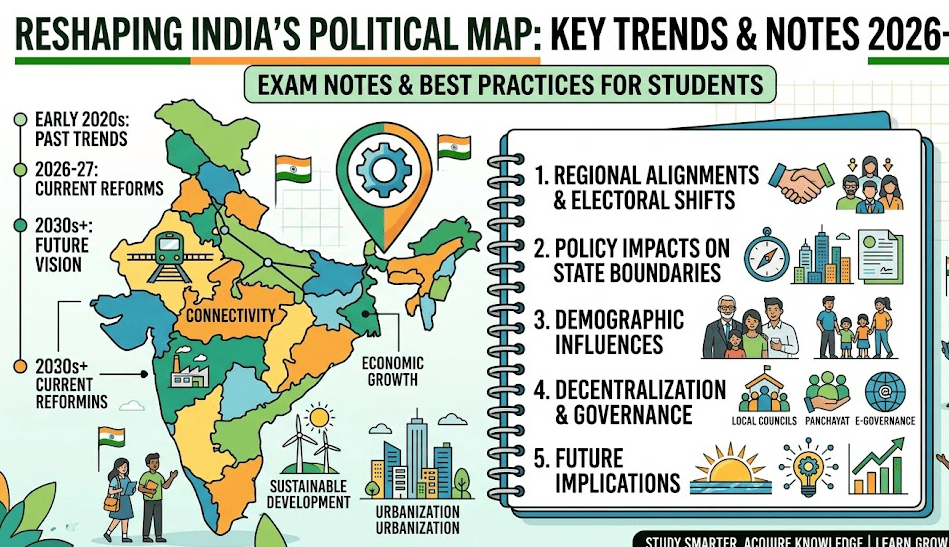
Reshaping India’s Political Map | Best nots of 2026-27 |
Reshaping India’s Political Map | Best nots of 2026-27 | Reshaping India’s Political Map | Best nots of 2026-27 | Reshaping India’s Political Map | Best nots of 2026-27 | Reshaping India’s Political Map | Best nots of 2026-27 | Reshaping India’s Political Map | Best nots of 2026-27 | Reshaping India’s Political Map | Best nots of 2026-27 | Reshaping India’s Political Map | Best nots of 2026-27 | Reshaping India’s Political Map | Best nots of 2026-27 |Reshaping India’s Political Map | Best nots of 2026-27 | Reshaping India’s Political Map | Best nots of 2026-27 | Reshaping India’s Political Map | Best nots of 2026-27 |
Rise and Fall of the Delhi Sultanate
Definition of Medieval Period
The term ‘medieval’ originally describes the time between the fall of the Roman Empire and the Renaissance in Europe.
- In European context: 5th to 16th century.
- In Indian context: 11th to 17th century.
Invasions Reshape India
The early 11th century marked a new era of invasions beyond the Hindu Kush mountains, reshaping India’s political scene.
- Invaders were predominantly Central Asian, Turkic, or Afghan.
- Motives included riches, territory, and religious propagation by force.
Formation of the Delhi Sultanate
The Delhi Sultanate formed after King Prithviraj Chauhan’s defeat in 1192.
- Consisted of five foreign dynasties: Mamluks, Khiljis, Tughlaqs, Sayyids, Lodis.
- Not all neighboring kingdoms succumbed, e.g., Eastern Gangas, Hoysalas.
Political Instability and Military Campaigns
The Sultanate was characterized by political turbulence and military expansion.
- Sultans often seized power by overthrowing predecessors.
- Military campaigns led to raiding and plunder.
Ala-ud-din Khilji’s Reign
Known for vast military campaigns and resisting Mongol invasions.
- Extended Sultanate’s territory southward.
- Financed military via plunder.
Muhammad bin Tughlaq’s Ambitious Schemes
Expanded the Sultanate but with flawed initiatives.
- Moved capital to and from Daulatabad.
- Introduced unsuccessful ‘token’ currency.
Impact on Economy and Society
The rulers’ wealth stemmed from plunder, taxation, and slave trade.
- Trade and agriculture were disrupted.
- Introduced jizya tax on non-Muslims.
Timur’s Invasion
In late 14th century, Timur invaded Delhi with disastrous results.
- City was left in ruins with huge losses.
- His invasion left chaos that saw the rise of the Lodis.
Eastern Ganga Kingdom Resistance
The Eastern Ganga kingdom successfully resisted Sultanate advances.
- Narasimhadeva I led military strength.
- Commemorated victories by building the Sūrya temple at Konark.
Musunuri Nayakas’ Defiance
Telugu chieftains formed a confederacy resisting Sultanate forces.
- Expelled Sultanate’s army from Warangal.
Resistance from the Hoysala Kingdom
The Hoysalas resisted repeatedly but eventually integrated into the Vijayanagara Empire.
- Known for building the magnificent Belur and Halebidu temples.
Emergence of Regional Sultanates
Several independent Sultanates rose, leading to a complex political landscape.
- Included Bahmani Sultanate, Sultanates in Gujarat, and Bengal.
Rajput Resistance: The Role of Mewar Kingdom
Kumbhalgarh Fort epitomized Rajput resistance under Rana Kumbha.
- Rebuffed both Delhi Sultanate and other emerging Sultanates.
- Kumbhalgarh Fort’s wall is among the longest globally.
Cultural and Iconoclastic Impact
The Sultanate era saw the destruction of sacred sites due to plunder and iconoclasm.
- Many wars impacted cultural and sacred religious places.
Taxation and Conversion
Non-Muslims faced jizya tax for protection and exemption from military service.
- Resulted in economic burden and conversion pressure.
The Vijayanagara Empire
The Establishment of Vijayanagara
Harihara and Bukka founded the Vijayanagara Empire in the 14th century after rejecting Delhi’s authority.
Symbolic Origin Sight
The location for Hampi was chosen after witnessing a hare chasing hounds, seen as a sign of strength.
The Bahmani Sultanate Rival
Vijayanagara’s major northern rival was the Bahmani Sultanate, which later split into five Deccan Sultanates.
A Distinct Naming Tradition
- ‘Narapati’ for Vijayanagara rulers
- ‘Ashwapati’ for Bahmani rulers
- ‘Chhatrapati’ for Maratha rulers
The Rise of Krishnadevaraya
Under Krishnadevaraya in the 16th century, the empire achieved military dominance and cultural renaissance.
Cultural Contributions
Krishnadevaraya patronized poets and composed the Telugu epic Āmuktamālyada.
Temple Patronage
Krishnadevaraya supported many temples, notably Tirupati and the Vitthala temple in Vijayanagara.
The Vitthala Temple Architecture
The Vitthala temple is celebrated for its grand architecture and musical columns.
Foreign Relations & Trade
Portuguese traders were welcomed in Vijayanagara to ensure valuable horses weren’t sold to rivals.
Domingo Paes’ Account
He described Vijayanagara as large, beautiful, and well-provisioned, resembling Rome.
Victory & Demise
Krishnadevaraya won many battles but later died in 1529, marking the beginning of decline.
Battle of Talikota
The Deccan Sultanate coalition defeated Vijayanagara’s forces in this 1565 battle.
The Sacking of Vijayanagara
Post-Battle of Talikota, the city was plundered and left in ruins, with major destructions.
Fragmentation into Nayakas
After the fall, the empire broke into smaller regions ruled by former military governors, Nayakas.
End of an Era
The Vijayanagara Empire officially ceased in the mid-17th century due to fragmentation and decline.
The Mughals
The Mughal Empire’s Foundation Babur, a Turkic-Mongol ruler, established the Mughal Empire by defeating Ibrahim Lodi at the First Battle of Panipat in 1526.
Mughal Warfare The battle employed gunpowder, field artillery, and matchlock guns, signifying the onset of firearms in Indian warfare.
Babur’s Legacy Babur’s autobiography, Baburnama, sheds light on his appreciation for architecture, poetry, and animals, while also detailing his conquests.
The Delhi Sultanate’s End Babur’s victory marked the end of the Delhi Sultanate and established Mughal dominion over Delhi.
Significance of India for Babur Despite nostalgia for Central Asia, Babur recognized India’s wealth and potential, prompting him to build his empire there.
Humayun’s Challenges Babur’s son struggled to maintain the empire against rivals like Sher Shah Suri, who briefly established the Sur Empire.
Akbar’s Rise At age 13, Akbar became emperor, expanding and stabilizing the Mughal Empire through a balance of conquest and diplomacy.
Chittorgarh Siege and Jauhar Akbar’s takeover of Chittorgarh was marked by a massacre and the Rajput women’s jauhar, a form of mass self-immolation.
Akbar’s Policy of Tolerance He promoted religious tolerance, forged alliances, and abolished the jizya tax on non-Muslims as part of his ‘sulh-i-kul’ policy.
Akbar’s Cultural Contributions He encouraged translations of works like the Mahābhārata into Persian and established a ‘house of translation’ for cultural exchange.
Art and Architecture Flourish Akbar’s era marked a peak in art and architecture, exemplified by buildings like Fatehpur Sikri and later the Taj Mahal by Shah Jahan.
Aurangzeb’s Expansion Aurangzeb’s reign saw the Mughal Empire reach its greatest extent, though it was challenged by numerous internal rebellions.
Aurangzeb’s Devout Reforms He reimposed the jizya tax and banned music and dance, driven by a strict adherence to his Sunni Islamic convictions.
Consequences of Aurangzeb’s Rule His campaigns depleted the empire’s resources, contributing to the downward spiral following his death in 1707.
Aurangzeb’s Legacy Despite his conquests, Aurangzeb expressed sorrow over his actions in his final letters, acknowledging his inability to improve the empire’s fate.
Resistance to the Mughals
Resistance to the Mughals: The Jat Uprising Peasant communities often resisted Mughal exploitation, including the Jat peasantry who killed an oppressive Mughal officer in the 17th century.
- Key Location: Western Uttar Pradesh, Haryana, Eastern Rajasthan
- Outcome: Jat leader killed, rebellion suppressed by the Mughal army
Tribal Resistance Several tribal groups resisted Mughal attempts to control their territories or impose taxes.
- Notable Tribes: Bhils, Gonds, Santhals, Kochs
- Outcome: Some subdued, others maintained independence, especially in remote areas
Rani Durgavati and Garha Kingdom Rani Durgavati governed wisely and is remembered for her brave stand against Akbar’s general in 1564.
- Military Strength: Army of 20,000 and 1,000 elephants
- Legacy: Symbol of regional pride, took her own life when wounded
The Rajputs: A Surge of Valor Rajputs often resisted external invaders due to their strategic location in northwest India.
- Remarkable Leaders: Rana Kumbha, Rana Sanga
- Famous Battle: Babur’s victory at Khanwa against Rajputs
Maharana Pratap: Face of Resistance Despite difficult odds, Maharana Pratap refused Mughal dominance, engaging in guerrilla warfare.
- Location of Confrontation: Haldighati pass
- Support: Strong backing from the Bhils, key role in Mewar tradition
Ahom Resistance in the Northeast The Ahoms, originally from present-day Myanmar, resisted both the Sultanate and the Mughals.
- System: Paik system limited need for permanent army
- Remarkable Battle: Ahom victory at Saraighat against a larger Mughal force in 1671
The Rise of Sikhs Founded by Guru Nanak, Sikhism faced persecution, prompting a transformation from a spiritual movement to a martial force.
- Key Events: Martyrdom of Guru Arjan and Guru Tegh Bahadur
- Formation: Khalsa brotherhood by Guru Gobind Singh
Sikhism: Guru Granth Sahib Sikhism’s sacred text, Guru Granth Sahib, teaches one God and virtues like truthfulness and compassion.
- Compiled by: Guru Arjan
- Key Message: There is one God for all, encouraging a life of virtuous living
Maharaja Ranjit Singh and the Sikh Empire Ranjit Singh unified Sikh confederacies into a powerful Sikh Empire, resisting later British expansion.
- Attributes: Military acumen, diplomatic skills, religious tolerance
- Result: A strong, centralised kingdom until the mid-19th century
Mughal Decline and Regional Resistance The Mughal Empire faced multiple regional resistances contributing to its decline.
- Notable Resisters: Marathas, Rajputs, Ahoms, Sikhs
- Outcome: Limited Mughal authority, emergence of new regional powers
The Impact of Guerrilla Tactics Groups like the Rajputs and the Ahoms successfully used guerrilla tactics against the Mughals.
- Techniques: Terrain knowledge, strategic mobility, targeted assaults
- Result: Prolonged conflicts, occasionally thwarting larger, well-equipped forces
Rani Durgavati’s Symbolic Impact Her story represents courage and regional pride in resisting powerful invaders like the Mughals.
Role of Tribal Knowledge in Battles The Bhils and other tribes contributed vital local knowledge and skills in various military campaigns, influencing combat outcomes.
The Development of Rajput States Despite external pressures, Rajput states like Mewar and Marwar built resilient cultures and polities inspired by past dynasties.
Shaping of Sikh Identity through Conflict Faced with persecution, Sikhism adopted military elements under its Gurus, reinforcing their commitment to justice and equality.
Administering India
Authority of Sultan
- The Delhi Sultan possessed absolute authority as the political and military head.
- Roles included defending Islamic territories, tax collection, and public interaction.
Assistance of Council of Ministers
- Sultan’s authority was supported by a council of ministers.
- The ministers managed various Sultanate departments.
- Territories were assigned to nobles called iqtadars for tax collection.
- Collected taxes, minus expenses, were meant for the Sultan’s treasury.
- The system ensured local loyalty but was not hereditary.
Tax Burden
- Taxes imposed heavily affected the peasantry.
- Many accounts recorded severe cruelty in revenue extraction.
Akbar’s Administrative Reforms
- Reorganized machinery for better control and efficiency.
- Diwan handled finances; Mir Bakhshi with military; Khan-i-Saman with public works.
- Sadr took charge of justice, religious, and educational matters.
Provinces and Subdivisions
- Twelve provinces (subahs) each had assigned ministers.
- Enforced checks and balances among government officials.
- Traditional self-governance preserved at the village level.
Mansabdari System
- Officers (mansabdars) maintained a specified number of troops and animals.
- Allowed swift army assembly without a centralised force.
- Inspections ensured compliance; officers paid via land (jagirs).
Akbar’s Religious Tolerance
- Akbar demonstrated growing tolerance for different faiths.
- Diversity among officials was limited, with foreign Muslims often preferred.
Echelons of Administration
- Non-Muslim representation often did not exceed one-third.
- Preference was shown for Muslims of foreign origin in administration.
Todar Mal’s Revenue System
- Introduced an efficient system for revenue collection.
- Surveyed crop yields and prices for accurate pricing.
- Comprehensive land surveys boosted state revenue.
Mughal Administrative Framework
- Akbar reorganised for efficiency and control.
- Focused on centralization and provincial management.
Local Governance
- Village self-governance structures largely remained intact.
- Demonstrated balance between central power and local autonomy.
- Records from his Ain-i-Akbari detailed Akbar’s administration.
- Highlighted the significance of the mansabdari system.
Taxation under Delhi Sultanate
- Trade taxes levied at every transaction stage.
- Financial burden predominantly impacted the peasantry.
Political System of Delhi Sultanate
- Central focus on Sultan as the political head.
- Administrative framework reliant on sultan’s authority.
People’s Lives
Economic Foundations India, between the 13th and 17th centuries, had a strong agrarian economy, complemented by thriving artisanal industries and vast trade networks.
Decentralized Economies Systems like śhreṇis (guilds) and jātis (professional communities) maintained India’s global wealth status.
Infrastructure Development The Sultanate and Mughal periods saw advancements in infrastructure like roads, canals, and bridges.
Currency Evolution New coinage systems were introduced, with the Mughal period introducing the silver rupaya and copper dam.
Agricultural Advances Improved irrigation systems led to multiple crop productions, although famine occasionally struck regions.
Textile and Craft Industries India was renowned for textiles, with artisans producing diverse goods from utensils to jewelry.
Trade and Shipbuilding India exported more than it imported, with significant shipbuilding advancements aiding trade.
Hundi System An early form of banking, the hundi allowed for fund transfers across political borders without physical currency.
Temple Economies Temples served as centers of worship, social interaction, and trade, often receiving land and wealth as donations.
Socio-economic Strain Economic stress emerged by the late 1600s, with high taxes leading to bonded labor for many peasants.
Wealth Disparity Wealth was concentrated among rulers and merchants, while laborers faced harsh conditions.
Social Harmony Despite occasional clashes, people of diverse faiths coexisted and were economically interdependent.
Art and Culture Both rulers and communities patronized the arts, blending indigenous and foreign influences.
Political Instability The era saw changes in political borders due to Turkic, Afghan, and Mughal invasions and internal warfare.
Resilience and Adaptability Despite challenges, India preserved cultural traditions and demonstrated resilience through art, literature, and spirituality.