Home Blog Page 9

Class 7 Physics – CHAPTER 11 : LIGHT

0
A picture containing text, clipart

Description automatically generated

Light

Light

  • Light is defined as a radiation which is visible to the human eye.
  • The natural source of light on the Earth is the Sun.
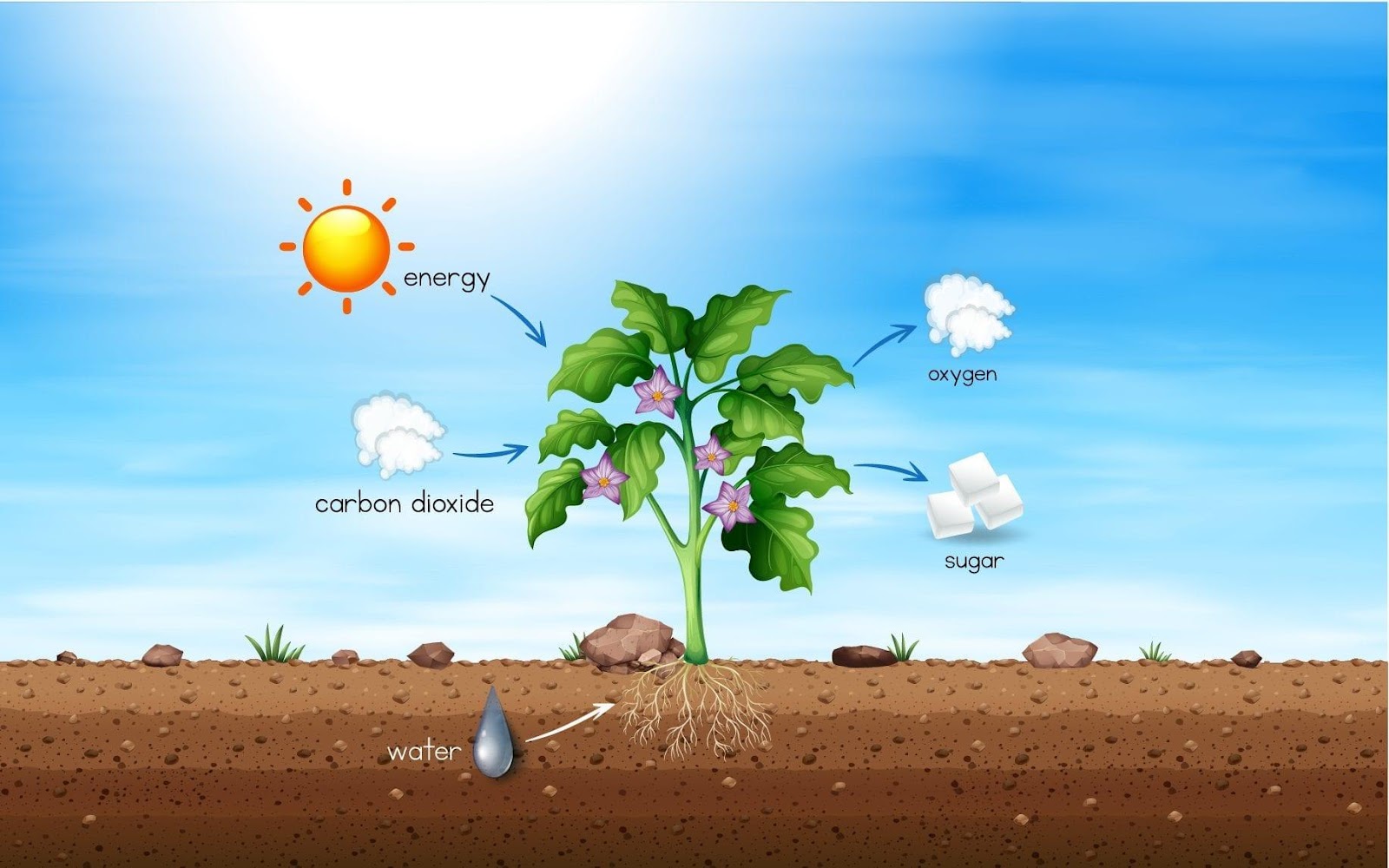
  • Sunlight plays an important role in the process of photosynthesis and thereby, in the growth of plants.
  • Other sources of light are candlelight, fire, lasers, tube lights, electric bulbs etc.
  • Light can travel through vacuum, i.e., it does not require a medium to travel.
  • The path of light is always straight and not curved. It does not bend.
  • Examples: Light emitted from a torch and the headlights of a vehicle.
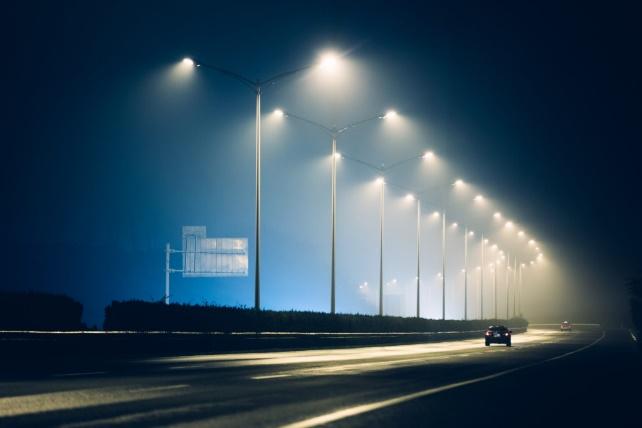
What too much artificial light steals from our night skies | PBS NewsHour
  • The direction of light can only be changed by reflection.

Reflection of Light

  • The bouncing of light from a smooth surface such as a mirror is called reflection of light.
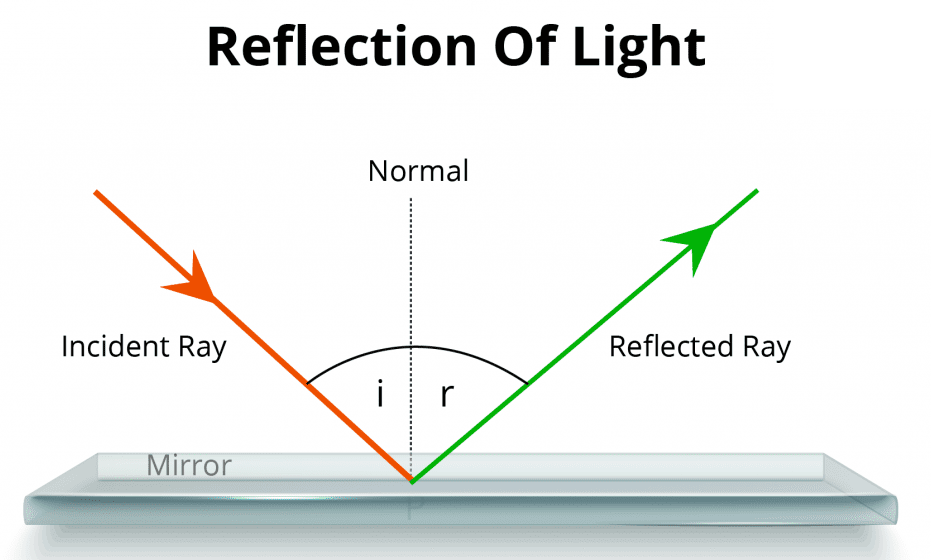
  • Due to the reflection of light, the impression of an object formed in the mirror is called the image of the object.
  • As the distance of the object from the mirror increases, the distance of the image also increases.
  • Example: A candle placed in front of a plane mirror appears as if a similar candle is placed behind the mirror.
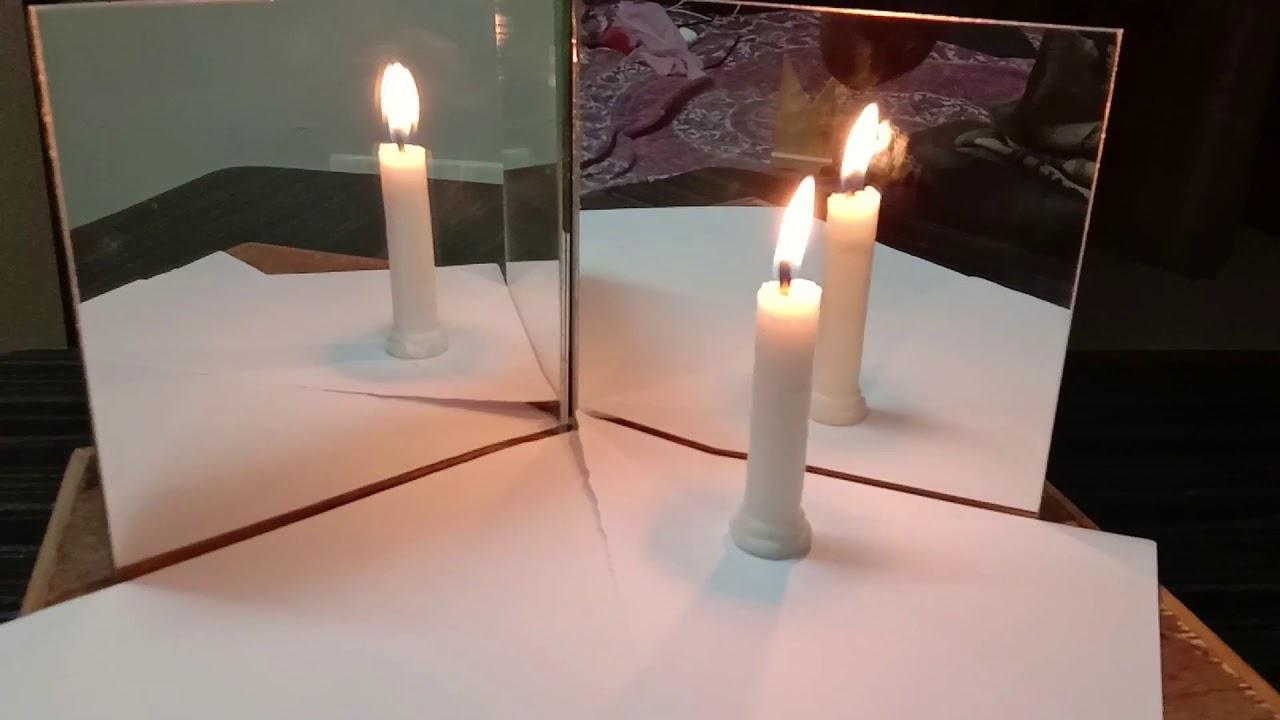
Image formation by two Plane mirrors at different angles | Physics  Demonstrations | Grade 7-12 - YouTube
  • An image formed by a plane mirror is erect and of the same size as the object.

Laws of Reflection

The laws of reflection are:

  • The angle of incidence equals the angle of reflection.
  • The incident ray, the reflected ray and the normal to the surface, all lie in the same plane.

Types of Reflection

Regular Reflection

  • Regular reflection is the reflection of light rays from a smooth surface such as a mirror, glass or water.
  • The reflected rays of light move in a fixed direction.
  • Images formed by regular reflection are always clear and distinct.
Diagram

Description automatically generated

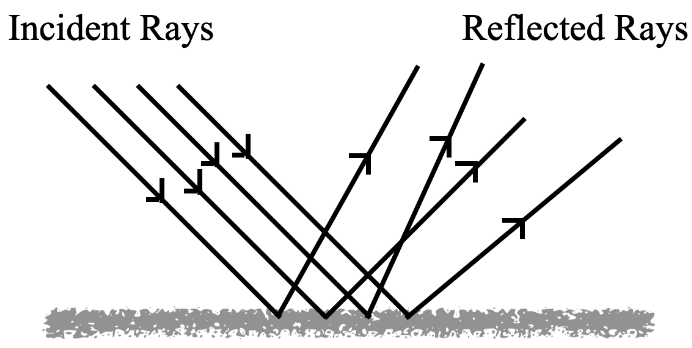
Irregular Reflection or Diffused Reflection

  • Irregular or diffused reflection is the reflection of light from a rough surface such as a plastic sheet, writing paper, wooden board, cloth, skin, leather etc.
  • This reflection occurs when a ray of light is incident on a wall or wood, which is not smooth  or polished.
  • The reflected rays do not travel in the same direction.

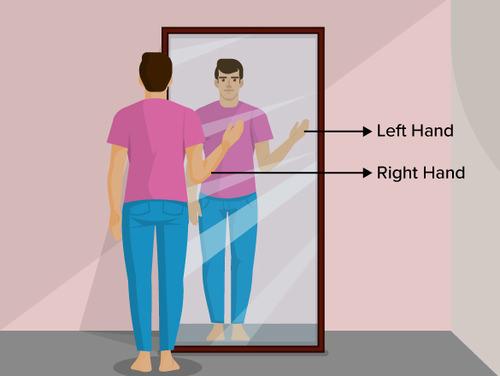
Left-Right Inversed
Laws of Reflection | CK-12 Foundation
  • It means that the images are inversed, i.e. the right part of an object appears on the left in the formed image, and the left part of the object appears to the right.
  • Example: The word ‘AMBULANCE’ is painted left-right inversed. When the driver of a vehicle in front looks into the rear-view mirror, he can read the word AMBULANCE quickly and make way.

Characteristics of an Image

  • The image formed by a plane mirror is:

Spherical Mirrors

  • Spherical mirrors have curved reflecting surfaces and are also called curved mirrors.
  • These mirrors are made from a hollow sphere.
  • There are two types of curved surfaces at each hemisphere:
  1. Inner curved surface
  2. Outer curved surface
  • The inner curved surface is called concave, while the outer curved surface is called convex.
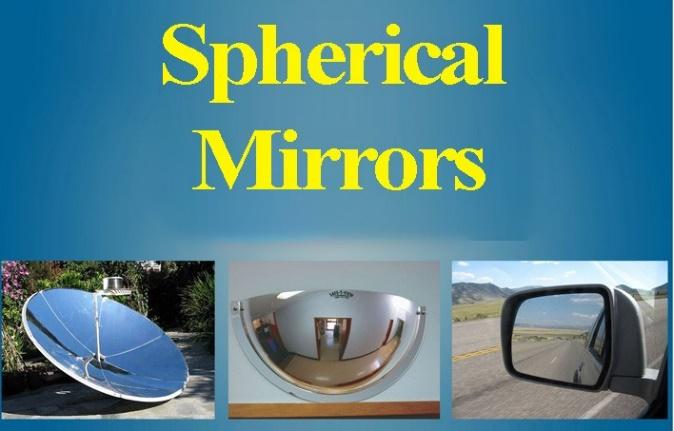
  • There are two types of spherical mirrors:

Concave Mirror

  • If the reflecting surface of a mirror is concave, i.e. bent inwards, then it is called a concave mirror.
Concave Mirror at Rs 800/piece | Concave Mirrors | ID: 13051262512
  • A concave mirror is used to magnify objects.

Uses of Concave Mirrors

  • These mirrors are used by dentists to obtain a magnified image of the teeth.
  • Doctors use concave mirrors to examine the ears, nose and throat.
  • They are used in headlights of cars and scooters in order to increase their focus and brightness.
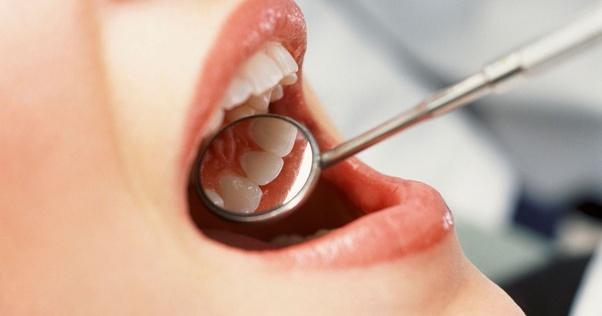
Concave Mirror Study Guide | Inspirit
  • People use it to shave and apply makeup.

Convex Mirror

  • If the reflecting surface of a mirror is convex, then it is called a convex mirror.
What is a convex mirror and where do you use it for? - JekaShop
  • A convex mirror is also known as a diverging mirror or a fish eye mirror.
  • The image formed by a convex mirror is virtual, erect and diminished, which means that a larger area is visible in a convex mirror than in a plane mirror of the same size.

Uses of Convex Mirrors

  • These mirrors are used as rear-view mirrors in cars and motorcycles, as they enable the driver/rider to view the road and the vehicles behind.
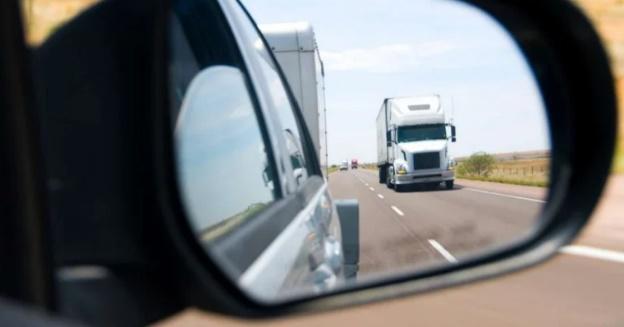
  • They are also used in supermarkets, stores and ATM centres as a security measure.

Types of Images formed by a Mirror

  • A mirror forms the following two types of images – Virtual and Real.

Virtual Image

  • The image formed by a mirror which cannot be captured on a screen is called a virtual image.
  • It is always erect.

Real Image

  • The image which can be captured on a screen is known as a real image.
  • It is always inverted.

Example: In a camera, images are real and can be captured on the negative, which acts as a screen.

Lenses

Concave Lens

  • When light rays are incident on a concave lens, they bend outwards or diverge.
  • This lens is also called a diverging lens.
  • A concave lens is thinner at its center than at its edges.
  • It is used to correct short-sightedness.
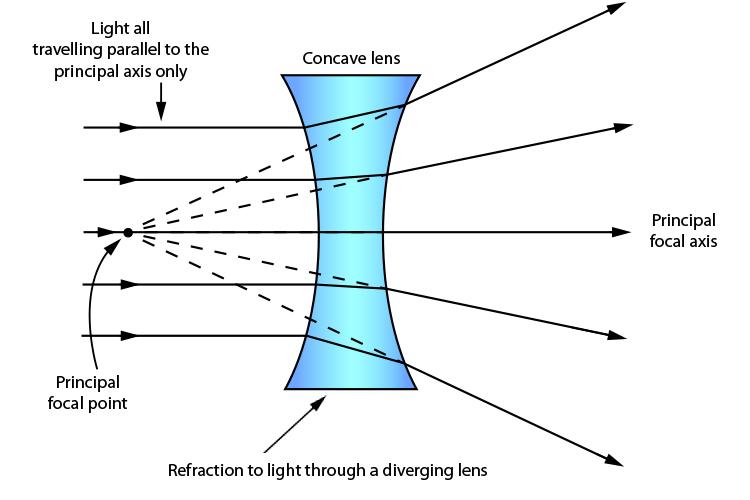
Concave lens – Principal focal point (two of them)

Convex Lens

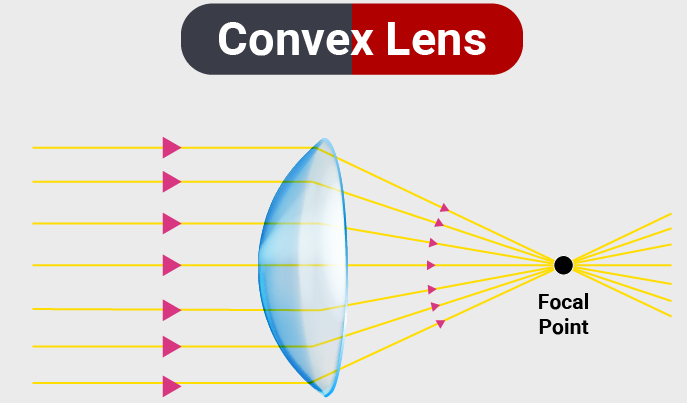
  • When light rays pass through a convex lens, they bend inwards and converge at a common point to form an image of the source of light.
  • This lens is also called a converging lens.
  • A convex lens magnifies the object viewed through it.
  • A convex lens is thick in the middle and thin at its edges.
  • When the object is placed close to a convex lens, the image formed is virtual, erect and magnified.
  • When the object is placed at a far off distance from a convex lens, the image formed is real, inverted and diminished.
Applications of Lenses

  • Lenses are used in magnifying glasses, peepholes, cameras, bioscopes, binoculars, telescopes, microscopes and projectors.
  • A refracting telescope uses a concave mirror and a convex lens.

Dispersion of Light

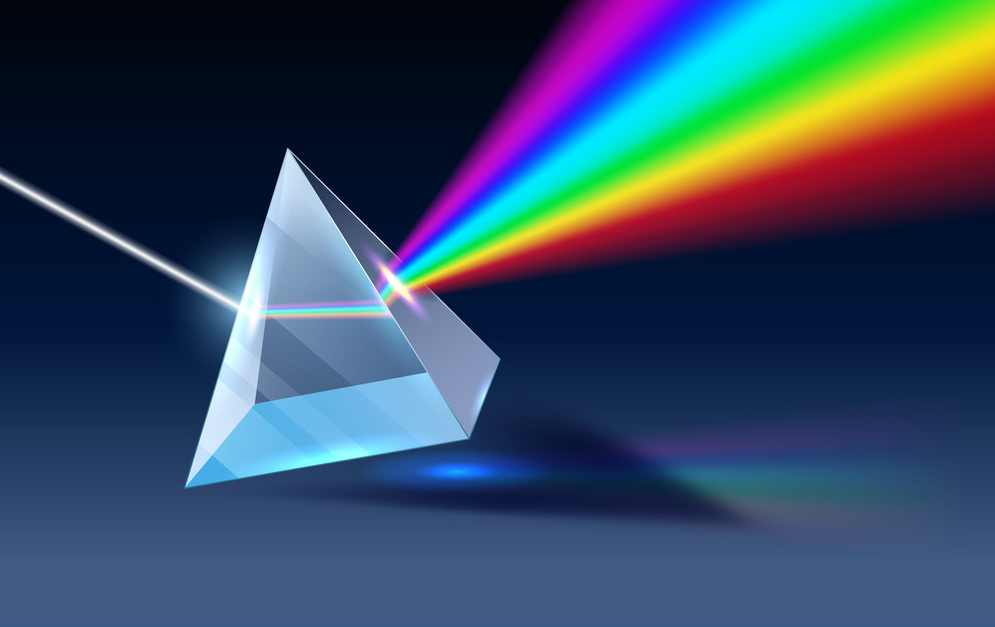
  • The phenomenon of splitting of a beam of white light into its constituent colours on passing through a prism is called dispersion of light.
  • A rainbow is formed when white light from the Sun passes through tiny prism-like water droplets and splits into different colours.
  • The order of colours from the lower end is violet, indigo, blue, green, yellow, orange and red, i.e. VIBGYOR.
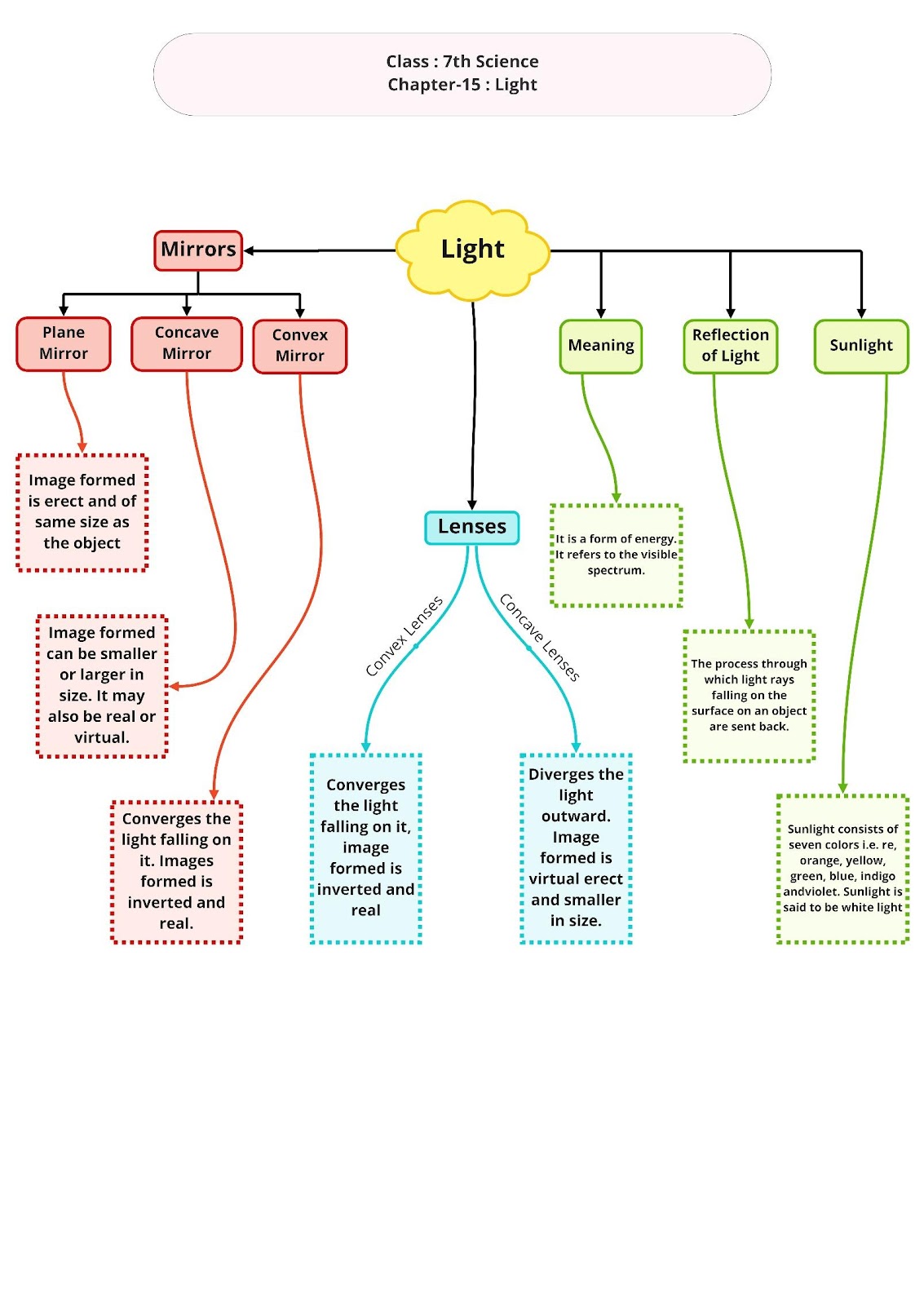
Important Questions

  • Multiple Choice Questions:

Question 1. Which one of the following shows lateral inversion?

(a) Plane mirror

(b) Concave mirror

(c) Convex mirror

(d) Convex lens

Question 2. Which of the following is used as a side view mirror?

(a) Plane mirror

(b) Concave mirror

(c) Convex mirror

(d) Convex lens

Question 3. The path of the light is

(a) always a straight line

(b) a curved line

(c) a zig-zag line

(d) depends on the medium

Question 4. White light is composed of

(a) three colours

(b) seven colours

(c) five colours

(d) eight colours

Question 5. A virtual image

(a) can be formed on the screen

(b) cannot be formed on the screen

(c) is formed only by the plane mirror

(d) is formed only by the convex mirror

Question 6. The image formed by spherical mirror is virtual. The mirror will be

(a) concave

(b) convex

(c) either concave or convex

(d) none of these

Question 7. The coloured band of light obtained by dispersion of light is called

(a) image

(b) spectrum

(c) convergence

(d) scattering

Question 8. We can get an inverted image from

(a) both concave lens and convex lens.

(b) both concave mirror and convex mirror.

(c) both concave mirror and convex lens.

(d) both convex mirror and concave lens.

Question 9. A convex lens is

(a) thick at centre

(b) thin at the centre

(c) thick at edges

(d) hollow at the centre

Question 10. The image that can not be obtained on a screen is called

(a) real image

(b) virtual image

(c) diminished image

(d) none of these

  • Fill In the Blanks:
  1. An image can be obtained on a screen is called a ………………. image
  2. An image formed by ………………. lens cannot be obtained on a screen.
  3. ………………. light deviates the least, while ………………. light deviates the more.
  4. The outer surface of a flat steel plate acts as a ………………. mirror.
  5. The inner surface of the reflector of a torch acts as a ………………. mirror.
  6. A ………………. is a piece of any transparent material bound by two curved surfaces or by one curved and one plane surface.
  • True or False:
  1. The image formed by a convex mirror is erect.
  2. The image formed by a concave mirror is formed on the screen.
  3. The image formed by a plane mirror is real.
  4. The change of sides of an object and its mirror image is called lateral inversion.
  5. The image formed by plane mirror is erect.
  6. When the reflecting surface of the spherical mirror is curved inwards, it is called concave mirror.
  • Very Short Question:
  1. Give an example to show that the path of light is always straight and never curved.
  2. What is the image of an object?
  3. Why the word ‘AMBULANCE’ is painted left-right inversed on the vehicle?
  4. State the principle used in creating a mirror image.
  5. Name the mirror having a curved reflecting surface.
  6. Name the two types of spherical mirror.
  7. State uses of the concave mirror.
  8. State uses of the convex mirror.
  9. What is a virtual image?
  10. What is a real image?
  • Short Questions:
  1. What are the laws of reflection?
  2. Differentiate between real & virtual image?
  3. Why concave mirror is called a converging mirror and a convex mirror is called a diverging mirror?
  4. Explain the nature of image formed in a concave mirror.
  5. What are the uses of concave mirror?
  6. What is a lens?
  7. How is the rainbow formed?
  8. Apart from rainbow, where else we can see seven colours of sunlight?
  • Long Questions:
  1. What is rainbow?
  2. Images in a mirror are located at the same distance behind the mirror as the object in front of it. Explain the importance of this property of mirror.
  3. What do you mean by left right inversed?
  • Answer Key-
  • Multiple Choice Answers:
  1. (a) Plane mirror
  2. (c) Convex mirror
  3. (a) always a straight line
  4. (b) seven colours
  5. (b) cannot be formed on the screen
  6. (c) either concave or convex
  7. (b) spectrum
  8. (c) both concave mirror and convex lens.
  9. (a) thick at centre
  10. (b) virtual image
  • Fill In the Blanks:
  1. real
  2. concave
  3. Red, violet
  4. plane
  5. concave
  6. lens
  • True or False:
  1. False
  2. True
  3. False
  4. True
  5. True
  6. True
  • Very Short Answers:
  1. Answer: Light emitted by torchlight and light emitted from the headlights of a vehicle
  2. Answer: Due to the reflection of light, the impression of an object formed in a mirror is called the image of the object.
  3. Answer: So that when the driver of a vehicle in front looks into his rear – view mirror, can read ambulance written on it quickly and give way to it.
  4. Answer: Principle of reflection
  5. Answer: Spherical mirror
  6. Answer: Concave mirror and convex mirror.
  7. Answer: Concave mirrors are used by dentists to obtain a magnified image of the teeth. They are also used in solar heaters or solar concentrators, and as reflectors in flashlights, and headlights of cars and scooters.
  8. Answer: Convex mirror are used as reflectors at sharp turns and tricky or ‘blind’ corners and in parking lots, and as rear-view mirrors in cars and on motorcycles.
  9. Answer: The image formed by a plane mirror cannot be captured on a screen, and is called a virtual image.
  10. Answer: Images that can be captured on a screen are known as real images.
  • Short Answers:
  1. Answer: The two laws of reflection are:
  • Angle of incidence is equal to angle of reflection.
  • Incident reflected ray & the normal lie on the same plane.
  1. Answer:  Real image can be obtained on a screen Image e.g.- Plane Mirror. But virtual Image cannot be obtained on a screen e.g. – Pinhole Camera, Photograph Camera.
  2. Answer: Concave mirror is called a converging mirror because parallel rays of light fall on the mirror they converge at a point called focus. Convex mirror is called a diverging mirror because parallel rays of light fall on it they diverge after reflection.
  3. Answer: The nature of image formed in a concave mirror depends on the portion of the object in front of the mirror. If the object is very close to the mirror the image is virtual, erect & magnified. As the distance increases image becomes real, inverted & its size keeps changing.
  4. Answer: Following are the uses of concave mirror:
  • Used by the ENT Specialists, dentists.
  • Used as Shaving mirror.
  • Used by makeup artists.
  • Used in torches & Car headlights to get a parallel beam of light.
  1. Answer: A piece of transparent material bound by curved surfaces. There are two types of lens concave lens and convex lens. Convex lens is thick at the centre and thinner at edges, it is called converging lens concave lens is thin at the center and thicker at edge, it is called diverging lens.
  2. Answer: A rainbow is formed by the refraction and reflection of the sun’s rays through raindrops. When it is raining in one part of the sky and sunny in another, a rainbow appears. The centre of the rainbows arc is always directed away from the sun.
  3. Answer: You can see seven colours of sunlight when it falls over soap bubbles, oil films, shiny surfaces of CD etc.
  • Long Answers:
  1. Answer: A rainbow is an optical phenomenon that is caused by reflection of light in water droplets in the Earth’s atmosphere, resulting in a spectrum of light appearing in the sky. It takes the form of a multi-coloured arc. Rainbows caused by sunlight always appear in the section of sky directly opposite the sun. Rainbows can be observed whenever there are water drops in the air and sunlight shining from behind at a low altitude angle, the colour of rainbow are Red, Orange, Yellow, Green, Blue, Indigo, Violet.
  2. Answer: Images in a mirror are located at the same distance behind the mirror as the object in front of it is mainly used in interior decoration and in architecture to make rooms appear brighter and bigger. Moreover, placing a mirror near lights, chandeliers and table lamps reflects the light over a larger area, and makes the room appear brighter. Images that cannot be captured on a screen are called virtual images.
  3. Answer: Images are inversed, i.e. the right part of an object appears on the left in its images, and the left part of the object appears to the right. For example, the word ‘AMBULANCE’ is painted left-right inversed on the vehicle so that when the driver of a vehicle in front looks into his rear – view mirror, he can make out the word AMBULANCE quickly and give way.

Class 7 Physics – CHAPTER 10 : ELECTRIC CURRENT AND ITS EFFECTS

0

A picture containing text, clipart

Description automatically generated

Electric Current and its Effects

Electric Current

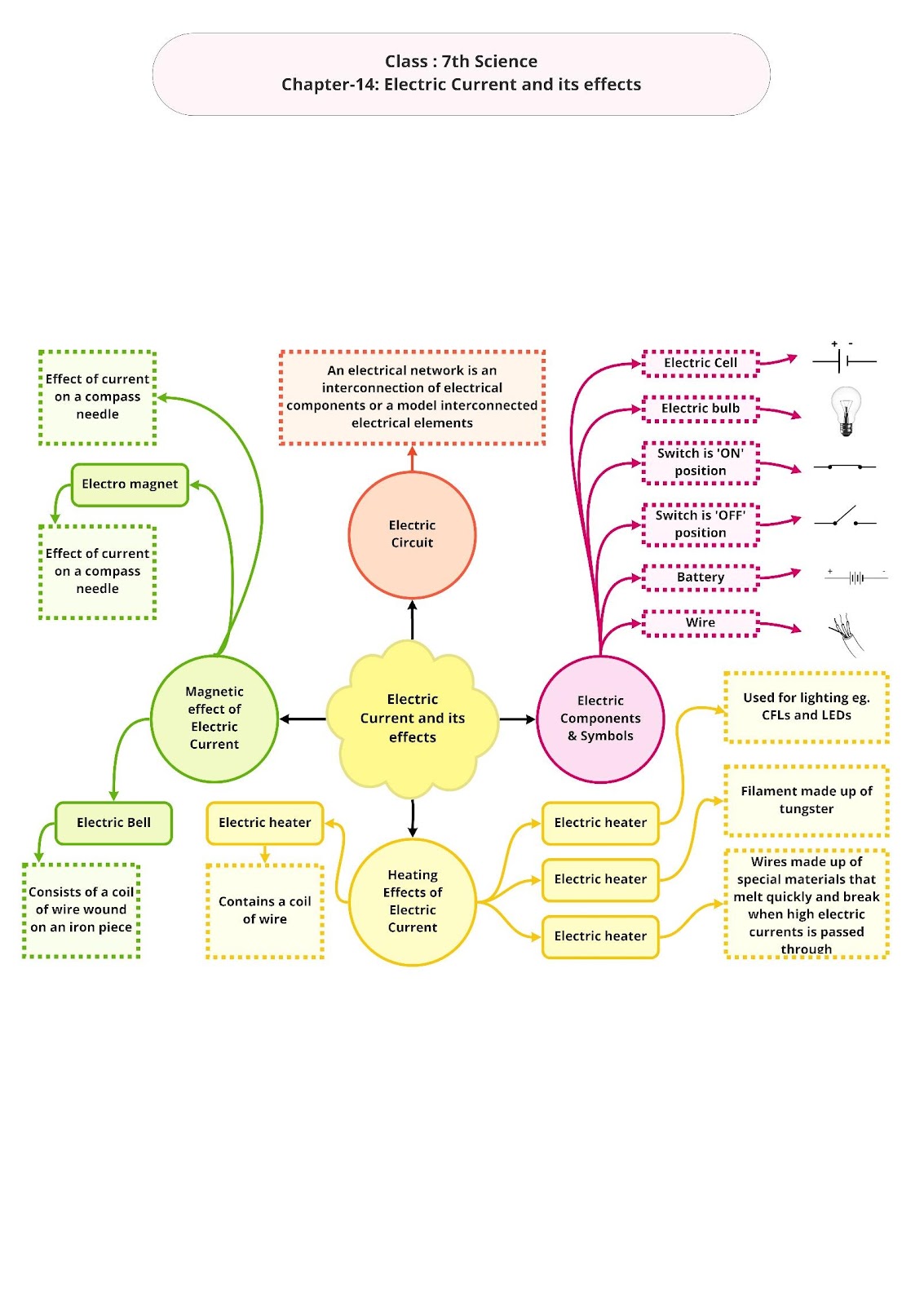
The flow of charges through a circuit is called electric current. The SI unit of electric current is ampere and donated by A. The direction of the electric current is conventionally from the positive terminal to the negative terminal of a cell.

Electric Current and Its Effects:

Electrical energy is the most useful form of energy as it can easily be converted into various other forms of energy such as heat energy, light energy, mechanical energy and chemical energy.

Symbols of Electric Current

  • Electric components are represented by symbols.
  • Symbols are used in circuit diagrams to show how a circuit is connected.
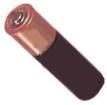
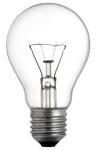
Sr.No.Electric ComponentImageSymbol
1.Electric Cell

2.Electric Bulb


3.Switch in ‘ON’ Position


4.Switch in ‘OFF’ Position


5.Battery


6.Wire
What Do Electrical Wire Colors Mean?


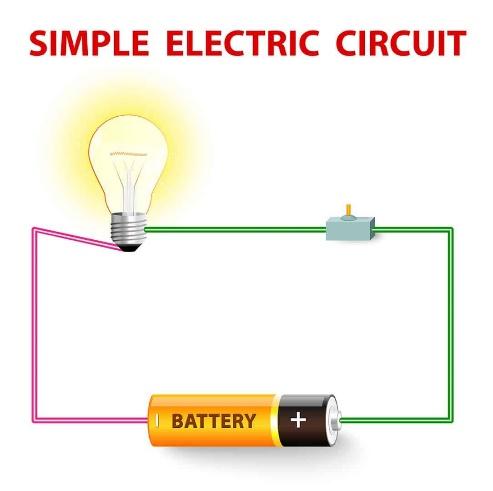
Electric Circuit

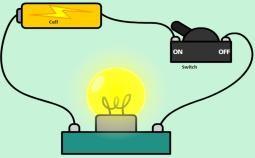
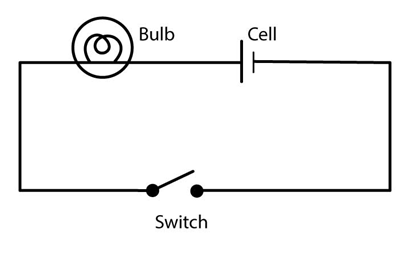
  • Electric current that flows through wires, cells, a key, a bulb etc. in a closed path is called an electric circuit.
  • It is also known as a closed circuit.
Pin on Cubs
  • The bulb glows only when the switch is in the ‘ON’ position.
  • A cell has two terminals:
  1. Positive terminal (+)
  2. Negative terminal (−)
  • A key or a switch used in the circuit usually breaks the circuit when it is in the ‘OFF’ position and allows the electric current to flow when it is in the ‘ON’ position.

Components of an electric circuit

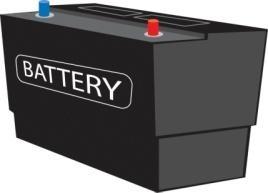
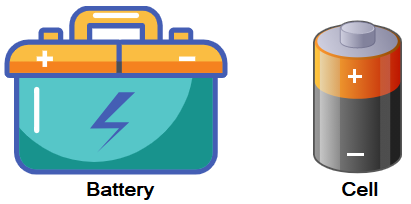
Cell or battery:

  • A cell is a source of current.
  • It has a positive and a negative terminal.
  • When two or more cells are connected such that the positive terminal of one cell touches the negative terminal of the other, it forms a battery, but they have to be connected in a proper manner for electricity to flow through the circuit. They can be connected in series or in parallel.

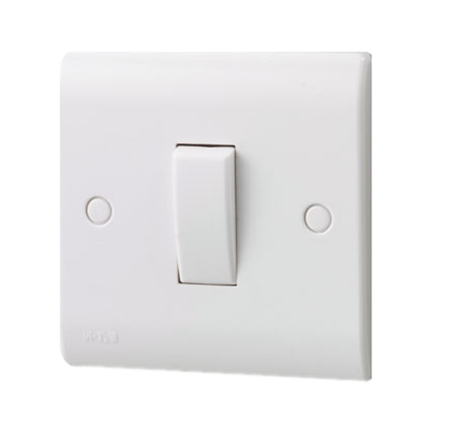
Switch:

  • A switch is used to close or open a circuit.
  • When the switch is off, the circuit is open and no current flows through it.
  • When the switch is on the circuit is closed allowing current to flow.
Eaton-MEM 1gang Switch | Electric House Multinational Limited

Electrical appliance:

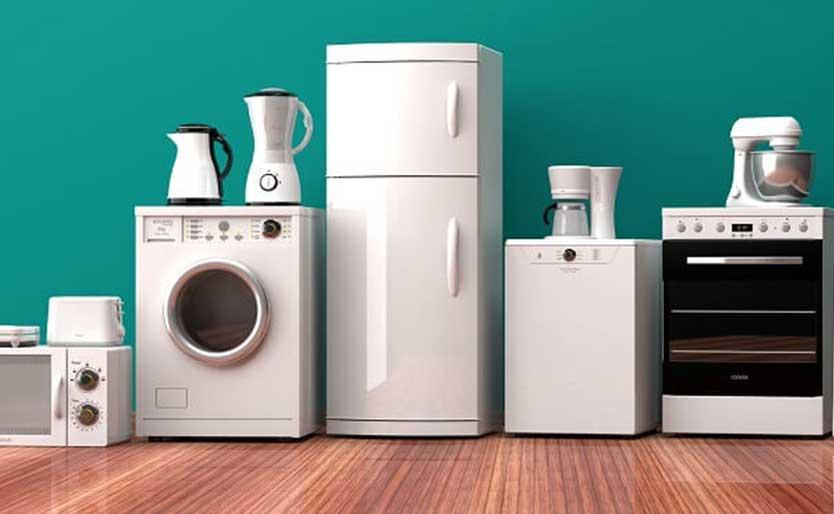
  • An electrical appliance is a device that uses the current flowing through it to function.
  • Electric bulbs, electric iron, fans, electric motors are some commonly used electrical appliances in our daily life.
Safety Precautions While Dealing with Electrical Appliances | Quick Spark

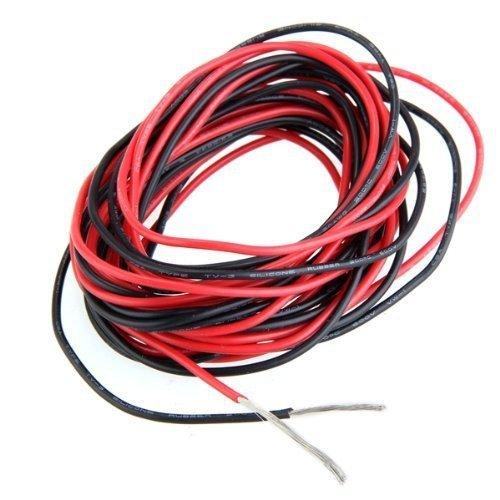
Wires:

Wires connect the element of the electric circuit. They are made up of materials that are good conductors of electricity such as copper.

Flexible Electrical Wire, Building wires, Household Cable, Home wires,  Household wire, हाउस वायर - Arihant Cables India, Coimbatore | ID:  11776202933

Heating Effect of Electric Circuit

  • When an electric current is passed through a metallic wire, it gets heated up. This is known as the heating effect of current.
  • Electric room heater or an electric heater works on the heating effect of electric current.
  • It contains a coil of a wire called an element.
  • This element becomes red hot and produces heat. The amount of heat produced in the wire depends on its material, length and thickness.

Electric Fuse

  • An electric fuse is an important application of the heating effect of electric current.
  • The wires of an electric fuse are made of materials which melt quickly and break when large electric current is passed through them.
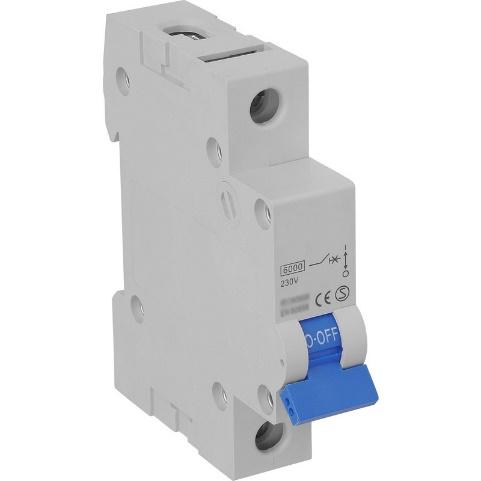
Difference Between Fuse and MCB (Miniature Circuit Breaker)
  • There is a maximum limit on the current which can safely flow through a circuit.
  • If the current exceeds this safe limit, then the wires may become overheated and cause fire. Hence, a fuse is used to prevent such a dangerous occurrence.

Magnetic Effect of Electric Current

  • When an electric current passes through a wire, it behaves like a magnet. This is known as the magnetic effect of the electric current.
  • When a compass is brought near such a current-carrying conductor/wire, the needle of the compass gets deflected because of the flow of electricity. This shows that electric current produces a magnetic effect.

Electromagnets

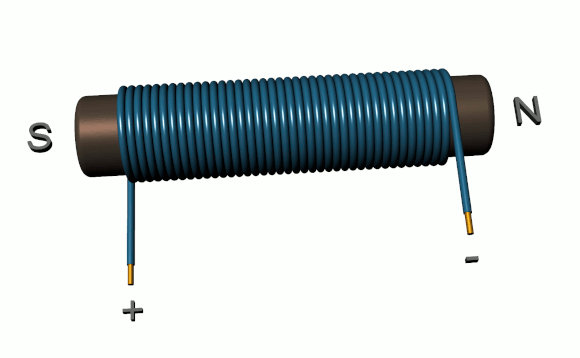
Electromagnet - Wikipedia
  • An electromagnet can be defined as a soft-iron core which is magnetized temporarily by passing a current through a coil of wire wound on the core.
  • When the electric current is switched off, the coil generally loses its magnetism. Such coils are called electromagnets.
  • Electromagnets are widely used in motors, electric bells, generators, relays, loudspeakers, hard disks, MRI machines as well as in industrial lifting electromagnets for picking up and moving heavy iron objects such as scrap iron.

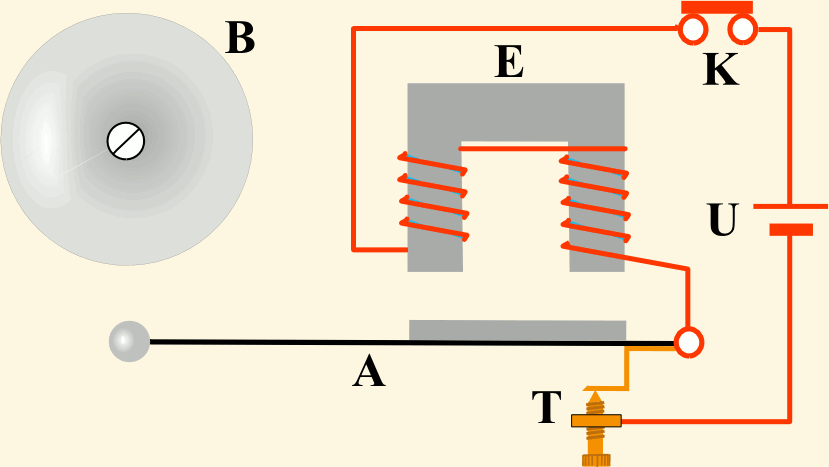
Electric Bell

  • An electric bell is a device which produces sound at the push of a button.
  • It consists of a coil of wire wound on an iron piece. This coil acts as an electromagnet.
  • An iron strip with a hammer at one end is kept close to the electromagnet.
  • A contact screw is placed near the iron strip. When the iron strip is in contact with the screw, current flows through the coil. The coil thus, acts as an electromagnet. It then pulls the iron strip.
  • In this process, the hammer at the end of the strip strikes the gong of the bell to produce a sound.
  • When the electromagnet pulls the iron strip, it breaks the circuit, and the current through the coil stops flowing.
  • The iron strip comes back to its original position and touches the contact screw again. This completes the circuit and the current flows in the coil and the hammer strikes the gong again.

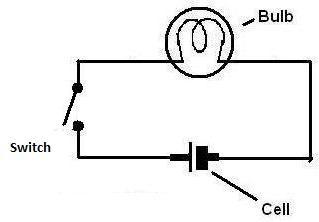
Circuit diagram

A schematic diagram that represents an electric circuit using the standard symbols of the components used in the circuit is called a circuit diagram.

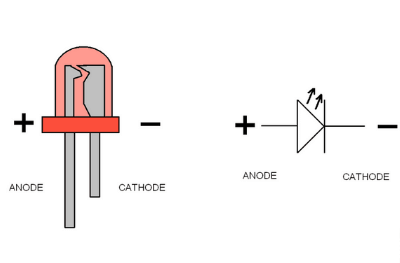
Light emitting diode (LED)

  • Nowadays, Light emitting diodes (LEDs) are used instead of an electric bulb because they consume less electricity, do not produce heat, have very long life and are almost unbreakable.
  • An LED allows electric current to follow in one direction only.
  • LED cannot tolerate even a small change in electric current. A circuit with an LED therefore requires an appropriate resistor. The resistor regulates the flow of electric current and protects the LED.

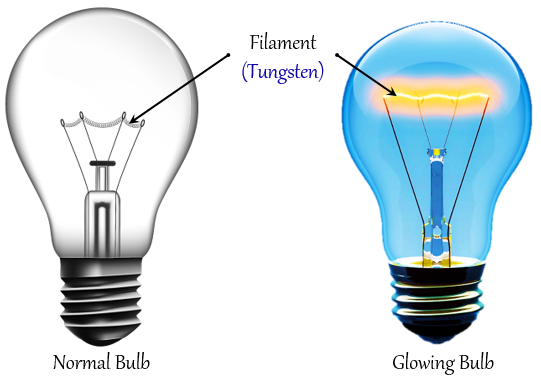
What makes a bulb glow

  • A bulb glows due to the heating effect of electric current.
  • A bulb has a partial vacuum, argon gas and a thin filament of tungsten.
  • Tungsten metal has a very high resistance and very high melting point.
  • When an electric current pass through the filament, due to its high resistance, its heat up quickly to about 2500 degree Celsius.
  • At this temperature, the tungsten filament begins to glow and emits light.

Important Questions

  • Multiple Choice Questions:

Question 1. Which of the devices use a battery?

(a) Torch

(b) Transistor

(c) TV remote control

(d) All of these

Question 2. Arrangement of cells in a device is

(a) side by side

(b) one after the other

(c) (a) or (b)

(d) none of these

Question 3. In an electric circuit, the bulb glows only when the switch is in the

(a) ‘ON’ position

(b) ‘OFF’ position

(c) (a) or (b)

(d) none of these

Question 4. When the switch is in the ‘ON’ position, the electric circuit is said to be

(a) closed

(b) open

(c) complete

(d) both (a) and (c)

Question 5. Which of the following precaution need not be taken while using electric appliances?

(a) Never touch lighted electric bulb connected to mains.

(b) Never experiment with the electric supply from mains.

(c) Never use any wire to replace fuse wire.

(d) Never turn switch in ‘ON’ position.

Question 6. In a bulb there is a thin wire called

(a) filament

(b) coil

(c) element

(d) fuse wire

Question 7. When the bulb gets fused, the electric current

(a) flows in the circuit

(b) does not flow in the circuit

(c) sometimes flows and sometimes not

(d) none of these

Question 8. A glowing bulb becomes warm due to the

(a) heating effect of current

(b) magnetic effect of current

(c) chemical effect of current

(d) physical effect of current

Question 9. An electric iron is an example of

(a) heating effect of current

(b) magnetic effect of current

(c) chemical effect of current

(d) physical effect of current

Question 10. The amount of heat produced in a wire depends on its

(a) material

(b) length

(c) thickness

(d) all of these

Question 11. The electric current has

(a) magnetic effect

(b) heating effect

(c) chemical effect

(d) all of these

Question 12. Which of the following is being used in place of fuses?

(a) MCB

(b) Nichrome

(c) Filament

(d) Switch

Question 13. Which of the following is not a reason for excessive currents in electrical circuits?

(a) Direct touching of wires

(b) Short circuiting

(c) Switch in ‘off position

(d) Overloading

Question 14. When electric current passes through a wire, it behave like a

(a) battery

(b) magnet

(c) fuse

(d) compass needle

Question 15. Fuse wire is generally made of

(a) tin and lead

(b) nickel and chromium

(c) nickel and copper

(d) chromium and silver

  • Fill In the Blanks:
  1. A combination of two or more cells is called a ………………..
  2. In a battery, the ……………….. terminal of one cell is connected to the ……………….. terminal of another cell.
  3. An electric iron works on the principle of ……………….. effect of electric current.
  4. The crane in a junkyard separate iron from the junk by using ……………….. effect of electric current.
  5. The bulb glows as the switch is moved to the ……………….. position.
  6. When the bulb gets fused, its ……………….. breaks.
  • True or False:
  1. A battery is a combination of cells in which positive terminals of both the cells are connected to one other.
  2. The key or switch can be placed anywhere in an electrical circuit.
  3. CFLs increase wastage of power.
  4. The wires used for making electric circuits normally become hot.
  5. A glowing electric bulb becomes warm.
  6. When the circuit is closed, the electric current does not flow throughout the circuit.
  • Very Short Question:
  1. Define electric circuit.
  2. For a bulb to glow, it must be connected to a battery. Why?
  3. What is a cell holder?
  4. What is a battery?
  5. Which one of the two minimise wastage of electricity CFL’s or an electric bulb?
  6. State some factors that affect production of heat in a wire through which an electric current is passing.
  7. Name the principle of working of electric fuse.
  8. What is an electric fuse?
  9. What is the full form of MCB?
  10. What is the full form of CFL’s?
  • Short Questions:
  1. Differentiate between electric current and electric circuit.
  2. Explain the function of cell in a circuit.
  3. How fuses are useful?
  4. Can we use an electromagnet separating plastic bags from a garbage heap? Explain.
  5. Write short notes on heating effects of electric current.
  6. Write short notes on magnetic effects of electric current
  7. What are filaments of a bulb and a heater made up of?
  • Long Questions:
  1. Explain the formation and uses of battery.
  2. An electrician is carrying out some repairs in a building. He wants to replace a fuse by a piece of wire. Would you agree with the electrician? Give reasons for your response.
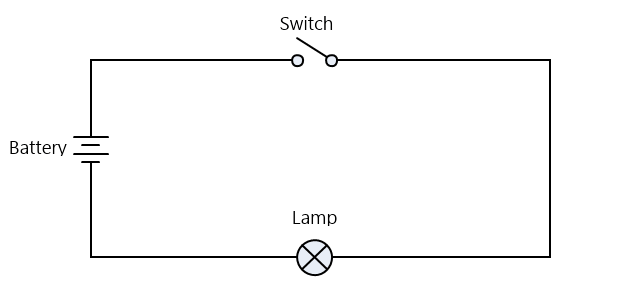
  3. Look at the figure given below and answer whether the compass needle will show deflection or not when the switch in the circuit shown is closed? 
Circuit diagram of the non-stationary incandescent tungsten filament in  vacuum or nowadays visible electromagnetic radiation emitting semiconductor  including cuprum conductor and IEC 60086 primary voltaic pile : r/VXJunkies
  • Answer Key-
  • Multiple Choice Answers:
  1. (d) All of these
  2. (c) (a) or (b)
  3. (a) ‘ON’ position
  4. (d) both (a) and (c)
  5. (d) Never turn switch in ‘ON’ position.
  6. (a) filament
  7. (b) does not flow in the circuit
  8. (a) heating effect of current
  9. (a) heating effect of current
  10. (d) all of these
  11. (d) all of these
  12. (a) MCB
  13. (c) Switch in ‘off position
  14. (b) magnet
  15. (a) tin and lead
  • Fill In the Blanks:
  1. battery
  2. positive; negative
  3. heating
  4. magnetic
  5. ‘ON’
  6. filament
  • True or False:
  1. False
  2. True
  3. False
  4. False
  5. True
  6. False
  • Very Short Answers:
  1. Answer: A closed path formed by the interconnection of electrical components through which electric current flows is called an electrical circuit.
  2. Answer: because a bulb will require more power
  3. Answer: A compartment that holds two or more cells together to form a battery is called a cell holder.
  4. Answer: A combination of two or more cells connected together is called a battery.
  5. Answer: CFL’s
  6. Answer: Length and thickness of the wire, the duration of flow of current, and the material of the wire.
  7. Answer: The electric fuse works on the principle of the heating effect of electric current.
  8. Answer: An electric fuse is a safety device to prevent damage to an electrical circuit when excessive current flows through it.
  9. Answer: Multiple Circuit Breakers
  10. Answer: Compact Fluorescent Lamps
  • Short Answers:
  1. Answer: Electric Current is the flow of electrons. But an electric Circuit is the closed path in which electric current flows.
  2. Answer: A cell supplies electric current. The positive terminal (+)of a cell is represented by a vertical long line, while the negative terminal (-) is shown as a parallel, shorter line.
  3. Answer: A fuse is thus a safety device which prevents damages to electrical circuits and possible fires.
  4. Answer: An electromagnet cannot be used for separating plastic bags from a garbage heap as it attracts only iron pieces and will not attract plastic bags.
  5. Answer: When an electric current flows through a wire, the wire gets heated. It is the heating effect of current or When current flows through a metal wire it gets heated up, this is called heating effect of current. E.g., a glowing electric bulb becomes warm. This effect has many applications like Electric Heater, Light Bulb etc.
  6. Answer: When an electric current flows through a wire, it produces magnetic effect around it. A current carrying coil of an insulated wire wrapped around a piece of iron is called an electromagnet. Magnetic Effect of electric current has many applications like Electric Bell, Motor, Fan etc.
  7. Answer: In a bulb there is a thin wire called the filament made up of tungsten. When current passes through it, it glows and gets heated up. In a heater there is a coil of wire called element which is made up of nichrome. When current passes through element it becomes red hot and give out heat
  • Long Answers:
  1. Answer: A combination of two or more cells connected together is called a battery. It supplies electric current. It is formed by connecting the positive terminal of one cell to the negative terminal of another. To identify the positive and negative terminals, they are denoted as + and -, respectively. These batteries are used in many devices, such as torch lights, mobile phones, calculators and even automobiles.
  2. Answer: There is a maximum limit on the current which can safely flow through a circuit. If by accident the current exceeds this safe limit, the wires may become overheated and may cause fire. In order to prevent this, in all buildings fuses are inserted in all electrical circuits. If a proper fuse is there in the circuit, it will blow off and break the circuit. A fuse is thus a safety device which prevents damages to electrical circuits and possible fires. So we will not agree with an electrician, who is using a wire in place of fuse of proper rating as if by accident the current exceeds safe limit, the wires may become overheated and may cause fire.
  3. Answer: The compass needle will not show any deflection when the switch in the circuit shown by above figure is closed, because there is no power source like cells in the circuit hence there will be no electric current flow in the circuit. In the absence of electric current there will be no magnetic effect to cause the deflection of compass needle.

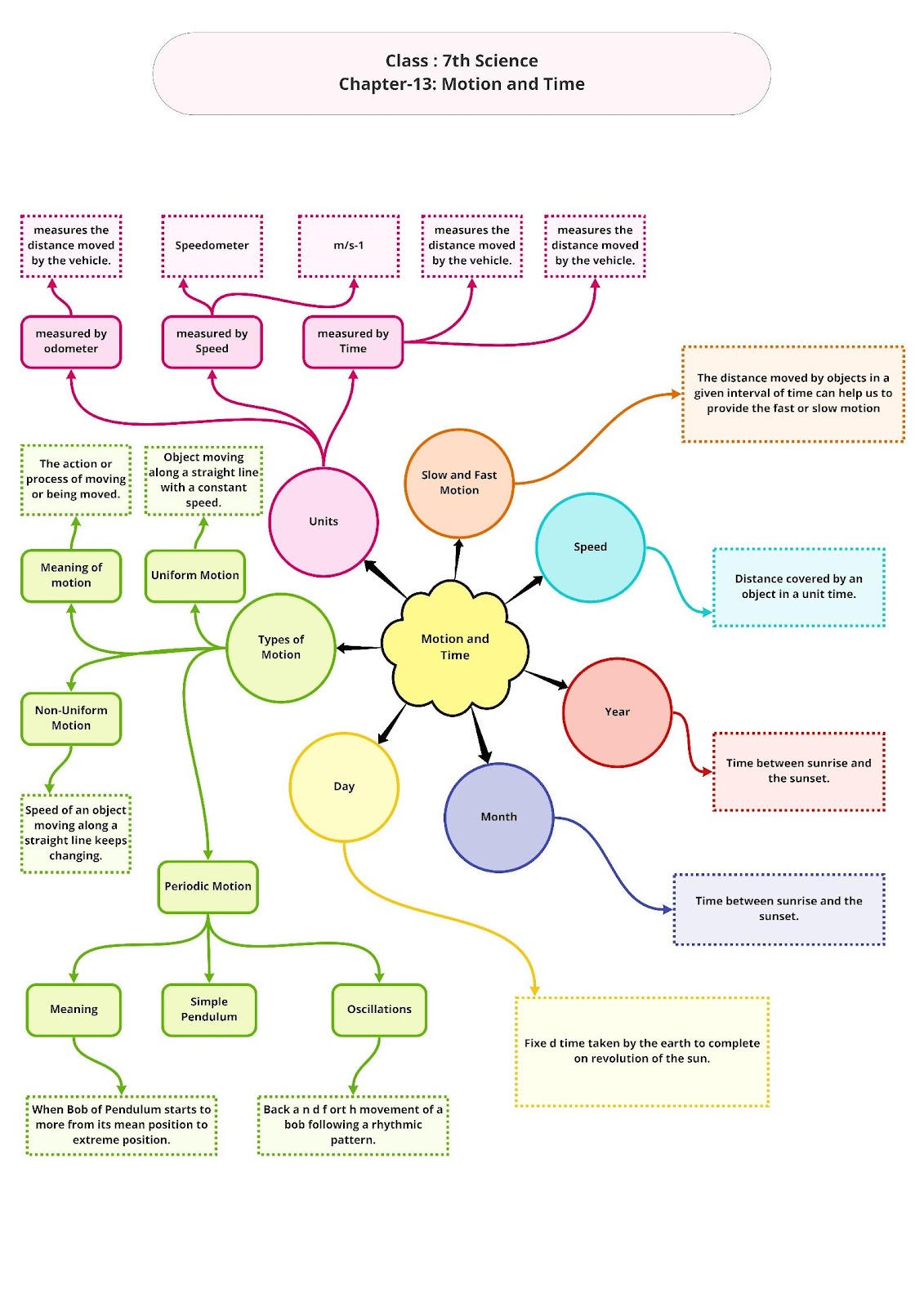
Class 7 Physics – CHAPTER 9 : MOTION AND TIME

0
A picture containing text, clipart

Description automatically generated

Motion and Time

Motion

  • Motion refers to the change in the position of an object with respect to time.
  • There are two states of an object:
  • When a body does not change its position with respect to time, then the body is said to be at rest.

Examples: Chairs of a dining table, a flower vase, table, blackboard etc.

  • When the body changes its position with respect to time, then the body is said to be in motion.

Examples: The blades of a rotating fan, the hands of a working wall clock etc.

Slow and Fast Motion

  • An object is said to be moving slowly if it covers lesser distance in a given time interval.
  • A slow moving object has low speed.
  • An object is said to be moving quickly if it covers more distance in a given time interval.
  • A fast moving object has high speed.

Rectilinear Motion

  • Motion in a straight line is called rectilinear motion.

Circular Motion

  • When an object moves in a circular path, it is said to perform circular motion.

Rotational Motion

  • When an object turns/spins about a fixed axis, it is said to perform rotational motion.

Periodic Motion

  • The motion which repeats itself after regular intervals of time is called periodic motion.
  • It is also called oscillatory motion

Speed

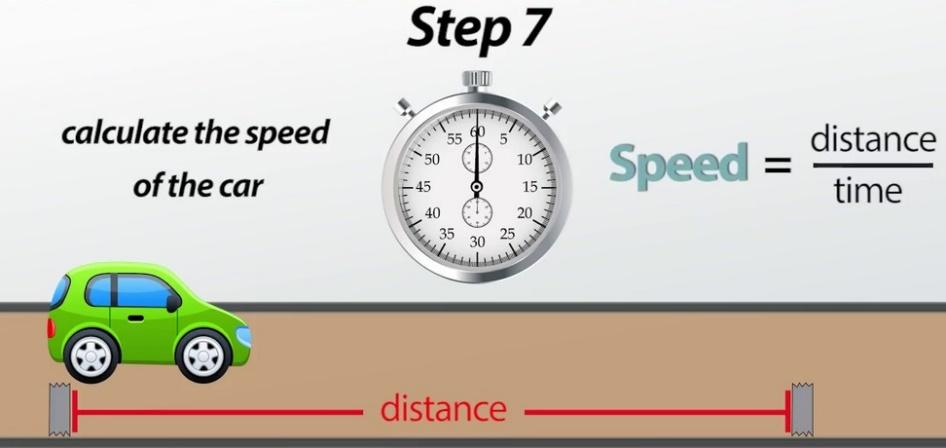
  • Speed is the distance covered by an object in unit time.
  • If a body covers equal distances in equal intervals of time, then it is said to be moving with uniform speed.
  • If a body covers unequal distances in equal intervals or equal distances in unequal intervals, then it is said to be moving with non-uniform speed.
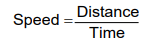
  • Speed is calculated as
  • The basic unit for speed is metre per second (m/s).
  • It is also measured in kilometre per hour (km/h) and kilometre per min (km/min).

Average Speed

  • The average speed of a moving object is defined as the total distance covered by it divided by the total time taken.

Average speed  Total distance covered

Total time taken

Measurement of Speed

  • Speed is how fast or slow an object is moving.
  • Measuring speed means observing the distance and the time taken by the object.

Speedometer

  • It is an instrument used in vehicles to show the speed with which the vehicle is moving.
  • Not all moving vehicles have a speedometer.

Example: A bicycle does not have a speedometer, whereas a car has a speedometer.

  • The speedometer has a needle which indicates the speed.

Odometer

  • An odometer is a device on vehicles to track the distance covered.

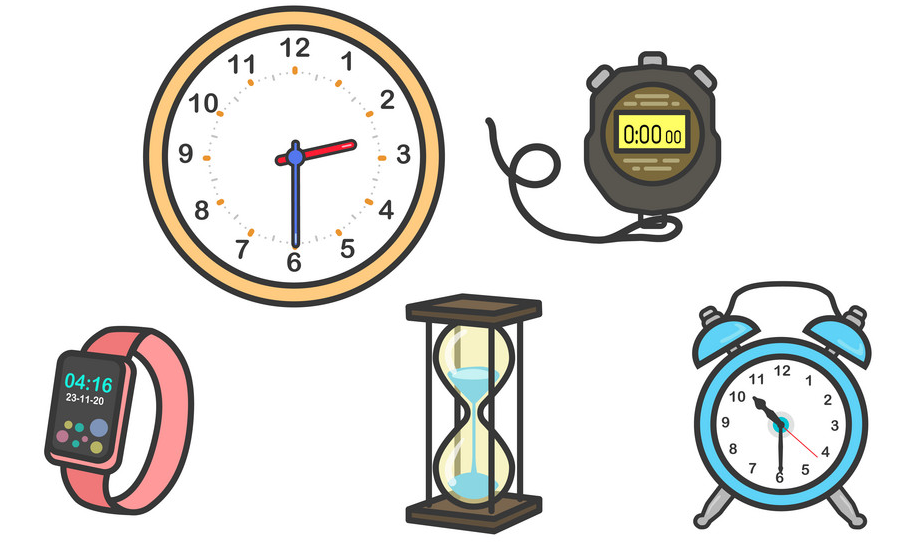
Measurement of Time

  • Certain events in nature help us track time.

Example: The phases of the moon indicate the time of the month.

  • Man-made structures are also constructed to measure time.

Example: The Jantar Mantar in Jaipur is a Sun clock which is used to measure the time.

  • Water clocks and sand clocks were used hundreds of years ago to measure time.
  • The basic unit of time is a second, and it is represented by the symbol ‘s’.
  • Larger units of time are minute (min) and hour (h).
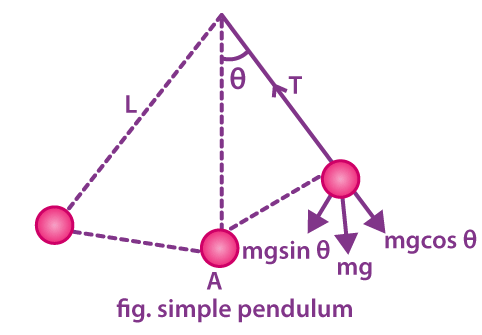
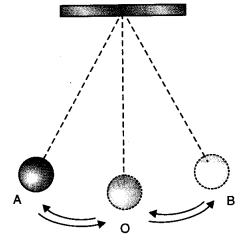
  • A pendulum is also used to measure time. It consists of a small metal ball called a bob, attached to an inextensible string, which is fixed to a rigid support.
  • The length of the pendulum is the distance from the point of suspension to the centre of gravity.
  • The time taken by the bob of the pendulum to make one complete oscillation is called its time period.
  • If the time period of a simple pendulum is two seconds, then the pendulum is called a second’s pendulum.

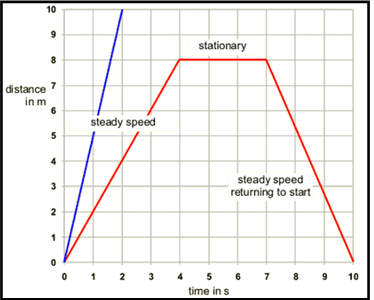
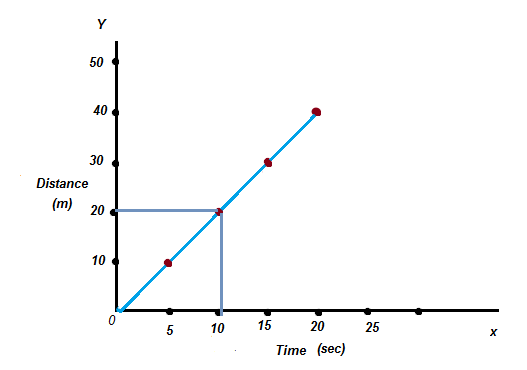
Distance-Time Graph

  • A distance-time graph is a visual representation of the collected data.
  • The graph has a horizontal ‘x-axis’ which represents the time, and a vertical ‘y-axis’ which represents the distance.
  • If the line on the graph is horizontal, then it implies that the object is stationary.
  • If the line on the graph is straight but with a slope, then the object is moving at a steady speed.
  • If the line on the graph is steeper (shown by a blue line), then the speed of the object is greater.
Thursday/Friday: Time Distance Graphs | Ms Lea's Blog

How to Draw Distance-Time Graphs

  1. We use a graph paper to draw distance-time graph.
  2. The graph paper has 1 centimetre squares marked on it. Each centimetre square has 100 smaller squares in it (which are millimetre squares).
  3. The side of bigger square on the graph paper is 1 cm and that of the smaller square is 1 mm.
  4. To draw the distance-time graph for a moving object, we need a graph paper, and the readings of distances travelled by the object and the corresponding time values which have been obtained experimentally.
  5. We should draw a horizontal line on the graph paper to represent x-axis. Label the x-axis by writing Time. The unit of time should be written in bracket such as Time (s), Time (min) or Time (h). An arrow should be put in front of the labelling of time and its unit like Time (min).
  6. Draw a vertical line on the left side of the graph paper to represent y-axis. Label the y-axis by writing the word Distance. The unit of distance should be written in bracket such as Distance (m), Distance (cm) or Distance (km). An arrow should be put in front of the labelling of distance and its unit like Distance (km). The point of intersection of x-axis and y-axis is called ‘origin’ and marked as O.
  7. We should choose suitable scales so as to represent the large values of ‘time’ and ‘distance conveniently on the small graph paper. The scales to be used depend on the range of time and distance values, and hence vary from question to question.
  8. Take the first value of time and the first value of distance from the data given in the question and mark one point on the graph paper where the graph lines representing these two values meet. Then take second, third, fourth and fifth sets of values of time and distance and mark corresponding points (as pencil dots) on the graph paper.
  9. Join all the marked points (or pencil dots) with a pencil line graph to obtain the required distance time graph.

Advantages of distance-time graphs 

  1. The variation of distance travelled by an object with time can be seen more easily from a distance-time graph than from the distance and time values given in the table form.

For example :

  1. A straight line distance-time graph tells us that the moving object covers equal distances in equal time intervals, so its speed is constant (or uniform). 
  2. A curved line distance-time graph tells us that the moving object covers unequal distances in equal time intervals and hence its speed is not constant (it is non-uniform).
  3. A straight line distance-time graph parallel to the time-axis (or a horizontal line graph) tells us that the distance moved by the object does not change with time, so its speed is zero (it is stationary)
  1. The data given in table form may give information about the distance moved by the object only at certain definite time intervals but from a distance-time graph we can find the distance moved by the object at any point of time.
  2. The speed of an object can be obtained from its distance-time graph. By using distance-time graph, we can find the distance moved by the object between any two time readings. And if we divide this distance by time (given by the difference in the two time readings), we will obtain speed of the object.

Other Types of Graphs

Line graphs show the variation of distance travelled by a moving object (car, bus, truck, etc.) with time. There are two other kinds of graphs.

Bar Graph

A bar graph is a diagram which shows information as bars (thin rectangles) of different heights in a bar graph, the positions and heights of the bars represent the values of the variable quantity about which information is being given.

Pie Chart

A pie chart is a kind of graph or diagram which shows the percentage composition of something in the form of slices of a circle (the whole circle representing 100 per cent).

Important Questions

  • Multiple Choice Questions:

Question 1. A bus travels 54 km in 90 minutes. The speed of the bus is

(a) 0.6 m/s

(b) 10 m/s

(c) 5.4 m/s

(d) 3.6 m/s

Question 2. The formula for distance is

(a) time = SpeedDistance

(b) Speed = TimeDistance

(c) Speed = 1Time × Distance

(d) Speed = distance × time

Question 3. Observe the figure given below:

The time period of a simple pendulum is the time taken by it to travel from

(a) A to B and back to A

(b) O to A, A to B and B to A

(c) B to A, A to B and B to O

(d) A to B

Question 4. Nearly all the clocks make use of

(a) straight line motion

(b) periodic motion

(c) random motion

(d) circular motion

Question 5. A simple pendulum takes 42 sec. to complete 20 oscillations. What is its time period?

(a) 2.1 s

(b) 4.2 s

(c) 21 s

(d) 8.40 s

Question 6. Time period of a simple pendulum depends upon its

(a) weight of bob

(b) length

(c) both (a) and (b)

(d) None of these

Question 7. Which of the following cannot be used for measurement of time?

(a) A leaking tap

(b) Simple pendulum

(c) Shadow of an object during the day

(d) Blinking of eyes

Question 8. On which axis is dependent variable represented?

(a) x-axis

(b) y-axis

(c) On any axis

(d) Depends on the data

Question 9. The correct symbol to represent the speed of an object is:

(a) 5 m/s

(b) 5 mp

(c) 5 m/s-1

(d) 5 s/m

Question 10. Boojho walks to his school which is at a distance of 3 km from his home in 30 minutes. On reaching he finds that the school is closed and comes back by a bicycle with his friend and reaches home in 20 minutes. His average speed in km/h is

(a) 8.3

(b) 7.2

(c) 5

(d) 3.6

  • Fill In the Blanks:
  1. The time taken by the pendulum to complete one oscillation is called its ……………..
  2. …………….. is the SI unit of time.
  3. The distance moved by an object in a unit time is called its ……………..
  4. Speed of the vehicle is shown by the instrument …………….. fitted on the vehicle.
  5. Distance time-graph representing a non-uniform motion of an object is of …………….. shape.
  6. The distance-time graph for the motion of an object moving with a constant speed is a ……………..
  • True or False:
  1. Each and every object in this universe moves with a constant speed.
  2. The motion of a spinning top is rotational motion.
  3. The motion of earth around the sun is called rectilinear motion.
  4. The smallest time interval which can be measured with commonly available clocks and watches is one second.
  5. A sundial measures time by the position of the shadow cast by the sun.
  6. Vehicles which covers more distance in small interval of time have slow speed.
  • Very Short Question:
  1. What is the SI unit of distance?
  2. Name an object that shows oscillatory motion.
  3. What is the motion of our hands while running?
  4. What is the motion of a child in a merry-go-round?
  5. What is motion?
  6. What is circular motion?
  7. Give an example of vibratory motion.
  8. Name the device on vehicles to track the distance covered.
  9. Define average speed.
  10. What do you mean by the statement; “car is moving with the speed of 50 Km per hour”?
  • Short Questions:
  1. What do you mean by non-uniform speed?
  2. A child is on see-saw, what kind of motion he have and why? Explain.
  3. Explain how in ancient time a day, a month and a year were measured.
  4. Define velocity along with its unit.
  5. What are quartz clocks?
  6. How do we know an object is moving faster compared to the speed of another object?
  7. If a car is moving with a speed of 5Km/h on highway then find the distance travelled by the car in 4 hours?
  8. How can you say that motion and rest are relative?
  • Long Questions:
  1. What is the function of RBCs?
  2. Does transpiration serve any useful function in the plants? Explain.
  3. Explain stomata and its function in plants.
  • Answer Key-
  • Multiple Choice Answers:
  1. (b) 10 m/s
  2. (c) Speed = 1Time × Distance
  3. (a) A to B and back to A
  4. (b) periodic motion
  5. (a) 2.1 s
  6. (b) length
  7. (d) Blinking of eyes
  8. (b) y-axis
  9. (d) 5 s/m
  10. (b) 7.2
  • Fill In the Blanks:
  1. time period
  2. Second
  3. speed
  4. speedometer
  5. any
  6. straight line
  • True or False:
  1. False
  2. True
  3. False
  4. True
  5. True
  6. False
  • Very Short Answers:
  1. Answer: Meter
  2. Answer: Pendulum
  3. Answer: oscillatory motion
  4. Answer: straight line motion
  5. Answer: Motion is a change in the position of an object with time.
  6. Answer: Motion of an object in a circular path is called circular motion e.g., Motion of the hands of a clock.
  7. Answer: Simple Pendulum
  8. Answer: An odometer
  9. Answer: The average speed of a moving object is defined as the total distance covered by it divided by the total time taken.
  10. Answer: Car is moving with the speed of 50 Km per hour it means it will cover a distance of 50 Km in one hour.
  • Short Answers:
  1. Answer: An object is said to be moving with variable speed or non-uniform speed if it covers equal distances in unequal intervals of time or vice-versa.
  2. Answer: On a see-saw child goes up and comes down from mean position and repeats itself. So there is oscillatory motion.
  3. Answer: In ancient time the time between one sunrise and the next was called a day. A month was measured from one new moon to the next and a year was fixed as the time taken by the earth to complete one revolution of the sun.
  4. Answer: Velocity can be defined as the rate of change of displacement.SI unit of velocity is m/s (meter/second Velocity is a vector quantity.
  5. Answer: It is a special type of clock or watch which have an electric circuit with one or more cells are called quartz clocks.
  6. Answer: By finding the distance travel by a moving body in unit time 1 hr. or 1 sec we know the speed of an object that help us to know which one is moving faster i.e. having greater speed.
  7. Answer:  We know distance travelled by a body = speed × time 

So, distance travelled by the car = 5 × 4 = 20 km

  1. Answer: We have observed that the position of stars and planets change while you remain stationary. In reality the earth is moving too. Thus, an object which appears to be at rest, may actually be in motion. Therefore, motion and rest are relative terms.
  • Long Answers:
  1. Answer: An object is said to be moving with uniform speed if it covers equal distances in equal intervals of time. But when we travel in a vehicle the speed of the vehicle changes from time to time depending upon the conditions existing on the road. In such a situation, the speed is calculated by taking the ratio of the total distance travelled by the vehicle to the total time taken for the journey. This is called the average speed.
  2. Answer: When we say that the car travels at an average speed of 60 km/h it does not mean that the car would be moving with the speed of 60 km/h throughout the journey. The actual speed of the car may be less than or greater than the average speed at a particular instant of time. The speed of a moving body at any particular instant of time is called instantaneous speed.
  3. Answer:  Following are different types of motion:
  • Translatory Motion: In Translatory motion the particle moves from one point in space to another. This motion may be along a straight line or along a curved path.
  • Rectilinear motion: Motion along a straight line is called rectilinear motion. Example: A car moving on a straight road
  • Curvilinear motion: Motion along a curved path is called curvilinear motion. Example: A car negotiating a curve
  • Rotatory Motion: In rotatory motion, the particles of the body describe concentric circles about the axis of motion
  • Vibratory Motion: In vibratory motion the particles move to and from about a fixed point.

Class 7 Physics – CHAPTER 3 : HEAT

0
A picture containing text, clipart

Description automatically generated

Heat

Concept of Heat

  • Heat is a form of energy.
  • We can feel heat by the sense of touch.
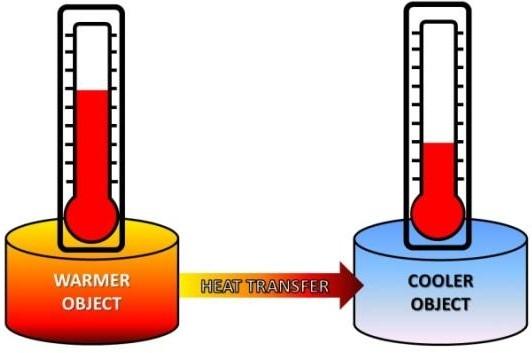
  • This form of energy can be transferred between two objects with varying temperatures.
  • The S.I. unit of heat is Joule (J).

Temperature

  • Heat cannot be measured with any instrument directly, but its effect on a substance can be detected. This measurement is the temperature of the body.
  • Temperature is defined as the degree of hotness or coldness of a body.

Thermometer

  • A thermometer is a device which measures the temperature in a reliable manner.
  • It is made of a long, narrow, uniform glass tube with a bulb at one end.
  • It is filled with mercury as it is in liquid state at room temperature. It expands or contracts with an increase or decrease in the temperature.
  • There are different types of thermometers:

Clinical Thermometer

  • A clinical thermometer is used to measure the temperature of the human body.
  • It is very accurate because of its narrow tube in which the liquid rises fast.
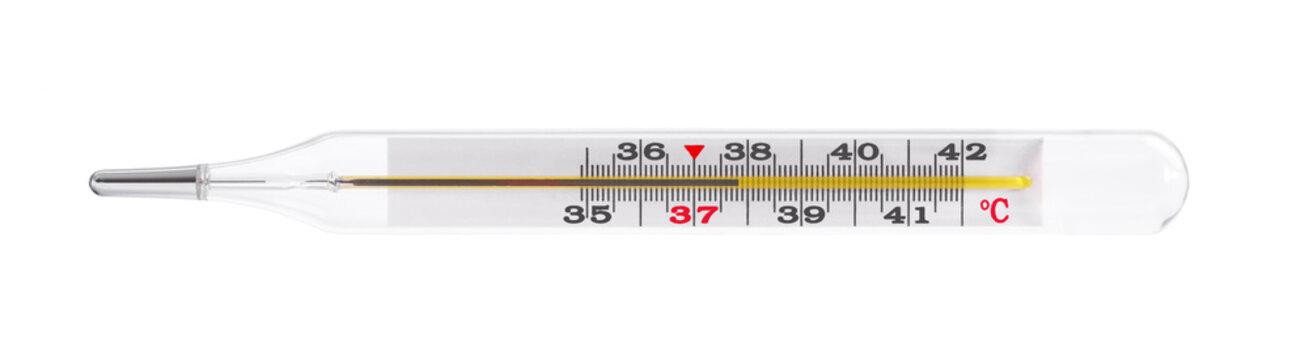
Clinical Thermometer Images – Browse 34,502 Stock Photos, Vectors, and  Video | Adobe Stock
  • The scale on the clinical thermometer is called the Celsius Scale, indicated by °C.
  • It reads the temperature from 35°C to 42°C.
  • It is used in clinics by doctors.

Laboratory Thermometer

  • A laboratory thermometer is used to measure temperatures or the temperature changes of other objects.
  • These thermometers are usually filled with red spirit rather than mercury.
  • The range of a laboratory thermometer is generally from −10°C to 110°C.

Maximum-Minimum Thermometer

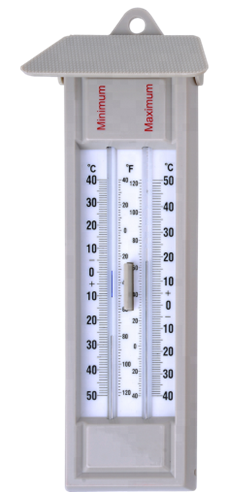
  • A maximum-minimum thermometer is used to measure the daily temperature in order to prepare weather reports.

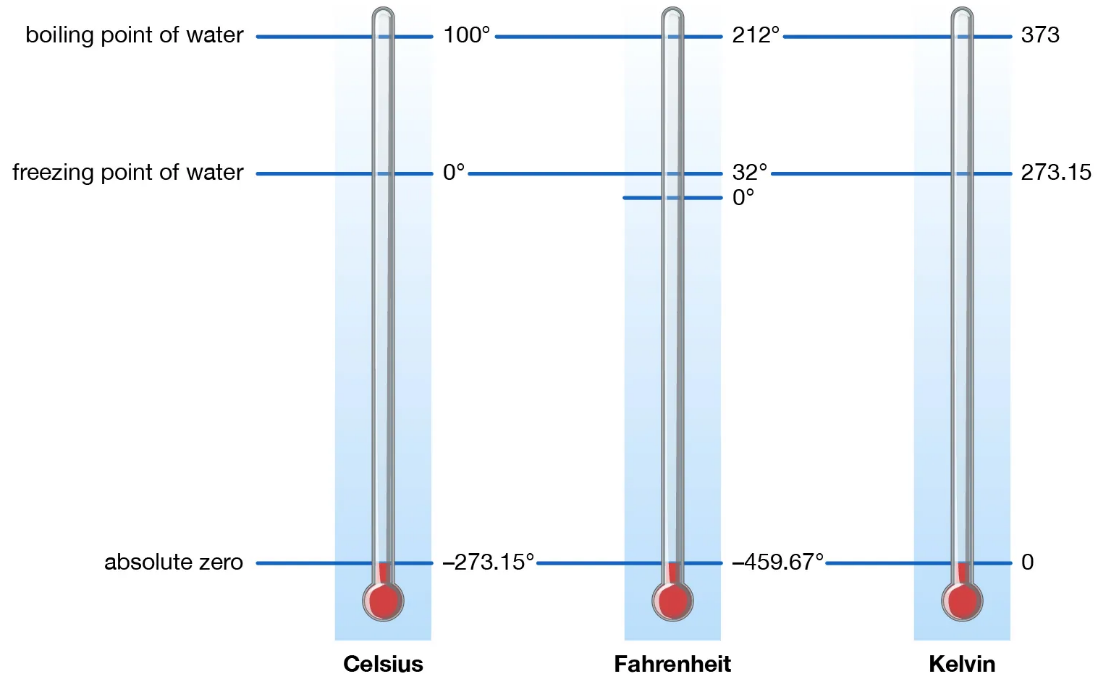
Scales of Temperaturesss

  • A reference scale with respect to which the temperatures can be measured is known as the scale of temperature.
  • There are different scales of temperature.

Transfer of Heat

  • Heat is transferred from a body at a higher temperature to a body at a  lower temperature, i.e. heat flows from a hot object to a cold object.
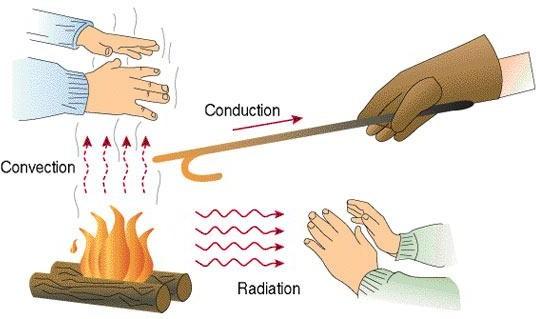
  • The fundamental modes of heat transfer are conduction, convection and radiation.

Conduction

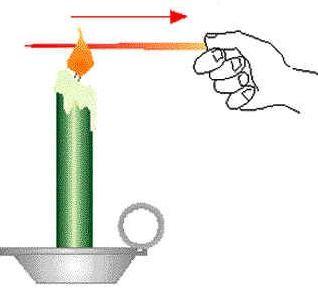
  • Conduction is the process by which heat is transferred from the hotter end of an object to the colder end of the object.
  • Conductors of heat:
  • Materials which allow heat to pass through them easily are called conductors.
  • Metals are good conductors of heat.
  • Examples: Aluminium, iron, copper, silver etc.
  • Insulators or bad conductors of heat:
  • Materials which do not allow heat to pass through them easily are called insulators.
  • They are also known as poor or bad conductors of heat.
  • Examples: Plastic, wood, glass, rubber etc.
  • Applications of good and bad conductors of heat in our day-to-day activities:
  • Boilers in industries and cooking utensils are usually made of metals which allow heat to flow quickly through the vessel for faster boiling and cooking.
  • Mercury is used as a thermometric liquid as it is a good conductor of heat.
  • Wood and plastic are bad conductors of heat; so, they are used as handles of cookware.

Convection

  • Convection is the transfer of heat by the movement of particles of a medium from one place to another.
  • It occurs only in liquids and gases.
  • Examples: Wind currents, the lower floor of a building is cooler than the upper floor, and the atmosphere at the seashore is always pleasant because of convection.

Radiation

  • Radiation is the transfer of heat which does not require a medium.
  • All hot bodies emit heat by the process of radiation.
  • We get heat from the Sun because of radiation as there is no medium present between the atmosphere of the Earth and the Sun.

Examples:

  • When we sit near a room heater, we get warmth by the process of radiation.
  • A hot utensil kept away from the flame cools down as it transfers heat to the surroundings by radiation.
  • Our body produces heat and receives heat from the surroundings by radiation.

SUMMER AND WINTER CLOTHING:

  • Light colors reflect most of the heat falling on it, hence it is advised to were light colors in summer
  • On the other hand, darker colors absorb most heat and helps us keep warm in the winter season.
  • In recent times, hollow bricks are used for construction as they trap layers of air to keep the houses cool.
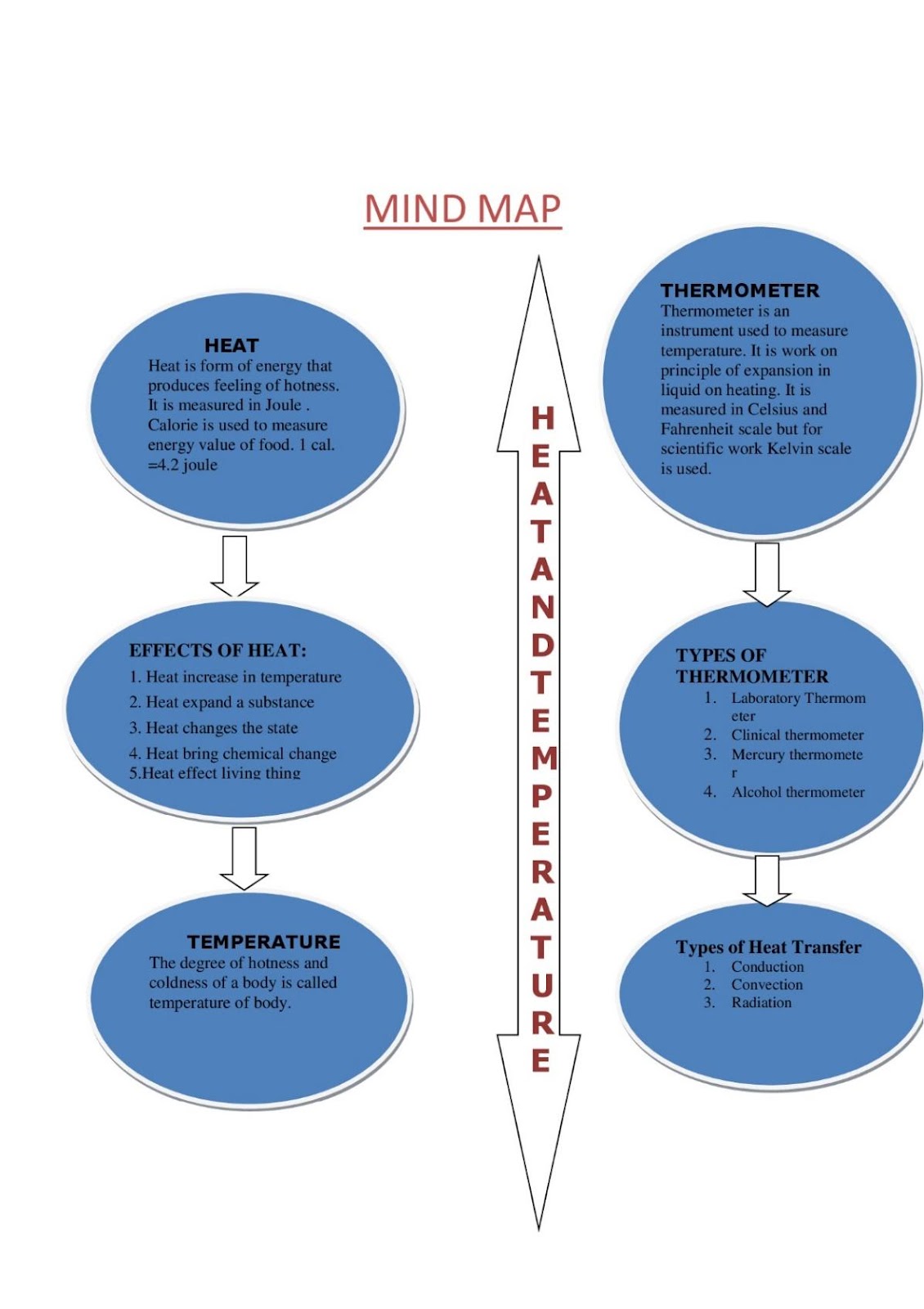
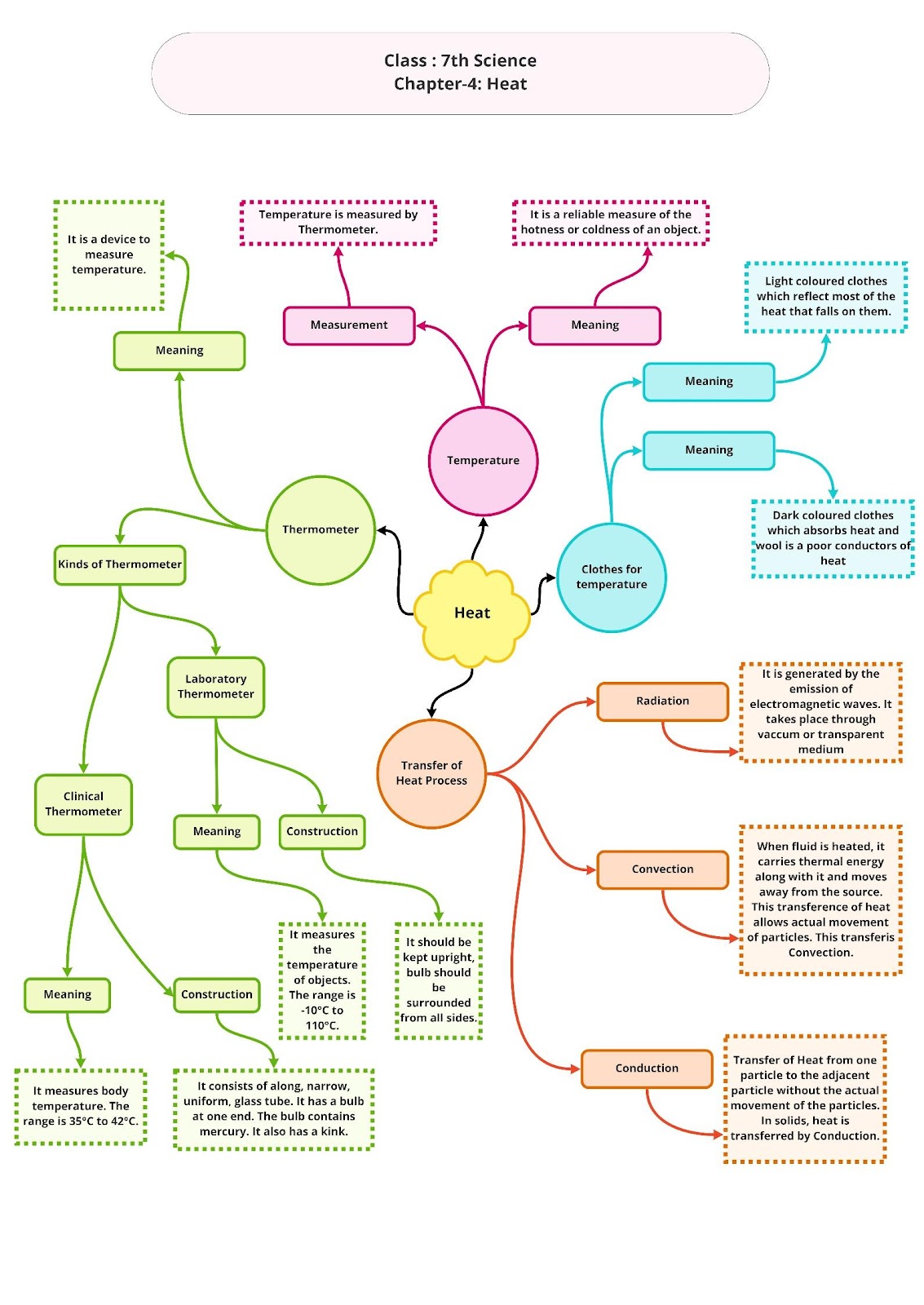
heat and temperature mind map

Important Questions

  • Multiple Choice Questions:

Question 1. Which of the following is a good conductor of heat?

(a) Iron

(b) Steel

(c) Aluminium

(d) All of these

Question 2. A device used to measure the temperature is

(a) transistor

(b) thermometer

(c) mercury

(d) none of these

Question 3. Which of the following thermometers has a kink?

(a) Laboratory thermometer

(b) Clinical thermometer

(c) Both (a) and (b)

(d) Digital thermometer

Question 4. What is the range of the temperature reading of a clinical thermometer?

(a) 35°C – 42°C

(b) -10°C – 110°C

(c) 0°C – 100°C

(d) 32°C – 42°C

Question 5. Which of the following thermometer contains mercury?

(a) Clinical thermometer

(b) Laboratory thermometer

(c) Both (a) and (b)

(d) None of these

Question 6. What is the range of the temperature reading of a laboratory thermometer?

(a) -10°C – 110°C

(b) 35°C – 42°C

(c) 0°C – 100°C

(d) -10°C – 100°C

Question 7. The transfer of heat from hotter body to colder body is called

(a) conduction

(b) induction

(c) convection

(d) radiation

Question 8. The process of transferring of heat without any contact between the source of heat and the heated object is called

(a) conduction

(b) convection

(c) radiation

(d) induction

Question 9. The normal temperature of human body is

(a) 35°C

(b) 37°C

(c) 40°C

(d) 42°C

Question 10. The materials which allow the heat to pass through them easily are called

(a) insulators

(b) conductors

(c) semiconductors

(d) poor conductors

Question 11. Which of the following is an insulator?

(a) Wood

(b) Iron

(c) Copper

(d) Zinc

Question 12.

The air from the sea is called

(a) sea breeze

(b) land breeze

(c) wind

(d) none of these

Question 13. Which colour absorbs more heat?

(a) Black

(b) White

(c) Blue

(d) Red

Question 14. What is the SI unit of temperature?

(a) Kelvin

(b) Celsius

(e) Fahrenheit

(d) None of these

Question 15. Which one is filled in the bulb of a thermometer?

(a) Mercury

(b) Lead

(c) Copper

(d) Silver

  • Fill In the Blanks:
  1. A reliable measure of the hotness of an object is known as ………………
  2. ……………… is used to measure the hotness or coldness of our body.
  3. Boiling and melting point of water is ……………… and ……………… respectively.
  4. The transfer of heat from hotter body to colder body is called ………………
  5. The normal temperature of human body is ……………… °C.
  6. ……………… is a good conductor of heat.
  • True or False:
  1. We wear white clothes in summer to radiate heat from the body.
  2. Sea breeze and land breeze occur due to convection currents set up in the air.
  3. The heat from sun reaches us through convection.
  4. Conduction is a process of heat transfer in which vibrating particles give energy to the neighbouring ones.
  5. A reliable measure for the hotness of an object is called Kelvin.
  6. The thermometer used to measure the temperature of our body is called a clinical thermometer.
  • Very Short Question:
  1. Define temperature.
  2. Name the device used to measure temperature.
  3. Name the two types of thermometer.
  4. What do you mean by clinical thermometer?
  5. What is the unit of temperature as adopted by India?
  6. What is the average body temperature of a healthy person?
  7. What is the range of laboratory thermometer?
  8. What is the use of kink in a clinical thermometer?
  9. Give an example to show the transfer from heat from one body to another.
  10. Give examples of conductors.
  • Short Questions:
  1. Define heat.
  2. Define temperature. What is its unit?
  3. What is the use of the maximum – minimum thermometer?
  4. Why does the mercury not fall or rise in a clinical thermometer when taken out of the mouth?
  5. Why clinical thermometer ranges from 35°C to 42°C?
  6. What is conduction?
  7. Why conduction is only possible in solids?
  8. How does the heat from the sun reach us?
  • Long Questions:
  1. Explain how water heated by convection?
  2. What is the Relation between Celsius, Fahrenheit and Kelvin scales?
  3. State similarities between the laboratory thermometer and the clinical thermometer.
  4. State differences between laboratory thermometer and clinical thermometer.
  • Answer Key-
  • Multiple Choice Answers:
  1. (d) All of these
  2. (b) thermometer
  3. (b) Clinical thermometer
  4. (a) 35°C – 42°C
  5. (c) Both (a) and (b)
  6. (a) -10°C – 110°C
  7. (a) conduction
  8. (c) radiation
  9. (b) 37°C
  10. (b) conductors
  11. (a) Wood
  12. (a) sea breeze
  13. (a) Black
  14. (a) Kelvin
  15. (a) Mercury
  • Fill In the Blanks:
  1. temperature
  2. Thermometer
  3. 100°C, 0°C
  4. conduction
  5. 37
  6. Iron
  • True or False:
  1. False
  2. True
  3. False
  4. True
  5. False
  6. True
  • Very Short Answers:
  1. Answer: A reliable measure of hotness of the hotness of an object is its temperature
  2. Answer: Thermometer.
  3. Answer: Clinical thermometer and laboratory thermometer.
  4. Answer: Thermometer means to measure our body temperature is called clinical thermometer.
  5. Answer: Degree Celsius (°C)
  6. Answer: 37°C
  7. Answer: – 10°C to 110°C
  8. Answer: Kink prevents mercury level from falling on its own.
  9. Answer: Any utensil kept on flame, becomes hot because heat transfers from flame to the utensil.
  10. Answer: Aluminium, copper, iron etc.
  • Short Answer:
  1. Answer: Heat is a form of energy, entry or exit of which correspondingly increases or decreases internal energy of a body when no work is done on the body or by the body. It is measured in joule or calories.
  2. Answer:  A reliable measure of the hotness of an object is its temperature. Temperature is measured by a device called thermometer. Unit of temperature is degree Celsius (°C), Fahrenheit and Kelvin (SI unit).
  3. Answer:  Different types of thermometers are used for different purposes. The maximum and minimum temperatures of the previous day, reported in weather reports, are measured by a thermometer called the maximum – minimum thermometer.
  4. Answer: Kink prevents mercury level from falling on its own.
  5. Answer:  The normal temperature of human body is 37°C.The temperature of human body normally does not go below 35°C or above 42°C. That is the reason that a clinical thermometer has the range 35°C to 42°C.
  6. Answer: Heat flows from a hotter object to a colder object. The process by which heat is transferred from the hotter end to the colder end of an object is known as conduction.
  7. Answer: In solids, generally, the heat is transferred by the process of conduction because particles of solids are closely packed and heat is transferred from the hotter end to the colder end of an object.
  8. Answer: It cannot reach us by conduction or convection as there is no medium such as air in most part of the space between the earth and the sun. From the sun the heat comes to us by a different process known as radiation which does not require any medium for heat transfer.
  • Long Answer:
  1. Answer: The water is poor conductor of heat so do not heated by conduction. When water is heated, the water became lighter. Hot water rises up. The cold water from the sides moves down towards the source of heat. This water also gets hot and rises upward and water from the sides moves down. This process continues till the whole water gets heated. This mode of heat transfer is known as convection.
  2. Answer: Since the range of temperature from ice-point to steam-point is equal in all the three scales, 100 centigrade degrees = (212 – 32) or 180 Fahrenheit degrees = (373 – 273) or 100 absolute degrees. We consider three thermometers in the above three scales are dipped simultaneously in a liquid of certain temperature. Let the temperatures recorded in the Celsius, Fahrenheit and Kelvin thermometers respectively be C, F and K. Now it can be proved that C / 5 = F- 32 / 9 = K- 273 /5.
  3. Answer: 

i. Laboratory thermometer and the clinical thermometer consist of a long, narrow, uniform glass tube.

ii. Laboratory thermometer and the clinical thermometer have a bulb containing mercury at the end of the tube.

iii. Laboratory thermometer and the clinical thermometer are marked with Celsius scale on the glass tube.

  1. Answer:
Clinical thermometerLaboratory thermometer
It is used to measure the temperature of human body onlyIt is used to measure the temperature of different objects in laboratory and factories
It has temperature range from 35°C. to 42°C.It has temperature range from -10°C to 110°C.  
It has a small constriction near the mercury bulbUsually, it does not have any constriction  
It can be tilted while taking readingIt has to be kept upright while taking the reading

Class 7 Chemistry – CHAPTER 5 : PHYSICAL AND CHEMICAL CHANGES

0
Diagram

Description automatically generated

Physical and Chemical Changes

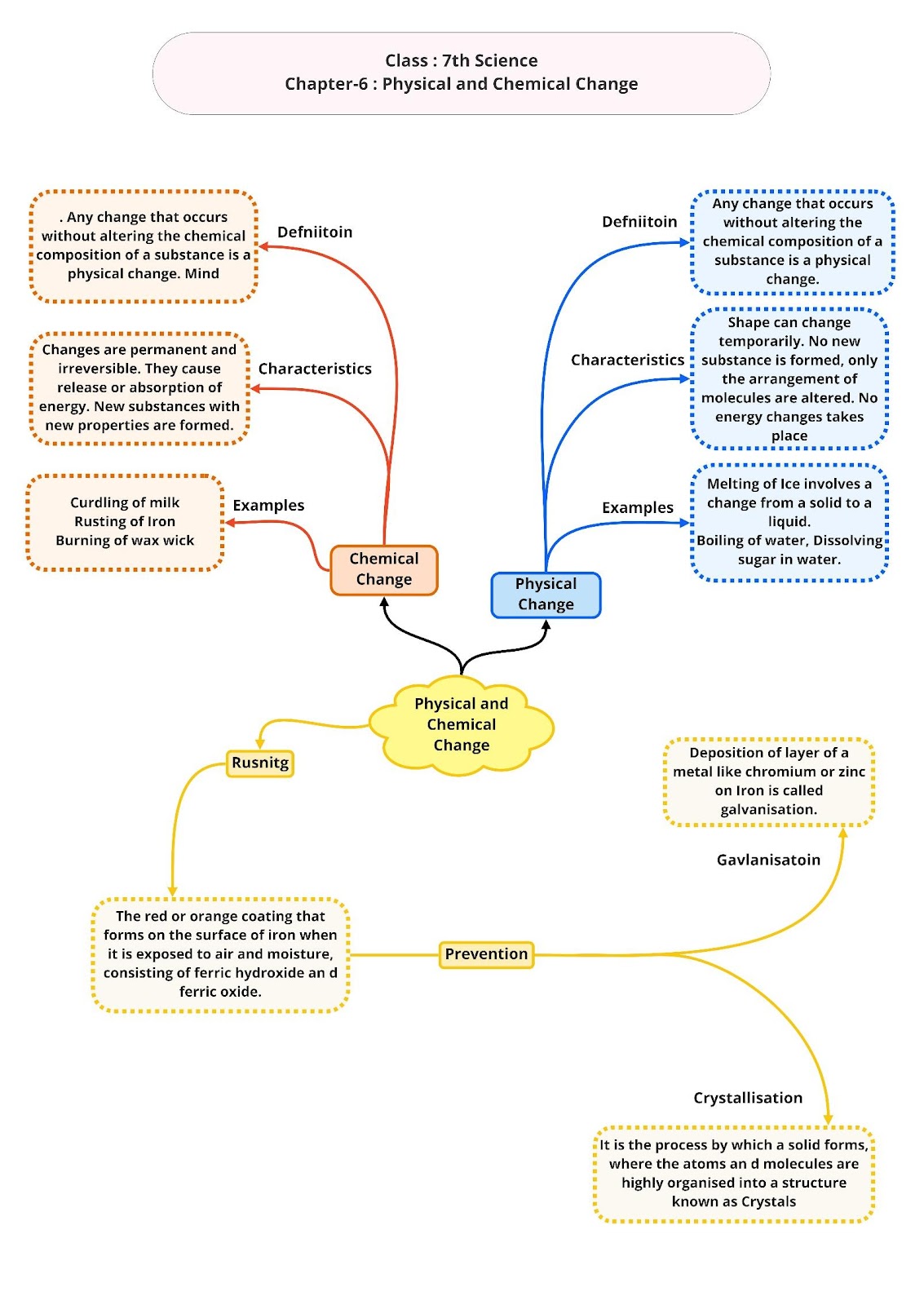
There are two types of changes, physical and chemical changes.

Physical Changes

  • In a physical change, no new substances are formed.
  • Changes in size, shape, state and colour of a substance are physical changes.
  • In a physical change, the changes are temporary and can be easily reversed to form the original substance.

Example:

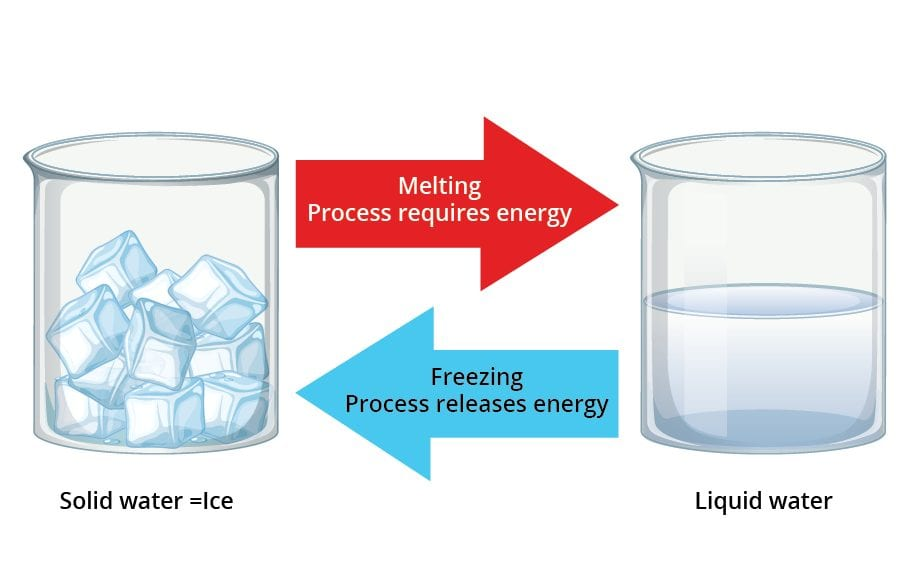
Melting of ice and freezing of water.

Examples of physical change:

  • Making of ice-cream
  • Boiling water into steam.
  • Crystallization of sugar from its solution,
  • Sublimation of camphor.
  • Bending of glass tube by heating.
  • Melting of wax.
  • Evaporation of water.
  • Glowing of an electric bulb
  • Magnetising an iron bar by means of electricity.
  • Dissolving sodium chloride in water.

Definition of Chemical Change

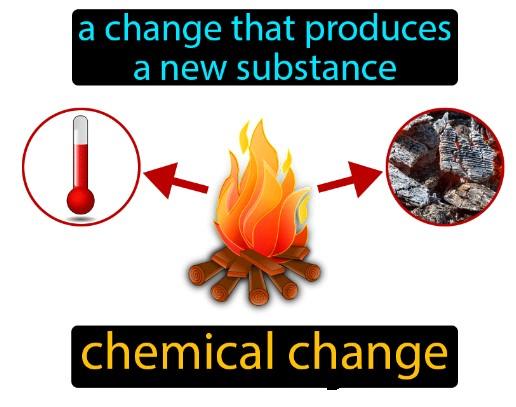
Chemical change is a permanent change which cannot be reversed and in which the chemical properties of a substance change with the change in its composition. It also alters the specific properties of a compound by bringing about a change in its molecular composition followed by a change in state,

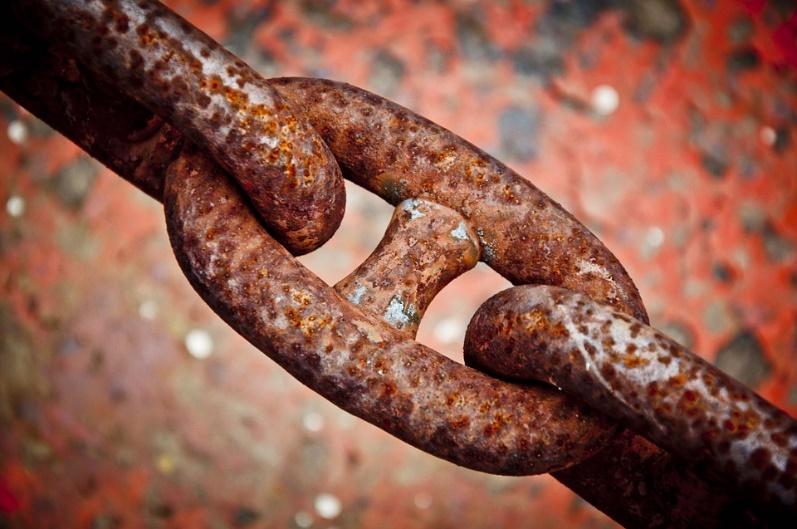
All of us are familiar is the rusting of iron.  If we leave a piece of iron in contact of air for some time, it is observe that the piece of iron acquires a film of brownish substance.  This substance is called rust and the process is called rusting. Iron gates of parks or farmlands, iron benches kept in lawns and gardens, almost every article of iron, kept in the open gets rusted. At home you must have seen shovels and spades getting rusted when exposed to the atmosphere for some time.

Chemical Changes: Characterstics, Importance, Examples - Embibe

Characteristics of Chemical Changes

  • Heat, light or any other radiation may be given off or absorbed.
  • Sound may be produced.
  • A change in smell may take place or a new smell may be given off.
  • A colour change may take place.

Examples:

  1. Burning of Magnesium Ribbon
  • Burning of a magnesium ribbon is a chemical change. When a magnesium ribbon is held over the flame of a burner, it burns with a dazzling white light to form magnesium oxide.
  • Mg + O2 → MgO
  • The magnesium oxide obtained on dissolving in water also forms a new substance, magnesium hydroxide which turns red litmus paper blue, indicating that it is basic in nature. Hence, the dissolving of magnesium oxide in water is a chemical change.

MgO + H2O → Mg(OH)2

  1. Reaction between Copper sulphate and Iron
    • The reaction between copper sulphate and iron is a chemical change. When an iron object is placed in a copper sulphate solution, a chemical reaction takes place to give two new substances, iron sulphate and copper.
  2. Reaction Between Baking soda and Vinegar

The reaction between baking soda and vinegar is a chemical change. Baking soda is sodium bicarbonate and vinegar contains acetic acid. On mixing baking soda with vinegar, a chemical change takes place to form three new substances, sodium acetate, carbon dioxide and water.

Distinguish between Physical and Chemical Change

Physical ChangeChemical Change
No new substance is formed.New substance is formed.
Change is temporary.Change is permanent.
It is easily reversible.It is usually irreversible.

Protective Shield of Ozone

  • There is a layer of ozone gas high up in the atmosphere.
  • The ozone layer protects us from the harmful radiations coming from the Sun.
  • The ozone absorbs these harmful radiations and breaks down to form oxygen.
  • This breaking down of ozone into oxygen is a chemical change.

Rusting of Iron

Iron objects, on being left in damp air (or water) for a considerable period of time get covered with a red flaky substance called rust. This is called rusting of iron.

Iron combines with oxygen in the air, in the presence of water (moisture), to form iron oxide. This hydrated iron (III) oxide is nothing but rust.

How to Prevent Steel from Rusting | Blog Posts | OneMonroe

Conditions Necessary for Rusting

  • Two reasons necessary for rusting are:
  • Presence of oxygen (in the air)
  • Presence of water or water vapour (moisture)

How to Prevent Rusting?

Methods to prevent rusting of iron: Painting or Greasing: Applying a coat of paint or grease to the surface of the iron object prevents the surface from coming in contact with the air and moisture and thus prevents rusting.

Galvanisation: The process of depositing a layer of zinc on iron is called galvanisation. A thin layer of zinc is deposited on the surface of the iron object and protects it from rusting.

Alloying: Stainless steel, an alloy is made by mixing iron with carbon and metals such as chromium, nickel and manganese, so that it does not rust.

Crystallisation:  The salt obtained from seawater by the process of evaporation is not pure and its crystals are small. Moreover, the shape of the crystals cannot be seen clearly.

However, large crystals of pure substances can be obtained from their solutions by the process of crystallisation.

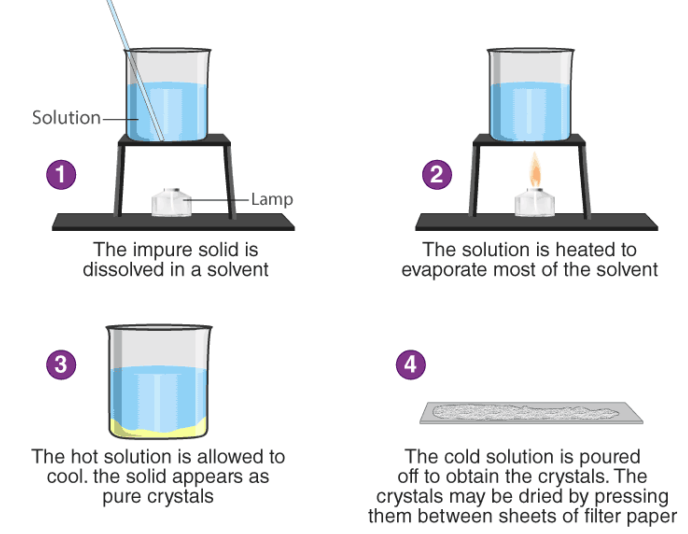
The process of cooling a hot, concentrated solution of a substance to obtain crystals is called crystallisation.

About Energy Changes

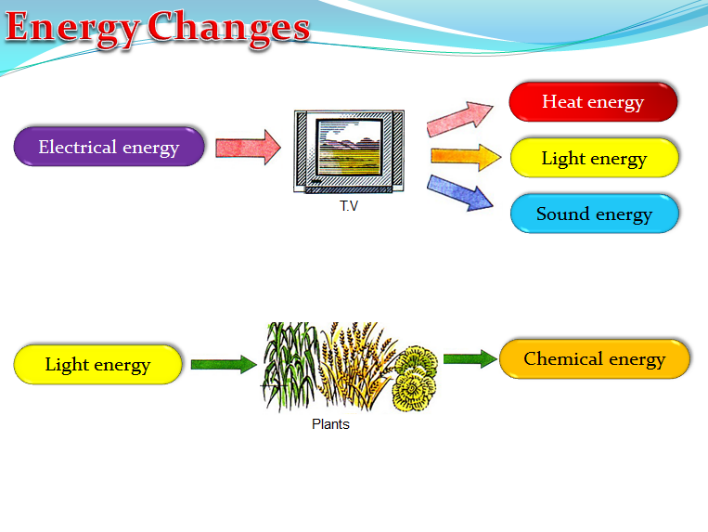
Energy Changes (Physics) | Teaching Resources

All chemical reactions take place either by the absorption or the release of energy, generally in the form of heat energy.

Exothermic reactions:

These chemical reactions which proceed with the release of heat energy, are called exothermic reactions.

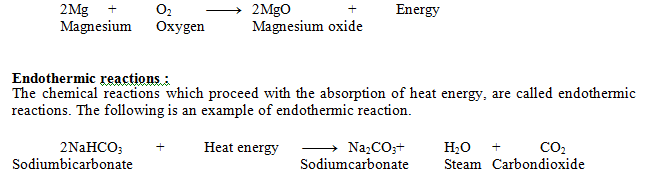
For example, When magnesium ribbon is heated from its tip in a Bunsen flame, it catches fire and burns with a dazzling white flame with release of heat and light energy. The product formed is magnesium oxide.

exothermic reaction

Process of Crystallisation

Crystallization is a process by which a pure soluble substance separates out in the form of crystals from its hot and saturated solution on cooling.

The process is employed in the separation of pure common salt from the impure common salt obtained from sea. Similarly, it is used to obtain pure nitre from impure nitre (KNO3) pure copper sulphate (CuSO4), from its impure sample and pure alum (phitkari) from the impure alum.

  1. Separation of pure copper sulphate from impure sample:

10 g of impure sample of copper sulphate, containing sand particles or dirt particles an impurity is taken in a beaker. This sample is dissolved in minimum amount of water. The impurities are filtered and the clear copper sulphate solution is collected in a china dish. The china dish containing copper sulphate solution is placed over sand bath.

When sand is heated in an iron vessel by placing it over a tripod stand, this arrangement is called sand bath.

The solution is allowed to evaporate, so that more than half of the volume of water evaporates. The solution is now saturated at higher temperature. The china dish is removed from the sand bath and covered with filter paper. The copper sulphate solution in it is allowed to cool for 24 hours. After 24 hours blue crystals of copper sulphate are separated out. The crystals are filtered and dried in the folds of filter paper.

GALVANISATION

The process in which depositing a layer of zinc on iron occurs is known as galvanisation. The iron pipes we use in our homes to carry water are galvanised to prevent rusting. You know that ships are made of iron and a part of them remains under water. On the part above water also water drops keep clinging to the ship’s outer surface. Moreover, the water of the sea contains many salts. The salt water makes the process of rust formation faster. Therefore, ships suffer a lot of damage from rusting in spite of beingpainted. So much so, that a fraction of ship’s iron has to be replaced every year.

Corrosion of Aluminium:

 Due to the formation of a dull layer of aluminium oxide when exposed to moist air, the aluminium metal loses its shine very soon after use. This aluminium oxide layer is very tough and prevents the metal underneath from further corrosion (because moist air is not able to pass through this aluminium oxide layer). This means sometimes corrosion is useful.

Corrosion of Copper:

When a copper object remains in damp air for a considerable time, then copper reacts slowly with carbon dioxide and water of air to form a green coating of basic copper carbonate [CuCO3.Cu(OH)2] on the surface of the object. Since copper metal is low in the reactivity series, the corrosion of copper metal is very, very slow.

Corrosion of Silver:

Silver is a highly unreactive metal, so it does not reacts with oxygen of air easily. But, air usually contains a little of sulphur compounds such as hydrogen sulphide gas (H2S), which reacts slowly

with silver to form a black coating of silver sulphide (Ag2S). Silver ornaments gradually turn black due to the formation of a thin silver sulphide layer on their surface and silver is said to be tarnished.

Important Questions

  • Multiple Choice Questions:

Question 1. Which of the following statement is incorrect for a chemical reaction?

(a) Heat may be given out but never absorbed

(b) Sound may be produced

(c) A colour change may take place

(d) A gas may be evolved

Question 2. Properties like size, shape, colour, state of a substance are

(a) chemical properties

(b) mental properties

(c) physical properties

(d) physico-chemical properties

Question 3. A physical change is generally

(a) reversible

(b) irreversible

(c) considerable

(d) all of these

Question 4. During a physical change, a substance undergoes a change in its

(a) physical properties

(b) chemical properties

(c) both (a) and (b)

(d) none of these

Question 5. Rusting of iron is a

(a) physical change

(b) chemical change

(c) both (a) and (b)

(d) all of these

Question 6. Rusting occurs when iron is exposed to

(a) oxygen and water

(b) soil and rain

(c) breeze and sunlight

(d) salt water and clouds

Question 7. When carbon dioxide is passed through lime water, the substance formed is

(a) calcium oxide

(b) calcium carbonate

(c) both (a) and (b)

(d) none of these

Question 8. A chemical change is also called a

(a) chemical reaction

(b) rusting

(c) both (a) and (b)

(d) all of these

Question 9. Burning of any substance is a/an

(a) physical change

(b) chemical change

(c) irreversible change

(d) both (b) and (c)

Question 10. The process of depositing a layer of zinc over iron is known as

(a) aluminisation

(b) galvanisation

(c) fertilisation

(d) ironing

Question 11. Two drops of dilute sulphuric acid were added to 1 g of copper sulphate powder and then small amount of hot water was added to dissolve it (step I). On cooling, beautiful blue-coloured crystals got separated (step II). Step I and step II are

(a) physical and chemical changes respectively.

(b) chemical and physical changes respectively.

(c) both physical change

(d) both chemical change

Question 12. Which among the following is a physical change?

(a) Burning of wood

(b) Ripening of fruit

(c) Cutting a log of wood in small pieces

(d) Cooking of food

Question 13. Which of the following is a chemical change?

(a) Germination of seeds

(b) Cutting a piece of paper

(c) Bursting of fire crackers

(d) Both (a) and (c)

Question 14. A chemical change may bring

(a) evolution of gas

(b) change in colour

(c) change in taste

(d) all of these

Question 15. Which is the formula of ozone?

(a) Fe2O3

(b) Fe3O2

(c) O2

(d) O3

  • Fill In the Blanks:
  1. Setting curd from milk is a _________ change.
  2. Broadly, changes are of two types, ________ and ________ .
  3. Physical properties of a substance consists of_________, _______, _______ and state.
  4. No new substance is formed in a _________ change.
  5. Calcium carbonate is decomposed to form _________ and _________
  6. Magnesium on burning produces ________.
  • True or False:
  1. Stainless steel is made by mixing aluminium with carbon.
  2. Burning of any substance is a chemical change.
  3. Stretching of rubber band is a physical change.
  4. We must use concentrated sulphuric acid for crystallisation of copper sulphate.
  5. Changes are broadly classified as physical and chemical changes.
  6. Galvanizing is a physical change.
  • Very Short Question:
  1. What is rust?
  2. What type of change in rust?
  3. What type of change is photosynthesis?
  4. What is a chemical change?
  5. Write the chemical formula of blue vitriol.
  6. State the two important conditions for rusting.
  7. What is freezing point of water?
  8. What is freezing of water?
  9. What is melting?
  10. Name the process by which water molecules continuously change to vapour.
  • Short Questions:
  1. Explain physical reaction along with examples.
  2. Explain chemical reaction along with examples.
  3. State the condition necessary for the occurrence of any reactant.
  4. State rate of chemical reaction.
  5. Why new products are formed in a chemical reaction?
  6. Explain the process of rusting.
  7. How can we prevent rusting?
  8. Setting of curd is regarded as a chemical change, explain why?
  • Long Questions:
  1. Which one is better technique to obtain sugar from sugar solution- crystallization or evaporation to dryness?
  2. Explain the changes occurring in burning of candle.
  3. Explain why burning of wood and cutting it into small pieces are considered as two different types of changes.
  4. Explain the formation of crystal of copper sulphate.
  5. A part from new products, many other things accompany a chemical change, what are those things?
  • Answer Key-
  • Multiple Choice Answers:
  1. (a) Heat may be given out but never absorbed
  2. (c) physical properties
  3. (a) reversible
  4. (a) physical properties
  5. (b) chemical change
  6. (a) oxygen and water
  7. (b) calcium carbonate
  8. (a) chemical reaction
  9. (d) both (b) and (c)
  10. (b) galvanisation
  11. (c) both physical change
  12. (c) Cutting a log of wood in small pieces
  13. (d) Both (a) and (c)
  14. (d) all of these
  15. (d) O3
  • Fill In the Blanks:
  1. chemical
  2. physical, chemical
  3. shape, size, colour
  4. physical
  5. calcium oxide, carbon dioxide
  6. magnesium oxide
  • True or False:
  1. False
  2. True
  3. True
  4. False
  5. True
  6. True
  • Very Short Answers:
  1. Answer: When iron oxide is hydrated, it is known as Rust (Fe2O3. xH2O)
  2. Answer: Chemical change
  3. Answer: Chemical change
  4. Answer: A change, in which a new substance with different properties is formed, is known as a chemical change.
  5. Answer: Crystals of copper sulphate pent hydrate (CuSO4.5H2O) are blue in colour. So, it is commonly known as blue vitriol.
  6. Answer: Presence of water and presence of oxygen
  7. Answer: The freezing point is 0°C at which water freezes.
  8. Answer: Freezing is the process in which water turns to ice when cold enough (below 0°C temperature).
  9. Answer: Melting is the process of turning a solid to a liquid.
  10. Answer: Evaporation.
  • Short Answer:
  1. Answer: A change in which a substance undergoes a change in its physical properties is called a physical change. For example; melting of ice.
  2. Answer: A change in which one or more new substances are formed is called a chemical reaction. For example; rusting of iron.
  3. Answer: For the occurrence of any reaction, the molecules or atoms of the reactants must collide with one another, in order to break old bonds and form new bonds.
  4. Answer: The reaction rate or rate of reaction is the speed at which reactants are converted into products.
  5. Answer: In a chemical reaction the old bonds of the reactants are broken down and fresh bonds are formed, resulting in formation of new products with different properties of that of earlier products.
  6. Answer: When an iron object is left in damp air (or water) for a considerable time, it gets covered with a red-brown flaky substance called rust. This is called rusting of iron. During the rusting of iron, iron metal combines with the oxygen (of air) in the presence of water (moisture) to form a compound iron oxide.
  7. Answer: Whenever you get iron, water and oxygen together, you get rust. So the best way to prevent it is to keep them apart; that’s what paint does, or the spray-on wax and oil coatings that the car protection companies sell. Keep your tools dry; wipe down your bike after a ride; keep the water away and it can’t rust.
  8. Answer: Setting of curd is a chemical change because we cannot get the original substance (milk) back. The new substance, i.e. curd is different from the milk in taste, smell and chemical properties.
  • Long Answer:
  1. Answer: Crystallization is better because,
  • It occurs on the entire surface.
  • We get solid in the pure crystallized form.
  • The soluble impurities get removed in this process.
  • It doesn’t require very high temperature conditions.
  1. Answer: When a candle burns, both physical and chemical changes take place. On a burning candle, the wax melts but can be solidified again on cooling. This shows that melting of wax is a physical change. Burning of candles also produces light and some gases like carbon dioxide. Hence, burning the wick of the candle is a chemical change.
  2. Answer: Burning of wood produces ash and smoke. Hence the properties of wood are changed, and new substances are formed. So, it is a chemical reaction. When a log of wood is cut into small pieces, there is no new substance formed. Each small piece bears the properties of wood. So, its a physical change. Obviously, burning and cutting of wood are two different types of changes.
  3. Answer: A cup of water taken in a beaker and a few drops of dilute Sulphuric acid are added into it. The water is hated. When it starts boiling copper sulphate powder is added slowly while stirring continuously till no more powder can be dissolved. The solution is filtered and allowed to cool down. Crystals of copper sulphate slowly form at the bottom of the beaker.
  4. Answer: Part from new products, many other things accompany a chemical change, those things are:
  • Heat, light or any other radiation may be given off or absorbed.
  • Change in smell may take place.
  • Sound may be produced.
  • Change in colour may take place.
  • A gas may be formed

Class 7 Chemistry – CHAPTER 4 : ACIDS,BASES AND SALTS

0
Diagram

Description automatically generated

Acids, Bases and Salts

Chemicals can be broadly classified into three categories, acids, bases and salts.

Acids

  • Acids are substances which taste sour.
  • They maybe corrosive or non-corrosive. 

Examples:

Hydrochloric acid and sulphuric acid are corrosive acids. Carbonic acid is a non-corrosive acid.

  • Acids turn blue litmus red.
  • There are two types of acids:

Organic acids: Naturally occurring acids obtained from plants and animals. Mineral acids: They are obtained from minerals present in the Earth’s crust.

Bases

  • Bases are substances which are bitter in taste and soapy to touch. 

Examples: Calcium hydroxide and zinc hydroxide

  • Water-soluble bases are called alkalis. 
  • Example: Sodium hydroxide
  • Bases turn red litmus blue.

Indicators

An indicator is a substance which illustrates the presence of a chemical substance by changing colour. Indicators can be natural or synthetic. For example, litmus, turmeric and China rose are naturally occurring indicators, while methyl orange and phenolphthalein are synthetically produced indicators.

Natural Indicators

Litmus Paper:

Acids turn blue litmus red and bases turn red litmus blue. The solutions which do not change the colour of either red or blue litmus are known as neutral solutions.

Turmeric:

It is yellow in an acidic medium and turns reddish brown in a basic medium.

China Rose:

It turns the colour of acidic solutions to dark pink (magenta) and that of basic solutions to green.

Substances which do not change the colour of either red or blue litmus are known as neutral substances. These substances are neither acidic nor basic.

Activity of Indicators

Mix some water with lemon juice in a plastic cup/tumbler/test tube. Then Put a drop of the above solution on a strip of the red litmus paper with the help of a dropper. Is there any change in color? Repeat the same exercise with the blue litmus paper. Note down if there is any change in color. Perform the same activity with the following substances: Tap water, detergent solution, aerated drink, soap solution, shampoo, common salt solution, sugar solution, vinegar, baking soda solution, milk of magnesia, washing soda solution, lime water. If possible make solutions in distilled water. Record your observations and make a Table of your result, than check are there any substances on which litmus had no effect? Name those substances. The solutions which do not change the color of either red or blue litmus are known as neutral solutions. These substances are neither acidic nor basic.

Synthetic Indicators

Phenolphthalein:

It remains colourless in an acidic medium and turns pink in a basic medium.

Acid Rain

  • Rain which contains a higher level of acid than normal is called acid rain.
  • Rain becomes acidic because carbon dioxide, sulphur dioxide and nitrogen dioxide (which are released into the air as pollutants) dissolve in the rain drops to form carbonic acid, sulphuric acid and nitric acid respectively.

Salts

Salts are produced by the neutralisation of acids with bases. During this process, water is also produced along with the evolution of heat.

Example: Hydrochloric acid on reaction with sodium hydroxide gives sodium chloride salt along with water.

HCl + NaOH → NaCl + H2O

USES OF SALTS:

  • As a table salt.
  • In the manufacture of butter and cheese.
  • In leather industry.
  • In the manufacturing of washing soda and baking soda.
  • For the preparation of sodium hydroxide by electrolysis of brine.
  • In cold countries rock salt is spread on ice to melt it.

USES OF SALTS IN DAILY LIFE

  • Common salt: It is used in large amount as table salt. It is used for preservation of food in pickling. It is used to preserve raw hides. It is used in the manufacture of chemicals such as chlorine and caustic soda (NaOH).
  • Baking soda: It is used for making baking powder. It is used for preparing antacid tablets, for controlling acidity of stomach.
  • Washing soda: It is used by washermen to wash clothes. It is used in manufacture of glass and caustic soda. It is used in fire extinguishers. It is used in the manufacture of detergents.
  • Chile saltpetre: It is used in the manufacture of nitric acid, gun powder and fire works.
  • Nitre: It is used as a fertiliser. It is also used in the manufacture of gun powder, fire works and nitric acid.
  • Smelling salt: It provides relief from common cold.
  • Epsom salt: It is used as a laxative by patients suffering from constipation.
  • Green vitriol: It is used in making blue black inks and in curing leather.
  • Blue vitriol: It is used as fungicide in agriculture. It is used in dyeing and printing industry. It is used in electroplating copper metal.
  • Plaster of Paris: It is used for making statues. It is used for setting broken bones.
  • Potash alum: It helps in rapid settling of suspended impurities in water. It is used for the purification of water.

Neutralisation

Diagram

Description automatically generated

The reaction in which an acid reacts with a base to form a salt and water is called a neutralisation reaction.

Applications of neutralisation

People particularly of old age suffer from acidity problems in the stomach which is caused mainly due to release of excessive gastric juices containing HCI. The acidity is neutralised by antacid tablets which contain sodium hydrogen carbonate (baking soda), magnesium hydroxide etc.

The stings of bees and ants contain formic acid. Its corrosive and poisonous effect can be neutralised by rubbing soap which contains NaOH (an alkali).

The stings of wasps contain an alkali and its poisonous effect can be neutralised by an acid like acetic acid (present in vinegar).

 Farmers generally neutralize the effect of acidity in the soil caused by acid rain by adding slaked lime (Calcium hydroxide) to the soil.

Neutralisation in Everyday Life

Indigestion

Our stomach contains hydrochloric acid. However, presence of a large quantity of acid in the stomach causes indigestion. To relieve this, we take an antacid such as milk of magnesia, which contains magnesium hydroxide base to neutralise the effect of excessive acid.

Ant Bite

The sting of an ant contains formic acid. When an ant bites, the effect of the sting can be neutralised by rubbing a base like moist baking soda (sodium hydrogen carbonate) or calamine solution, which contains zinc carbonate.

Soil Treatment

When soil is too acidic, it is treated with bases like quick lime (calcium oxide) or slaked lime (calcium hydroxide). If the soil is basic, organic matter is added to it. Organic matter releases acids which neutralise the basic nature of the soil.

Factory Wastes

  • The wastes of many factories contain acids.
  • If the waste is allowed to enter the water bodies, the acid will kill the fish and other aquatic organisms.
  • So, factory wastes are neutralised with basic substances before releasing them into water bodies.
entrancei

Important Questions

  • Multiple Choice Questions:

Question 1. Acids taste

(a) sour

(b) sweet

(c) bitter

(d) salty

Question 2. Bases taste

(a) sweet

(b) sour

(c) bitter

(d) salty

Question 3. Colours of phenolphthalein indicator in acidic and basic medium, respectively are

(a) pink and colourless

(b) colourless and pink

(c) blue and red

(d) red and blue

Question 4. The nature of bases is

(a) acidic

(b) basic

(c) neutral

(d) all of these

Question 5. Which of the following feel soapy on touching?

(a) Acid

(b) Base

(c) Salt

(d) None of these

Question 6. Which of the following is a natural indicator?

(a) China rose petal

(b) Turmeric

(c) Litmus

(d) All of these

Question 7. The most commonly used natural indicator is

(a) turmeric

(b) beetroot

(c) China rose petal

(d) litmus

Question 8. The correct way of making a solution of acid in water is to

(a) add water to acid

(b) add acid to water

(c) mix acid and water simultaneously

(d) add water to acid in a shallow container

Question 9. Which of the following is basic in nature?

(a) Lime water

(b) Baking soda

(c) Both (a) and (b)

(d) Lemon juice

Question 10. Litmus is extracted from

(a) curd

(b) grapes

(c) lichens

(d) cabbage

Question 11. Calcium hydroxide is found in

(a) window cleaner

(b) lime water

(c) soap

(d) lime juice

Question 12. On adding phenolphthalein indicator to a colourless solution, no change is observed. The nature of the solution may be

(a) acidic or basic

(b) basic

(c) acidic or neutral

(d) basic or neutral

Question 13. Neutralisation reaction is a

(a) physical and reversible change

(b) physical and irreversible change

(c) chemical and reversible change

(d) chemical and irreversible change

Question 14. When a drop of vinegar solution is put on the litmus paper, it turns

(a) red

(b) blue

(c) green

(d) yellow

Question 15. Tap water is

(a) acidic

(b) basic

(c) neutral

(d) depends on source

  • Fill In the Blanks:
  1. ……………. can cause damage to historical monuments, marble, statues, plants and animals.
  2. ……………. helps to relieve indigestion.
  3. Organic matters release …………….
  4. Salt may be ……………, …………….. or ……………… in nature.
  5. Plants do not grow well when the soil is either too …………….. or too ……………….
  6. When an ant bites, it injects ………………. acid.
  • True or False:
  1. Curd is a base.
  2. Lime juice tastes sour.
  3. Turmeric is a man-made indicator.
  4. China rose petal is a natural indicator.
  5. Litmus is called a natural dye.
  6. Lactic acid is found in lemons.
  • Very Short Question:
  1. Name the most commonly used indicator.
  2. Form where does we extract litmus to be used as indicator.
  3. The reaction between an acid and a base is known as neutralisation.
  4. Name the acid present in our stomach.
  5. What role does HCL present in our stomach plays?
  6. Name the acid present in sting of an ant.
  7. State the nature of soap solution.
  8. State the nature of lemon juice.
  9. Why lemon juice and orange juice tastes sour?
  • Short Questions:
  1. Give examples of some acids and bases
  2. Define indicators along with examples.
  3. What is the use of litmus test?
  4. Explain the nature of distilled water.
  5. What do you mean by neutral substance, explain with examples?
  6. Rena is trying to wash turmeric stain on her cloth with soap, she noticed the stain colour changed to red, explain why?
  7. Red litmus paper is dipped in a solution; it remains red, what is the nature of the solution?
  8. Explain the universal indicator.
  • Long Questions:
  1. State few properties of acids.
  2. State few properties of bases.
  3. What are the differences between acids and bases?
  4. Write a short note about litmus paper.
  5. Arnav is provided with three kinds of liquid of them one is sodium hydroxide; another is hydrochloric acid and third is a sugar solution. How will he identify them when he have only turmeric indicator.
  6. Describe the process of neutralisation with the help of an example.
  • Answer Key-
  • Multiple Choice Answers:
  1. (a) sour
  2. (c) bitter
  3. (b) colourless and pink
  4. (b) basic
  5. (b) Base
  6. (d) All of these
  7. (d) litmus
  8. (b) add acid to water
  9. (c) Both (a) and (b)
  10. (c) lichens
  11. (b) lime water
  12. (c) acidic or neutral
  13. (d) chemical and irreversible change
  14. (a) red
  15. (d) depends on source
  • Fill In the Blanks:
  1. Acid rain
  2. Antacid
  3. acids
  4. acidic, basic, neutral
  5. acidic, basic
  6. formic
  • True or False:
  1. False
  2. True
  3. False
  4. True
  5. True
  6. False
  • Very Short Answers:
  1. Answer: Litmus paper
  2. Answer: Lichens
  3. Answer: The reaction between an acid and a base is known as neutralization.
  4. Answer: HCL
  5. Answer: It helps in digestion of food
  6. Answer: Formic acid
  7. Answer: Basic
  8. Answer: Basic
  9. Answer: Acidic
  10. Answer: Because they contain acids.
  • Short Answer:
  1. Answer: Curd, lemon juice, vinegar, orange juice etc. are acids and baking soda, lime water etc. are bases.
  2. Answer: Indicators are special type of substance that are used to taste whether a substance is acidic or basic in nature. It change the colour of acidic or basis substances when added into it. Turmeric, litmus, etc. are some natural indicators.
  3. Answer: To test the nature of a substance for an Acid or a base or a neutral, litmus test is performed in which the Acid turns blue litmus red, Bases turn red litmus blue and has no effect on neutral substance.
  4. Answer: The Distilled water is neutral. It is neither sour (Acidic) nor bitter (Basic), to very its chemical nature, we can perform litmus test. It neither turns blue litmus red nor red litmus blue hence we can say, distilled water is a neutral substance.
  5. Answer: The substances which are neither acidic, nor basic are called neutral substance. These substances neither turn blue litmus red nor red litmus blue, for example distilled water, sugar solution etc.
  6. Answer: Turmeric is a natural indicator which when reacts with bases turns it into red colour; here soap solution is basic so it turns red.
  7. Answer: Red litmus paper when dipped in a solution, if it remains red then the nature of the solution is neutral.
  8. Answer: Universal indicator gives a range of colour that can be used to determine the level of acidity or basic of a solution, this level is called the pH value.
  • Long Answer:
  1. Answer:

i. Acids are sour in taste

ii. The chemical nature of such substances is acidic

iii. Acid turns blue litmus red

iv. It gives hydrogen ion when dissolves in water

v. Do not give any colour with phenolphthalein indicator

vi. Do not absorb carbon dioxide gas

vii. Acids do not react with ammonium salt

viii. Acids are generally found in Vinegar, Curd, Spinach, lemons, Citrus fruits, Amla, Tamarind, grapes, unripe mangoes, Citrus fruits such as oranges, etc.

  1. Answer: 

i. Bases are bitter in taste and soapy to touch

ii. Base turns red litmus blue

iii. The nature of such substances is said to be basic

iv. It gives hydroxide ions when dissolves in water

v. It give pink colour with phenolphthalein indicator

vi. Some bases like NaOH absorbs carbon dioxide gas

vii. Bases are generally found in lime water, soap, window cleaner, Milk of Magnesia

viii. Reacts with ammonium salt to give ammonia gas

  1. Answer:
AcidBases
Acids are sour in taste.Bases are bitter in taste and soapy to touch.
The chemical nature of such substances is acidic.The nature of such substances is said to be basic.
Acid turns blue litmus red.Bases turn red litmus blue
Acids are generally found in Vinegar, Curd, Spinach, Amla, Citrus fruits, Tamarind, grapes, unripe mangoes, Citrus fruits such as oranges, lemons, etc.Bases are generally found in lime water, soap, window cleaner, Milk of Magnesia  
Acids do not react with ammonium saltReacts with ammonium salt to give ammonia gas
Do not absorb carbon dioxide gasSome bases like NaOH absorbs carbon dioxide gas
  1. Answer: Litmus is extracted from lichens. It is most commonly used as an indicator to determine the chemical nature of substance. It has mauve or purple colour in distilled water. When it is added to an acidic solution, it turns red and when added to a basic solution, it turns blue. It is available in the form of a solution, or in the form of strips of paper, known as litmus paper. Generally, it is available as red and blue litmus paper.
  2. Answer: Turmeric is yellow in colour, when it is exposed to neutral (Sugar Solution) or acidic substances (Hydrochloric Acid) it will retain its yellow colouration. However, if turmeric is exposed to more alkaline substances (sodium hydroxide) it becomes a dark pink/red. So first we detect sodium hydroxide -a basic substance by a colour change from yellow to dark or red. Then will test for an acid or neutral substance with indication of no colour change. Now out of these two, we will mix one with already tested solution for basic substance -sodium hydroxide with dark or red colour, if on mixing the colour reverses back to yellow, the liquid is an acid and the remaining third liquid is neutral.
  3. Answer: Neutralisation is a process in which an acid solution when mixed with base solution, react with each other to produce a salt and water along with generation of heat. Salt so produced, may be acidic, basic or neutral in nature. In this process the acidic nature of the acid and the basic nature of the base are destroyed.

Acid + base salt + water. (heat is evolved)

For example: HCl + NaOH NaCl + H2O.

Class 7 Biology – CHAPTER 13 : WASTEWATER STORY

0
A picture containing text

Description automatically generated

Wastewater Story

Water – Our Lifeline

  • Water is used for a variety of purposes in our everyday life. When used, this water becomes adulterated and is called waste water.
  • Polluted water leads to people suffering from water-related diseases.
  • Water gets polluted due to several factors such as increase in population, industrial development and mismanagement.
  • Waste water is subjected to a cleaning process often referred to as sewage treatment.

Sewage

  • Sewage is liquid waste; most of it is water which has dissolved and suspended impurities.
  • Water which washes off the roads and roofs carries harmful substances and impurities called contaminants.
Types of ImpuritiesExamples
Organic impuritiesHuman faeces, animal wastes, oil, urea, pesticides,herbicides, fruit and vegetable wastes
Inorganic impuritiesNitrates, phosphates, metals
NutrientsPhosphorus and nitrogen
BacteriaThose which cause diseases such as cholera, dysentery andtyphoid
  • A sewer is an underground passage for carrying off drainage water and waste matter.
  • The provision of drainage at a place by laying sewers under the ground is called sewerage. It takes the waste water to the point of disposal, i.e. a treatment plant.
  • A manhole is a covered vertical hole in the ground, pavement or road. Manholes are located every 50-60 m in a sewerage system, at the junction of two or more sewers and at points where there is a change in direction of the sewer line.

Sources of wastewater:

  • Sewage water contains detergents, toxic chemicals food wastes, paper, human faeces, plastics, metal objects, microorganisms, blood, human/animal tissues, etc. These kinds of materials present in wastewater are called contaminants.
  • In agricultural practices, pesticides and fertilizers are used, which gets mixed with fresh water during rains or flood, thereby contaminated the river and ponds.
  • The wastewater from the industries may contain lubricant oil, paint, dye, chemicals and metals. These are also called Industrial effluents.
  • Construction of buildings, mining leads to the generation of wastewater containing cement, paints, metals and chemicals.
  • Abattoirs (slaughterhouses), animal farms and veterinary hospitals too contaminate water and contribute to sewage.
  • One of the major sources of wastewater is domestic sewage from homes.
Waste Not, Want Not: Harnessing the power of microbes for wastewater  recycling - Science in the News

Treatment of sewage in cities and towns:

If sewage water is allowed to directly flow into the water bodies, it would pollute water. Such polluted water is not suitable for human consumption or for growing crops. It will also harm all kinds of plants and animals living in this water.

Thus, Wastewater must be cleaned before it is released into the water bodies. This is done in Sewage treatment plant or wastewater treatment plant. Treated wastewater can be used for various purposes.

Effects of improper sewage management:

  • Many places in our country have open drains in the streets. These serve as breeding places for mosquitoes, which cause diseases like malaria and Chikungunya.
  • Untreated wastewater or sewage contains nutrients which are beneficial for the growth of algae. If this untreated wastewater is let off into the water bodies then it leads to an increase in algal growth called algal blooms. This causes depletion of oxygen in the water bodies making them unable to support aquatic life such a condition is called eutrophication.
  • The overflowing drains can contaminate wells and streams too.
  • The contamination can cause water- borne diseases such as Cholera, typhoid, Hepatitis and dysentery.

Methods of sludge management:

  • Sludge can be incinerated in sludge incinerators to convert it into ashes, which can be used in construction purposes or to supplement the nutrients in the soil.
  • Dewatering of the sludge can be done by sludge- drying machines. The leftover solid waste is used in the manufacture of fertilizers.
  • The gas produced by aerobic bacteria acting on the sludge in the aeration tank is used as biogas, which is a source of energy for cooking and electricity.

Wastewater Treatment Plant (WWTP)

  • Physical, chemical, biological processes are employed to remove physical, chemical and biological matter from the water.
  • The dried sludge is now used as manure, thereby returning the organic matter and nutrients to the soil.
  • The treated water has a very low level of organic and suspended matter and is hence discharged into seas, rivers or into the ground.
  • Sometimes, chemicals such as chlorine and ozone are used to disinfect water before releasing it into the distribution system.

Primary treatment process:

In this process, the sewage flows through the grit chamber very slowly so that the sand, pebbles and soil settle down at the bottom.

It is a mechanical process; the sewage flows into the settling tank of sedimentation tank where the solid wastes like faeces are allowed to settle down.

The waste material that settle down at the bottom is called the sludge and the floatable material is called the scum.

The sludge at the bottom is removed with a scrapper every few days and treated further. The water then is left out is called the clarified water.

Travelling Bridges for Grease and Grit Removal PVD - SAVI
What Is The Purpose Of A Clarifier In Water Treatment

Secondary treatment process:

It is a biological process. This is done by transferring the clarified water into an aeration tank where air blowers bubble air, which helps the aerobic bacteria to grow and feed on the organic contaminants.

Microorganisms decompose most of the organic matter still present in the sewage.

The leftover liquid waste is allowed to remain in time so that microscopic organisms settle down at the bottom. This is called the activated sludge. This activated sludge is then left in sand dry beds.

LANDY-7 Surface Aerator

Tertiary treatment process:

The leftover liquid waste is transferred to another large tank where the decomposed waste settles at the bottom. These tanks too are called sedimentation tanks.

At this stage, most of the solid substance from the water are removed.

The water is then shifted to a tank where it is treated with chlorine to kill all the microorganisms present in the wastewater and to remove the Phosphorus compounds and nitrogen compounds. Addition of chlorine to wastewater to kill germs is called chlorination. It is a chemical process.

The dirty water that was brought to the sewage treatment plant is now clean and can be used to cultivate crops, maintain large gardens, and manufacture goods in industries.

The water can also be discharged into oceans, rivers and lakes or used to recharge groundwater.

Alternative Arrangement for Sewage Disposal

Text

Description automatically generated with medium confidence

Sanitation and Disease

  • A large number of diseases are caused by poor sanitation and contaminated drinking water.
  • Water contaminated with untreated human excreta causes diseases such as cholera, typhoid and dysentery.
Graphical user interface, text, application

Description automatically generated with medium confidence

Good Practices of Waste Disposal

Graphical user interface, application

Description automatically generated

Control of sewage at homes:

  • Do not drain off cooking oil, paints and automobile oils. it leads to blockage.
  • Chemical like paints, insecticides, medicines may kill decomposer microbes that help purify water, so, these must never be thrown down the drain.
  • Do not drain the tea leaves, vegetable and animal food waste and egg shell. Solid waste clogs drains and make surrounding dirty.

Important Questions

  • Multiple Choice Questions:

Question 1. Water that is not fit for use is called

(a) clean water

(b) wastewater

(c) both (a) and (b)

(d) none of these

Question 2. Which of the following is not a source of wastewater?

(a) Sewers

(b) Homes

(c) Industries

(d) Hospitals

Question 3. The period of International Decade for action on ‘Water for Life’ is

(a) 2000 – 2010

(b) 2005 – 2015

(c) 2010 – 2020

(d) 2003 – 2013

Question 4. The process of removing pollutants in water before it enter a water body is called

(a) cleaning of water

(b) refining

(c) filtering of water

(d) none of these

Question 5. Which of the following is a part of inorganic impurities of the sewage?

(a) Pesticides

(b) Urea

(c) Phosphates

(d) Vegetable waste

Question 6. Wastewater released by homes, factories, industries and other users is known as

(a) polluted water

(b) sewage

(c) both (a) and (b)

(d) none of these

Question 7. Suspended impurities contained by sewage are called

(a) contaminants

(b) sludge

(c) grey water

(d) none of these

Question 8. A network of big and small pipes under the ground for wastewater management is known as

(a) sewage

(b) sewerage

(c) manhole

(d) channel

Question 9. Solid waste extracted during sewage treatment is known as

(a) sewage

(b) sludge

(c) biogas

(d) contaminants

Question 10. Which portion of WWTP retains large objects like rags, sticks, etc.?

(a) Bar screen

(b) Sludge

(c) Sedimentation tank

(d) Sewerage

  • Fill In the Blanks:
  1. Wastewater should be cleaned up by removing ………………
  2. Some factors responsible for the increasing scarcity of freshwater are ……………… , ……………… and ………………
  3. The General Assembly of the ……………… proclaimed the period 2005-2015 as the International Decade for action on ‘Water for Life’.
  4. Sewage is a ……………… waste.
  5. Sewage contains some organic impurities like oil, ………………, ……………… and ………………
  6. Air is pumped into the clarified water to help ……………… bacteria to grow.
  • True or False:
  1. Wastewater is suitable for drinking purpose.
  2. Wastewater can be revised.
  3. Clean water is available for every person.
  4. Pollution is one of the factors of the increasing scarcity of freshwater.
  5. World Water Day is celebrated on 22 March every year.
  6. Cleaning of water is also known as sewage treatment.
  • Very Short Question:
  1. What is sewage?
  2. What per cent of earth’s water is fresh?
  3. What constitutes waste water?
  4. State one of the reasons for increasing scarcity of fresh water.
  5. Which day is celebrated as World Water Day?
  6. What is cleaning of water?
  7. What are the adverse effects of drinking contaminated water?
  8. What is sewage treatment?
  9. What is the purpose of filtering waste water?
  10. What is a clarifier?
  • Short Questions:
  1. What do you mean by waste water?
  2. Enlist the various causes of water pollution.
  3. What is sludge and how is it treated?
  4. What is sewage and sewage treatment?
  5. Explain why is it harmful to discharge untreated sewage into Water bodies?
  6. Untreated human excreta are a health hazard. Justify the statement.
  7. What do you understand by the term “sewerage”?
  8. List few ways to control sewage generation.
  • Long Questions:
  1. What is sewage? Explain why it is harmful to discharge untreated sewage into rivers or seas?
  2. Oils and fats should not release in the drain. Explain why?
  3. Explain the various steps involved in water treatment plant.
  • Answer Key-
  • Multiple Choice Answers:
  1. (b) wastewater
  2. (a) Sewers
  3. (b) 2005 – 2015
  4. (a) cleaning of water
  5. (c) Phosphates
  6. (b) sewage
  7. (a) contaminants
  8. (b) sewerage
  9. (b) sludge
  10. (a) Bar screen
  • Fill In the Blanks:
  1. pollutants
  2. population growth; pollution; mismanagement
  3. United Nation
  4. liquid
  5. urea; human faeces; animal waste
  6. aerobic
  • True or False:
  1. False
  2. True
  3. False
  4. True
  5. True
  6. True
  • Very Short Answers:
  1. Answer: Waste water released by houses is called sewage.
  2. Answer: 3 per cent.
  3. Answer: It can include human waste, food scraps and chemicals.
  4. Answer: Population growth.
  5. Answer: 22 March
  6. Answer: Cleaning of water is the process of removing pollutants before it enters a water body or is reused.
  7. Answer: Drinking contaminated water results in diseases such as cholera, typhoid and diarrhoea. Polluted water can also prove fatal.
  8. Answer: Pollutants in waste water can be removed in several stages, and this process is called “sewage treatment.
  9. Answer: To remove large impurities.
  10. Answer: A clarifier is a tank with its central part inclined downwards so as to allow faeces to settle down. The inclined waste is then removed using a scraper.
  • Short Answers:
  1. Answer: The dirty water which contains various impurities like dust, polythene bags, Vegetable peels, kitchen waste, oil & water that goes down the drains from sinks, showers, toilets, laundries etc. is waste water. Waste water cannot be used further.
  2. Answer: Water is polluted by various factors like:
  • Bathing of cattle in river bodies.
  • Washing of clothes & utensils by people in rivers.
  • Discharging wastes from factories, industries in nearby river bodies & ponds.
  1. Answer: Solid Faecal matter which is generated after the water treatment plant is known as sludge. The sludge is transferred to a separate tank where it is decomposed by anaerobic bacteria. The biogas produced can be used as a fuel & the dried sludge is used as manure for replenishing the nutrients of the soil.
  2. Answer: The waste water that is being generated at homes, industries, agricultural activities, human activities etc. is called sewage. And sewage treatment is a process of removing pollutants before it enters a water body or is refused.
  3. Answer: It is harmful to discharge the untreated sewage into the water bodies as it contains harmful substances. Most of it is water which has dissolved & suspended impurities which may pollute the water bodies & also harm the aquatic plants & animals.
  4. Answer: An untreated human excreta is a health hazard as it may cause water pollution. It pollutes both Surface water as well as ground water. Since ground water is a source of water for wells, tube wells etc. therefore it leads to waterborne diseases like cholera, jaundice, typhoid etc.
  5. Answer: Sewerage is like a transport system that carries sewage from the point where it is being generated to the point of disposal i.e. treatment plant.
  6. Answer:  Following are the ways to control sewage generation are:
  • Leakage in sewer lines should be checked & repaired regularly.
  • Do not defecate, spit or scatter litter in public places.
  • Used tea leaves, solid food remains, toys, towels etc. should not be thrown in water pipe because these materials may choke the pipe.
  • Long Answers:
  1. Answer: Sewage is waste water released by homes, industries, hospitals, offices and other users. It also includes rainwater that has run down the street during a storm or heavy rain. The water that washes off roads and rooftops carries harmful substances with it. Sewage is a liquid waste which has dissolved and suspended impurities as contaminants or pollutants. If this untreated sewage is discharged into rivers or seas, It may cause water pollution and soil pollution in which both the surface water and groundwater get polluted. Groundwater is a source of water for wells, tube wells, springs and many rivers. Therefore if it gets polluted, it becomes the most common route for water borne diseases. They include cholera, typhoid, polio, meningitis, hepatitis and dysentery.
  2. Answer: Cooking oil and fats should not be thrown down the drain. They can harden and block the pipes. In an open drain the fats clog the soil pores reducing its effectiveness in filtering water. Also they may kill microbes that help purify water. Therefor oil and fats should be always discharged after taking due care in the dustbin or if possible in some suitable dumping place.
  3. Answer: There are various steps involved in the water treatment plant which involves physical, chemical & biological processes:
  • Waste water is passed through bar screens to remove big objects like cans, sticks, rags etc.
  • The liquid material is then passed through sedimentation tank where solid waste like faecal matter, sand, grit settles down.
  • This solid matter is then removed with the help of a scrapper. This is the sludge.
  • A skimmer removes the floatable solids like oil, grease etc.
  • The clear water so obtained is called clarified water.
  • Air is pumped into clarified water to help aerobic bacteria to grow. The bacteria then consume the unwanted matter still present in clarified water.
  • The suspended microbes settle at the bottom & the water is removed from the top.

Class 7 Biology – CHAPTER 12 : REPRODUCTION IN PLANTS

0
A picture containing text

Description automatically generated

Reproduction in Plants

  • The production of new individuals from parents is known as reproduction.
  • Plants reproduce sexually as well as asexually.

Asexual Reproduction

  • In asexual reproduction, new plants are obtained without the production of seeds or spores.

Vegetative Propagation

  • In this type of reproduction, new plants are produced from roots, stems, leaves and buds.
  • Since these parts are known as vegetative parts of a plant, this type of reproduction is termed as vegetative propagation.

(a) Vegetative Propagation by Stems

The stems (or branches) of plants normally bear buds in the axils which can be used in vegetative propagation to produce new plants. New plants can be obtained from the stem (or branch) of an existing plant by the method of cuttings. A small part of stem (or branch) of a plant which is removed by making a cut with a sharp knife, is called a cutting. While making a cutting, care should be taken to see that there are some buds on it.

The lower end of stem cutting is buried in the moist soil. The upper part of cutting having bud on it is kept above the ground. The cutting planted in soil is watered everyday. After a few days, the cutting develops roots. The bud grows and produces a shoot (branch with leaves)
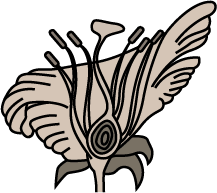
The plants like rose, champa, grapes, sugarcane, bananas, Bougainvillea can be grown by cuttings method.

Money plant can also be grown by the cuttings method of vegetative propagation. We can grow money plant even in a jar of water by taking a stem cutting (with a node) from an existing money plant.

Advantage of the cuttings method is that by using this method we can produce many new plants from just one plant quickly, without waiting for flowers and seeds.

Some of the plants have modified stems which are short and thick, and grow below the ground (or underground). The underground stems have buds from which new plants can be grown. Such underground stems are called stem tubers.

A tuber is the thickened underground stem (or root) of a plant which is swollen with stored food. The tuber has a number of buds. Each bud of the tuber can grow into a new plant when the old tuber (or its cutting) is planted in the soil in the next growing season. Tubers can be used as organs of vegetative propagation to produce new plants.

There are two types of tubers : stem tubers and root tubers.

  1. Potato is a stem tuber 
Potato is underground stem because it A Possesses axillary class 11 biology  CBSE

A potato tuber has many buds (called eyes) on its body which appear like scars. When a potato tuber is planted in the soil, then all the buds of potato tuber start growing to produce new potato plants. Thus, one old potato tuber can produce many new potato plants. We can even plant cut pieces of potato in the soil to obtain new potato plants but each such cut piece should have a bud (or eye) on it.

Each potato plant produces more than one tuber, and each tuber has more than one bud (which produce more than one new plant). The vegetative propagation method of producing potato plants by using potato tuber cuttings is much faster than the production of potato plants from seeds.

Ginger and turmeric are also modified, underground stems swollen with food. The underground stems of ginger and turmeric plants have buds on their body.
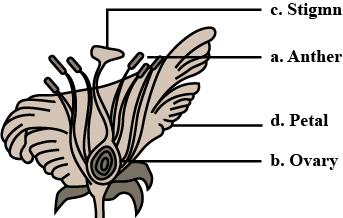
  1. Vegetative Propagation by Roots

There are some plants which have modified, thickened roots which bear buds.

For example: sweet potato plant has modified roots thickened with stored food which are called root tubers. The root tubers of sweet potato have buds (eyes) on them which can grow to produce new sweet potato plants. Dahlia also has root tubers. The root tubers of Dahlia have buds in them which can grow to produce new Dahlia plants.

  1. Vegetative Propagation by Leaves
What is vegetative propagation in asexual reproduction?

The leaves of some plants develop buds on them. Such leaves having buds can be used as structures of vegetative reproduction in plants.

A plant which can reproduce from its leaves is Bryophyllum (Bryophyllun is also called sprout leaf plant). The leaves of Bryophyllum plant develop some buds in its margins (or edges) When a mature leaf of the Bryophyllum plant falls on the ground, then each bud can grow into a new plant.

Another plant called Begonia also reproduces by vegetative propagation through its leaves. The Begonia plant which can grow into new plants when the leaves fall on the ground.

The plants such as cacti produce new plants when their parts get detached from the main body and fall on the ground (singular of cacti is cactus). Each detached part of a cactus plant which falls on ground can grow into a new plant.

Advantages of Vegetative Propagation of Plants

  1. The new plants produced by vegetative Propagation take much less time to grow and bear flowers and fruits as compared to the plants grown from seeds.

2) The new plant produced by Vegetative Propagation are exactly like the parent plant. So all the desirable features of the parent plant will be replicated in the new plant.

Budding

  • In budding, a small part of the parent plant body grows out as a bulb-like projection called the bud, which detaches and becomes a new plant. Example: Yeast.

Fragmentation

  • Fragmentation involves breaking up of the plant body into two or more pieces on maturing, each of which subsequently grows to form a new plant. Example: Spirogyra.

Spore Formation

Parent plants produce hundreds of tiny spores in spore cases. When these spore cases burst, spores are spread into the air. Under favourable conditions, the spores germinate and develop into new individuals. Examples: Rhizopus (bread mould), mosses and ferns.

Sexual Reproduction

  • Flowers are reproductive parts of a plant. The stamen is the male reproductive part, while the pistil is the female reproductive part.
  • Flowers with either only stamen or only pistil are known as unisexual flowers. Examples: Corn, papaya and cucumber.
  • Flowers which contain both stamen and pistil are called bisexual flowers. Examples: Mustard, rose and Petunia.
  • The stamen consists of anther and filament. The anther contains pollen grains which produce male gametes.
  • The pistil consists of stigma, style and ovary. The ovary contains one or more ovules. The female gamete or egg is formed in an ovule.
  • Male and female gametes fuse to form a zygote.

Pollination

  • Pollination is the transfer of pollen grains from the anther to the stigma of a flower.
  • When pollen grains are transferred from the anther to the stigma of the same flower, it is termed as self-pollination.
Bees and Pollination - Ypsilanti District Library
  • When the pollen grains of a flower land on the stigma of another flower of the same plant, or that of a different plant of the same kind, it is known as cross-pollination.
  • The pollen grains are light and can be easily carried by wind or water.
  • Insects help in the transfer of pollen by carrying the pollen on their body on their visit to the flower.
  • Pollination in aquatic plants such as Vallisneria and Hydrilla is carried out by water.

Fertilisation

  • The fusion of male and female gametes to form a zygote is termed as fertilisation.
  • Male and female gametes fuse to form a zygote which develops into an embryo.
  • The embryo is that part of the seed which develops into a new plant.

Fruit and Seed Formation

  • After fertilisation, the ovule present in the ovary grows to become a seed and the ovary grows into a fruit.
  • The other parts of the flower dry up and fall off.
  • The seed contains the embryo enclosed in a protective seed coat.
  • Apples, oranges, mangoes, plums, tomatoes, walnuts and almonds are fruits with seeds.

Seed Dispersal

  • If all the seeds germinate in the same place, then there would be an unhealthy competition for food and light between plants.
  • This is avoided due to dispersal of seeds.

How seeds and fruits are dispersed

The main agents for the dispersal of seeds and fruits are wind, water and animals. Some seeds are also dispersed by an explosive mechanism in which the ripe fruits of some plants burst on their own by making a little explosion and throw their seeds away from the plant with a great force. The various seeds and fruits have some special features in them due to which they are adapted to be carried away easily by wind, water or animals.

  1. Dispersal of Seeds and Fruits by Wind

The seeds and fruits dispersed by wind either have wing-like structures or they have hair or they are very small and light, which helps them to be easily carried away by the blowing wind.

For example: 

  1. The seeds of drumstick plant have wings so that they can be carried away by wind to far away places and dispersed. Thus, drumstick plant has winged seeds. Similarly, the seeds of maple plant also have wings which help in their dispersal by the wind.
  2. The seeds of madar (aak) have hair which allow them to be carried away easily by the wind. The fruits of sunflower have hair which enable them to be blown away by wind and get dispersed. So, the sunflower plant has hairy fruits. The cotton plant has also hairy seeds which are easily carried away by wind and dispersed.
  3. The plants like grass, orchids and Begonia have very small and light seeds which can be easily blown away by the wind for dispersal.
  4. Dispersal of Seeds and Fruits by Water

The seeds and fruits which are dispersed by water develop floating ability in the form of spongy or fibrous outer coats.

The seeds of water lily plant and coconut plant are dispersed by water.

The seeds of water lily plant have a spongy outer coat which allows them to float in water and move to other places along with water currents. The coconut fruits have a fibrous outer coat which enables them to float in water and carried away by flowing water to far off places. It is due to the dispersal of coconut fruits by sea-water that coconut trees grow in all the coastal areas.

  1. Dispersal of Seeds and Fruits by Animals

Some fruits develop hooks on their surface by which they get attached to the hairy bodies of the passing animals and carried away to distant places.

These fruits may be carried several kilometres by the moving animals before they are rubbed off from their body and fall to the ground. When the fruits are dispersed by an animal, the seeds present in them are automatically dispersed.

When the fruits of Xanthium and Urena are dispersed by animals, the seeds of Xanthium and Urena present inside these fruits also get dispersed.

(4) Dispersal of Seeds by an Explosive Mechanism

When some fruits ripen, strain is set up in their walls until the fruits split into two halves (making a small explosion) and their seeds are thrown away from the plant with a great force in all directions. Thus, some seeds are dispersed when their fruits burst with a sudden jerk.

The ripe fruits of castor plant burst suddenly with a jerk and scatter the seeds far away from the parent plant. Similarly, the ripe fruits of balsam plant burst suddenly with a jerk and throw their seeds far away from the parent plant. Thus, the two plants whose seeds are dispersed by an explosive mechanism involving the sudden bursting of their ripe fruits are: Castor and Balsam.

Important Questions

  • Multiple Choice Questions:

Question 1. Plants produced by vegetative propagation take

(a) long time to grow

(b) less time to grow

(c) both (a) and (b)

(d) none of these

Question 2. Part of the plant that take part in sexual reproduction is

(a) seed

(b) fruit

(c) flower

(d) branch

Question 3. Vegetative propagation in sweet potato takes place by

(a) root

(b) leaves

(c) seed

(d) stem

Question 4. The ‘eye’ of the potato plant is what

(a) the root is to any plant

(b) the bud is to a flower

(c) the bud is to Bryophyllum leaf

(d) the anther is to stamen

Question 5. Vegetative propagation is a type of

(a) asexual reproduction

(b) sexual reproduction

(c) binary fission

(d) none of these

Question 6. The ovaries of different flowers may contain

(a) only one ovule

(b) many ovules

(c) one to many ovules

(d) only two ovules

Question 7. Yeasts reproduce by

(a) fragmentation

(b) budding

(c) vegetative propagation

(d) layering

Question 8. In fungus, reproduction takes place by

(a) budding

(b) spore formation

(c) fragmentation

(d) binary fission

Question 9. Spirogyra reproduces asexually by

(a) spore formation

(b) fragmentation

(c) budding

(d) cutting

Question 10. In fern, asexual reproduction takes place through

(a) spore formation

(b) fragmentation

(c) budding

(d) binary fission

Question 11. Which of the following contains male gamete?

(a) Filament

(b) Ovule

(c) Pollen

(d) Anther

Question 12. The zygote develops into

(a) a seed

(b) an ovule

(c) a fruit

(d) an embryo

Question 13. Which of the following plant bear bisexual flower?

(a) Corn

(b) Papaya

(c) Cucumber

(d) Mustard

Question 14. Which of the following is a part of a pistil?

(a) Stigma

(b) Anther

(c) Filament

(d) Pollen

Question 15. Which of the following is not a part of pistil?

(a) Ovary

(b) Ovule

(c) Anther

(d) Style

  • Fill In the Blanks:
  1. There are …………….. modes of reproduction in plants.
  2. …………….. holds the spores inside it.
  3. Mosses reproduce by ……………..
  4. In the process of budding, a small bulb-like outgrowth called …………….. is formed from the …………….. cell.
  5. In the method of spore formation, small spherical bodies called …………….. are produced.
  6. Spirogyra reproduces by ………………
  • True or False:
  1. Sweet potato reproduces by seeds.
  2. The roots of Dahlia give rise to new plants.
  3. Plants produce seeds as a result of sexual reproduction.
  4. Any detached part of a plant can grow into a new plant.
  5. In vegetative propagation, the new plants are not same as that of the parent plant.
  6. Plants produced in sexual reproduction have the characters of only male parent.
  • Very Short Question:
  1. What is unisexual flower?
  2. The fusion of male and female gametes is termed as.
  3. Name the different modes of asexual reproduction.
  4. Name vegetative parts of plants.
  5. Name the reproductive organ of a flowering plant.
  6. State the two types of reproduction in plants.
  7. What happens in sexual reproduction?
  8. Where the seeds are formed?
  9. What is a node?
  10. Plant has buds on the edges of its leaves are known as.
  • Short Questions:
  1. Why reproduction is an essential life process?
  2. What do you mean by vegetative propagation? Explain with example.
  3. What is sexual reproduction? Explain with example.
  4. Explain different parts of a flower?
  5. Explain vegetative propagation.
  6. How is zygote formed in plants?
  7. How does Differentiate between self-pollination and cross-pollination.
  8. Explain flower of a plant.
  • Long Questions:
  1. In the figure of a flower given below, label the parts whose functions are given below and give their names.

(a) The part which contains pollen grains.

(b) The part where the female gamete is formed.

(c) The female reproductive part, where pollen grains germinate.

(d) The colorful part of flower which attracts insects.

In the figure of a flower given in figure, label the parts whose functions  are given below and give their names. a) The part which contains pollen  grains.b) The part where the
  1. Name some fruit bearing plants. Now make a table and describe the method of seed dispersal in these fruits as well as the part which helps in the seed dispersal.
  2. Ravi was sitting in a garden with his family. His younger sister comes running with different types of flowers and starts to name their parts. She stops as she forgets some names and Ravi noticing this comes to help her.
    His sister askes many questions related to flowers and Ravi answers her with all information he has.
  1. What is a flower and mention its function during reproduction?
  2. Flowers help in pollination and fertilization. Yes/No? Give the reason.
  3. Do all flowers have both male and female parts on them specify?
  4. What values are observed in Ravi and his sister?
  5. Why is pollination important for sexual reproduction in plants?
  • Answer Key-
  • Multiple Choice Answers:
  1. (b) less time to grow
  2. (c) flower
  3. (a) root
  4. (c) the bud is to Bryophyllum leaf
  5. (a) asexual reproduction
  6. (c) one to many ovules
  7. (b) budding
  8. (b) spore formation
  9. (b) fragmentation
  10. (a) spore formation
  11. (c) Pollen
  12. (d) an embryo
  13. (d) Mustard
  14. (a) Stigma
  15. (c) Anther
  • Fill In the Blanks:
  1. two
  2. Sporangium
  3. spore formation
  4. bud, parent
  5. spores
  6. fragmentation
  • True or False:
  1. False
  2. True
  3. True
  4. False
  5. False
  6. False
  • Very Short Answers:
  1. Answer: A flower may have either male or female reproductive parts. Such a flower is called unisexual flowers.
  2. Answer: Fertilisation
  3. Answer: There are different methods by which plants reproduce asexually. They are vegetative propagation, budding, fragmentation and spore formation
  4. Answer: Root, stem and leaves.
  5. Answer: Flower
  6. Answer: Asexual and sexual.
  7. Answer: In sexual reproduction, the male and the female gametes fuse to form seeds that eventually develop into new plants.
  8. Answer: Inside the Fruits.
  9. Answer: A node is a part of the stem from where a leaf grows.
  10. Answer: Bryophyllum
  • Short Answers:
  1. Answer: Reproduction is essential for continuation of the species from generation to generation.
  2. Answer: Vegetative propagation is the ability of plants to reproduce by using vegetative parts like roots, stems and leaves. example: Yeast, Hydra, Bryophyllum reproduce by budding, algae and fungi reproduce by spores
  3. Answer: Sexual reproduction is the process in which two components male and female are involved to produce offspring of their own kind. The flower is a reproductive organ of a flowering plant.
  4. Answer:  Following are the parts of flowers:
  • Sepal: Green leafy part of flower that protect flower in bud condition.
  • Petal: Coloured leafy part of flower that attract insect for pollination
  • Stamen: The male parts of flower that contain pollen grain
  • Pistil: The female parts of flower that contain ovary at bottom
  1. Answer: It is a type of asexual reproduction in which new plants are produced from roots, stems, leaves and buds. Since reproduction is through the vegetative parts of the plant, it is known as vegetative propagation. The plants like rose or champa can be propagated through Vegetative propagation.
  2. Answer: When male gamete present in pollen grain moves into ovules and fuse with female egg cell inside ovules and zygote is formed. This process is called fertilization.
  3. Answer: After pollination, pollen grain germinates on the stigma and moves through style to reach into ovules and fuse with female gamete, thus fertilization occurs. Inside ovary, the ovule develops into seed. As seed forms, the ovary increases in size and became fruit.
  4. Answer: It is a type of asexual reproduction in which new plants are produced from roots, stems, leaves and buds. Since reproduction is through the vegetative parts of the plant, it is known as vegetative propagation. The plants like rose or champa can be propagated through Vegetative propagation.
  • Long Answers:
  1. Answer: The various parts of a flower whose functions are mentioned above are labelled as follows
In the figure of a flower given in figure, label the parts whose functions  are given below and give their names. a) The part which contains pollen  grains.b) The part where the
  1. Answer: The method of seed dispersal in the fruits and the parts which help in the seed dispersal: Name of fruits bearing plants Agents through which seeds are dispersed Parts or seeds which helps in dispersal.
name of fruits bearing plantsAgents through which seeds are dispersedParts or seeds which helps in dispersal
DrumstickAir/windWinged seeds
SunflowerWindHairy seeds
GokhruAnimalSpines and Hooks
CoconutWaterFibrous coating
LotusWaterThalamus float in water
PoppyExplosionPericarp bursts
GrassWindminute, light weighted seeds
  1. Answer: 
  1. A flower is the reproductive part of a plant which helps in sexual reproduction. A flower ensures the occurrence of process of fertilization.
  2. Yes, flower aids in both pollination and fertilization. Different colors and fragrance of flowers attract insects to them causing dispersal of pollen grain ensuring pollination.
    Fertilization occurs in the ovary of the flower after pollination of male and female parts.
  3. Number of some flowers can either have male or female parts on them, these flowers are called unisexual.
    Some flowers have both, the male and female parts on them so they are called bisexual flowers.
  4. Ravi is aware, sincere, helpful as he helps others and knowledgeable while his sister is inquisitive, ready to acquire new knowledge and observant.
  5. Answer:

The fertilization of male and female gametes in an organism is known as sexual reproduction. In plants, the male gamete is found in pollen grains and the pollen grains are found in the anther part of the flower. Whereas female gametes are present inside the pistil. For fertilization to occur male gamete need to come in contact with the female gamete which is carried out with the help of pollination. Pollination is the process by which the pollen grains are transferred to the stigma of the pistil so that the male gamete can fuse with the female gamete which is present inside the ovary of the pistil. After fertilization zygote is formed. Hence, pollination is a crucial step for sexual reproduction in plants. 

Pollination can be of two types: i) self-pollination and ii) cross-pollination.

Class 7 Biology – CHAPTER 7 : TRASPORTATION IN ANIMALS

0
A picture containing text

Description automatically generated

Transportation in Animals and Plants

Circulatory System

  • The circulatory system is defined as the system which moves blood, oxygen and nutrients through the body.
  • An example of the circulatory system is the functioning of the human heart, blood and blood vessels.

Blood

  • Blood is a fluid which flows in blood vessels and transports substances such as digested food from the small intestine to other parts of the body.
  • It carries oxygen from the lungs to the other cells of the body.
  • It transports waste for removal from the body.
  • Blood is a liquid containing many kinds of cells suspended in it. The fluid part of the blood is called

plasma.

  • Blood carrying oxygen is called oxygenated blood and the blood lacking oxygen is called    deoxygenated blood.
  • Animals such as Hydra and sponge lack a circulatory system. The water in which they live carries food and oxygen when it enters the body. The waste materials and carbon dioxide are carried away with water when it moves out.
  • Unicellular animals such as Amoeba and Paramoecium living in water also have no blood in them.

Blood Vessels

  • Arteries carry oxygen-rich blood from the heart to all parts of the body. The walls of the arteries are thick and elastic because the blood flow is rapid and at high pressure.
  • Capillaries are present throughout the body. The exchange of substances (Examples – food, oxygen and carbon dioxide) between the blood and the body cells occurs through capillaries.
  • Veins carry carbon dioxide-rich blood from all parts of the body back to the heart. They have thin walls.
  • The number of pulse beats per minute is known as the pulse rate. The pulse rate is the same as the heart rate.

Heart

  • The heart is a fist-sized muscular organ found in the chest cavity towards the left lungs. It pumps blood to all parts of the body. It beats 60-80 times a minute throughout our life.
  • The heart is made up of four chambers. The Upper two chambers are called right atrium and left atrium. The two lower chambers are called right ventricle and left ventricle.
  • A muscular wall called septum separates the right and left side of the heart, preventing the mixing of oxygenated blood with the deoxygenated blood and have valves. Valves allow the blood to flow in only one direction.
  • The blood rich in carbon dioxide flows through the right side of the heart, while the blood rich in oxygen flows through the left side of the heart.

The arteries and veins in the heart connect to other parts of the body. The blood vessels that enter or leave the heart are:

Vena cava:  It is a large vein that collect blood rich in carbon dioxide from all parts of the body through smaller veins and empties the blood from the right atrium.

Diagram

Description automatically generated

Pulmonary artery: It carries blood rich in carbon dioxide from the right ventricle of the heart to the lungs.

Pulmonary vein: It brings oxygenated blood from the lungs to the left atrium of the heart.

Aorta: It is the largest artery which receives blood rich in oxygen from the left ventricle. The oxygenated blood is then circulated to different parts of the body.

Working of heart:

  • The heart functions as a double pump. Impure (deoxygenated) blood from the veins flows into the right Atrium of the heart.
  • From here, the blood enters the right ventricle through an opening.
  • The impure blood is transported from the right ventricle to the lungs by the Pulmonary artery.
  • Gaseous exchange takes place in the lungs.
  • The blood gives off carbon dioxide and takes in oxygen.
  • Oxygen-rich blood is carried to the left Atrium by the Pulmonary vein.
  • From here, the blood flows through an opening into the left ventricle.
  • The left ventricle pumps oxygen rich blood to every part of the body through the aorta.
  • The oxygen is then used by the cells and the cell produces carbon dioxide.
  • The blood takes in carbon dioxide and returns to the right ventricle of the heart.

Heartbeat

  • The walls of the chambers of the heart are made of muscles which contract and relax rhythmically. This rhythmic contraction and relaxation of muscles constitute a heartbeat.
  • The rhythmic beating of the heart maintains the circulation of blood and the transport of substances to different parts of the body.
  • The average heartbeat of an adult person while resting is 72 to 80 per minute. It increases during and after physical exercise.
  • The heartbeat can be heard by using an instrument called a stethoscope. It amplifies the sound of a heartbeat.

Lymphatic system of the human body

  • The lymphatic system is made up of lymph vessels and lymph nodes.
  • As the blood flows through the capillary some of the plasma oozes out of the walls. Most of the fluid enters the lymph vessels and is drained back into the blood vessels.
  • Before this blood is returned to the circulatory system, it is filtered through lymph nodes. lymph nodes contain special types of cells called Lymphocytes which protect the human body from disease causing organisms and harmful substances.

Excretion

  • When cells perform their functions, certain waste products which are toxic in nature need to be removed. The process of removal of wastes is called excretion.

Excretory System in Humans

  • The different parts of the human excretory system are two kidneys, two ureters, urinary bladder and

urethra.

  • Of the useful and harmful substances in the blood which reach the kidneys, the useful substances are reabsorbed into the blood. The wastes dissolved in water are removed as urine.
  • From the kidneys, the urine goes into the urinary bladder through tube-like ureters.
  • The bladder stores urine till the time it is passed out through the urinary opening at the end of a muscular tube called urethra.
  • An adult human being passes about 1-1.8 litres of urine which consists of 95% water, 2.5% urea and 2.5% waste products.
  • Sweat is also a type of excretory product containing water and salts. It is removed from the body by sweat glands through the skin.

Excretion in Animals

  • Aquatic animals excrete cell waste in gaseous form (ammonia) which directly dissolves in water.
  • Birds and land animals such as lizards, snakes and insects excrete a white-coloured semi-solid waste called uric acid.

Excretion in plants

  • Plants excrete waste products from their body. They get rid of their waste product in the following ways:
  • Oxygen and Carbon dioxide are given out during the process of photosynthesis and respiration.
  • The excess water is lost by the plants through transpiration.
  • Some plants excrete their waste product in the form of gums, resins and latex. The substances are of great use as adhesive, paints, varnishes and rubber.

Transport of Substances in Plants

  • Plants absorb water and minerals from the soil through roots and transport these to leaves, where food is prepared.
  • Since food is a source of energy, it must be made available to every cell of the organism. To serve this purpose, a transport system is present in plants.

Transport of Water and Minerals

  • Plants have pipe-like vessels to transport water and nutrients from the soil. These vessels are made of special cells forming a vascular tissue.
  • The vascular tissue for the transport of water and nutrients in plants is called xylem, while that for the transport of food is called phloem.
CBSE Class 7 Biology Notes Transport of Substances in Plants

Transpiration

  • When plants absorb mineral nutrients and water from the soil, some of it is absorbed by the plant while some evaporates through the stomata present on the surface of the leaves by the process of transpiration.
  • This evaporation of water from leaves causes a suction pull which is able to pull water to great heights in tall trees.
  • Just like sweating helps to keep our body cool, transpiration cools the plants.

Important Questions

  • Multiple Choice Questions:

Question 1. The pumping organ of our circulatory system is

(a) heart

(b) artery

(c) vein

(d) all of these

Question 2. What is the state of the blood?

(a) Solid

(b) Fluid

(c) Gas

(d) None of these

Question 3. They are pipe-like, consisting of a group of specialised cells. They transport substances and form a two-way traffic in plants. Which of the following terms qualify for the features mentioned above?

(a) Xylem tissue

(b) Vascular tissue

(c) Root hairs

(d) Phloem tissue

Question 4. The fluid part of the blood is known as

(a) membrane

(b) plasma

(c) RBC

(d) WBC

Question 5. The red pigment present in the RBC of the blood is

(a) haemoglobin

(b) WBC

(c) pulse

(d) none of these

Question 6. Which blood cells are a significant part of the immune system of the body?

(a) RBC

(b) WBC

(c) Platelets

(d) All of these

Question 7. The cells in the blood which help in clotting are.

(a) Haemoglobins

(b) Platelets

(c) Red blood cells

(d) White blood cells

Question 8. The part of human body which lacks sweat gland is

(a) scalp

(b) armpits

(c) lips

(d) palms

Question 9. Which blood vessel carries oxygen-rich blood?

(a) Arteries

(b) Veins

(c) Both (a) and (b)

(d) None of these

Question 10. The number of heart beats per minute is called

(a) pulse rate

(b) throbbing

(c) beating

(d) none of these

Question 11. What joins up to form veins which empty into the heart?

(a) Arteries

(b) Capillaries

(c) Red blood cells

(d) White blood cells

Question 12. The heart is located in the

(a) chest cavity

(b) stomach

(c) lungs

(d) all of these

Question 13. How many chambers does the human heart have?

(a) Three

(b) Four

(c) Five

(d) Two

Question 14. Name an instrument/device used to amplify the sound of heart.

(a) Stethoscope

(b) UV machine

(c) Both (a) and (b)

(d) Ultrasound machine

Question 15. The absorption of nutrients and exchange of respiratory gases between blood and tissues take place in

(a) veins

(b) arteries

(c) heart

(d) capillaries

  • Fill In the Blanks:
  1. The two upper chambers of the heart are called ………………
  2. ……………… is the device used by doctors to feel the heartbeat of a patient.
  3. The rhythmic contraction and relaxation of the heart muscle is known as ………………..
  4. The organ and organ system involved in excretion forms the ………………
  5. The filtration of blood is done by the blood capillaries in the …………………
  6. Urine gets stored in a sac called the ……………..
  • True or False:
  1. We need only oxygen for survival.
  2. Right auricle receives oxygenated blood from the pulmonary veins.
  3. There are two types of blood vessels.
  4. Plasma is the fluid part of blood.
  5. WBCs contain haemoglobin.
  6. Pulmonary arteries bring oxygenated blood from lungs to heart.
  • Very Short Question:
  1. Name the system in the body responsible for removal of unwanted harmful substances and excess water in the body cells.
  2. Name the fluid part of blood.
  3. Name the three types of cells present in blood.
  4. When a blood vessel is cut, blood comes out immediately. After some time, a dark red clot is formed on the cut. Name the cell responsible for this.
  5. Name the two types of blood vessels
  6. Which of the two carry oxygen rich blood, arteries or vein?
  7. Where is heart located in human body?
  8. Name the vein in the body that carries oxygen-rich blood.
  9. What is heart beat?
  10. What is pulse?
  • Short Questions:
  1. What do you mean by dialysis? Explain.
  2. Write the two functions of kidneys.
  3. State one function of the following:
  • Arteries
  • Vein
  • Capillaries
  1. Why is heart known as the pumping organ of the human body?
  2. What is the significance of dividing heart into different chambers?
  3. Explain pulse and pulse rate.
  4. Why walls of veins are thinner than the walls of arteries?
  5. How do plants absorb water and minerals from soil?
  • Long Questions:
  1. What is the function of RBCs?
  2. Does transpiration serve any useful function in the plants? Explain.
  3. Explain stomata and its function in plants.
  • Answer Key-
  • Multiple Choice Answers:
  1. (a) heart
  2. (b) Fluid
  3. (b) Vascular tissue
  4. (b) plasma
  5. (a) haemoglobin
  6. (b) WBC
  7. (b) Platelets
  8. (c) lips
  9. (a) Arteries
  10. (a) pulse rate
  11. (b) Capillaries
  12. (a) chest cavity
  13. (b) Four
  14. (a) Stethoscope
  15. (d) capillaries
  • Fill In the Blanks:
  1. atria
  2. Stethoscope
  3. heartbeat
  4. excretory system
  5. kidneys
  6. urinary bladder
  • True or False:
  1. False
  2. False
  3. False
  4. True
  5. False
  6. False
  • Very Short Answers:
  1. Answer: Excretory system
  2. Answer: Plasma
  3. Answer: White blood cell, red blood cell and platelets
  4. Answer: Platelets
  5. Answer: Arteries and vein
  6. Answer: Arteries
  7. Answer: Heart is located in the chest cavity with its lower parts towards the left.
  8. Answer: pulmonary vein
  9. Answer: The muscles of the heart contract and relax, which constitutes a heartbeat.
  10. Answer: Throbbing that occurs in arteries due to flowing of blood is called pulse or the flow of blood in an artery over a bone is called the pulse.
  • Short Answers:
  1. Answer:  Dialysis is an artificial process of getting rid of waste and unwanted water from the blood by dialysis machines. Dialysis machines contain a tank with solution of water glucose and salt. Patient’s blood allowed passing through solution for removal of waste. The cleaned blood pumped to vein. The dialysis continues till all blood has been purified.
  2. Answer: The two functions of kidney are excretion and osmoregulation. Excretion is the elimination of metabolic waste products from the body. Osmoregulation is regulating osmotic pressure of the body fluids by controlling the amount of water and salts in the body.
  3. Answer:
  • Arteries- carry blood from heart to different parts of body
  • Veins-carry blood from different parts of body to the heart.
  • Capillaries-exchange of material between blood and surrounding cells.
  1. Answer: Heart is the pumping organs of a human body as it continuously act as a pump for transporting blood to all body parts. Heart pumps carbon-dioxide rich blood to lungs and oxygen rich blood to rest of the body.
  2. Answer: The division of heart into different chambers ensures that there is no intermixing of oxygenated and deoxygenated blood. This ensures a better efficiency of circulation and transportation of oxygen.
  3. Answer: When blood flows in arteries, it gives throbbing sensation in arteries. This throbbing sensation is known as a pulse. The rate of heart beat or throbbing is known as pulse rate. A person has a pulse rate between 72 to 80 beats per minute. A stethoscope is an instrument used to measure the sound heartbeat.
  4. Answer: Veins do not have thick walls because blood in vein is no longer under pressure but blood emerges from the heart is under high pressure. So arteries have thick walls.
  5. Answer: Plants absorb water and minerals from soil by the roots. The root hair absorbs water and dissolved mineral nutrients from the soil. The roots remain in contact with underground water.
  • Long Answers:
  1. Answer: Red Blood Cells (RBCs) contain a red pigment called haemoglobin. Haemoglobin bind with oxygen and transports it to all the parts of the body and ultimately to all the cells. It will be difficult to provide oxygen efficiently to all the cells of the body without haemoglobin. The presence of haemoglobin makes blood appear red.
  2. Answer: Plants absorb mineral nutrients and water from the soil. Not all the water absorbed is utilised by the plant. The water evaporates through the stomata present on the surface of the leaves by the process of transpiration. The evaporation of water from leaves generates a suction pull which can pull water to great heights in the tall trees. Transpiration also cools the plant.
  3. Answer:  Stomata are tiny pores present on the surface of the leaves. These pores are surrounded by ‘guard cells’. Following are its function in plants:
  • The carbon dioxide required in the process of photosynthesis is made available by Stomata, through direct absorption from the air.
  • Stomata help Plants in absorption of mineral nutrients and water from the soil. Not all the water absorbed is utilised by the plant. The water evaporates through the stomata present on the surface of the leaves by the process of transpiration. The evaporation of water from leaves generates a suction pull which can pull water to great heights in the tall trees. Transpiration also cools the plant.

Class 7 Biology – CHAPTER 6 : RESPIRATION IN ORGANISMS

0
A picture containing text

Description automatically generated

Respiration in Organisms

What is Respiration?

  • A process in living organisms involving the production of energy, typically with the intake of oxygen and the release of carbon dioxide, is called respiration.
  • When the breakdown of food, i.e. glucose, occurs in the presence of oxygen, it is called aerobic respiration.
  • When the breakdown of food, i.e. glucose, occurs in the absence of oxygen, it is called anaerobic respiration.

Anaerobic Respiration in Muscles

Anaerobic cellular respiration - Labster Theory

We (human beings) normally obtain energy by aerobic respiration. But under certain conditions (when extra energy is needed), anaerobic respiration can take place in our muscles for a short time. When the oxygen gets used up faster in our muscle cells than can be supplied by the blood, then a temporary deficiency of oxygen occurs in the muscle cells.

For example: When we do a heavy physical exercise (fast running, cycling or weightlifting, etc.), our muscles need a lot of energy. To produce more energy, our muscles need more oxygen. But the supply of oxygen through blood-is limited and hence insufficient. Under these conditions, anaerobic respiration takes place in the muscle cells (without oxygen) to produce extra energy and fulfil the demand for more energy.

When anaerobic respiration takes place in our muscle cells in the absence of oxygen, then glucose (food) breaks down partially to form lactic acid and releases some energy. This extra energy helps us in doing hard physical exercise.

After a heavy physical exercise (very fast running, etc.), we sometimes get muscle cramps (Painful contractions of muscles are called cramps). During heavy exercise, some of our muscles respire anaerobically. The anaerobic respiration by muscles brings about partial breakdown of glucose (food) to form lactic acid. This lactic acid accumulates in the muscles. Thus, muscle cramps occur due to the accumulation of lactic acid in muscles when the muscles respire anaerobically (without oxygen) while doing hard physical exercise.

We can get relief from cramps in muscles caused by heavy exercise by taking a hot water bath or a massage. Hot water bath (or massage) improves the circulation of blood in the muscles. Due to improves the supply of oxygen to the muscles increases. This oxygen breaks down lactic acid accumulated in muscles into carbon dioxide and water, and hence gives us relief from cramps.

Similarity between aerobic and anaerobic respiration

Aerobic RespirationAnaerobic respiration
Energy is produced by breakdown of food like glucose.In this also energy is produced by breakdown of food like glucose.
It take place in the cells of the organism. It also takes place in the cells of the organism.

Difference between aerobic and anaerobic respiration

Aerobic RespirationAnaerobic respiration
It takes place in the presence of oxygen.It takes place in the absence of oxygen.
Complete breakdown of food occurs in this.Partial breakdown of food occurs in this.
The end products are Carbon dioxide, water and energy.The end products are alcohol and carbon dioxide or lactic acid.
It produces large amount of energy.It produces less amount of energy.

Respiration in Humans

  • The process of taking in oxygen rich air into the body is called inhalation and giving out of air rich in carbon dioxide is known as exhalation.
  • The process of inhalation and exhalation together is called breathing.

Breathing Rate

The number of times person breathes in one minute is called breathing rate.

The average breathing rate in an adult human being at rest is 15-18 times per minute. Women breathe slightly faster than men.

The breathing rate of a person changes according to the oxygen requirements of the body.

  1. The breathing rate of a person is the slowest when he is sleeping because minimum energy is required by the body during sleep which can be provided by a slow rate of breathing.
  2. The breathing rate of a person increases with increased physical activity (like exercise, running, weightlifting, etc.). When the breathing rate increases, greater amount of air goes into the lungs. With more air going into the lungs, the blood can absorb oxygen at a faster rate. Thus, faster breathing supplies more oxygen to the body cells for producing more energy (by the rapid breakdown of food) needed for doing heavy physical exercise, etc.

When we run, we also take deep breaths so as to inhale more air (and get more oxygen) for the speedy release of energy from food. Athlete breathes faster and deeper than usual even after finishing a race. This is because during the race, the leg muscles of athlete have produced extra energy by doing anaerobic respiration (without using oxygen). By breathing faster and deeper, the athlete is giving back oxygen to the muscles which it could not give earlier at the time of running.

We feel hungry after doing a heavy physical exercise. This is because to provide extra energy for doing heavy physical exercise, the food has broken down very rapidly (by faster breathing) and made us feel hungry.

Children breathe about 20 to 30 times per minute

Mechanism of Breathing

  • Air inhaled through the nostrils passes into the nasal cavity and reaches the lungs through the windpipe.
  • The windpipe, also known as trachea, branches into two smaller tubes called bronchi at its lower end; the two bronchi are connected to the two lungs.
  • Lungs are present within the chest cavity which is surrounded by ribs on the sides.
  • Each bronchus is further divided into still smaller tubes called bronchioles which have air-sacs at their ends called alveoli.
  • Exchange of respiratory gases between air and blood occurs in the alveoli.

Activity: Mechanism of Breathing

Mechanism of breathing Activity

A big bell jar is taken (The bell jar is a glass jar whose bottom is open). A glass tube branching into two smaller tubes at its lower end is fitted in the mouth of the bell jar with the help of a cork. Two balloons are tied at the two ends of the tube. A thin rubber sheet is tied around the open bottom of the bell jar. In this apparatus, the space inside the bell jar represents the chest cavity, the balloons represent the lungs whereas the rubber sheet represents the diaphragm.

  1. To show the process of breathing in air, we pull the rubber sheet downwards. In this case, the space in the bell jar increases, lowering the air pressure inside the bell jar. The air from outside rushes in through the tube into balloons due to which the balloons get inflated (their size increases).This shows the action of diaphragm during inhaling of air.
  2. To show the process of breathing out of air, we release the rubber sheet. In this case, the space in the bell jar decreases. The air from inside the balloons goes out through the tube due to which the balloons get deflated (their size decreases). This shows the action of diaphragm during exhaling of air.

When the diaphragm moves downward during inhaling, the lungs get filled with air. But when the diaphragm moves upward during exhaling, then the air is forced to go out of the lungs.

Air Which We Breathe During Respiration

The air which we breathe in from the atmosphere is called inhaled air and the air which we breathe out (from our lungs through nose or mouth) is called exhaled air.

The only difference in the inhaled air and exhaled air is that they contain different proportions of oxygen, carbon dioxide and water vapour.

  1. The Case of Oxygen: The air which we inhale contains a higher proportion of oxygen. Some of the oxygen of inhaled air is used up in breaking down glucose food during respiration. So, the exhaled air which comes out after the process of respiration contains a lower proportion of oxygen. Thus, exhaled air contains less oxygen than inhaled air.
  2. The Case of Carbon Dioxide: The air which we inhale contains a lower proportion of carbon dioxide. Now, during respiration when oxygen breaks down glucose food, then some carbon dioxide is produced. Thus, exhaled air contains more carbon dioxide than inhaled air.
  3. The Case of Water Vapour: The air which we inhale contains only a little of water vapour. When glucose (food) is broken down by oxygen during respiration, then water is also produced (along with carbon dioxide). So, the exhaled air contains a lot more water vapour than inhaled air.

If we exhale air on a mirror through our mouth, then a patch of moisture is formed on the mirror surface. This is because the exhaled air coming from our mouth contains a lot of water vapour. This water vapour condenses on the mirror surface to form tiny droplets of water which appear as a patch of moisture.

Activity: Carbon dioxide is produced during respiration

The apparatus consists of two boiling tubes and fitted with two-holed corks. The boiling tubes are connected through a special type of glass tube. The left arm of glass tube is short which goes in the boiling tube. The right arm of glass tube is long and dips in lime water in boiling tube. The boiling tube has another bent glass tube whose longer side dips in lime-water contained in it. The boiling tube has also another short, bent tube E in it which does not dip in lime-water.

We put the top end of the tube in mouth and breathe in and ‘breathe out gently. When we breathe in, then the inhaled air (fresh air) enters the glass tube and passes through the lime-water in boiling tube . And when we breathe out, then the exhaled air (coming from our lungs) passes through the lime-water in boiling tube. We continue to breathe in and breathe out for about five minutes.

We will find that the lime-water in boiling tube (in which inhaled air is passed) turns milky only slightly but the lime-water in boiling tube (in which exhaled air is passed) turns milky appreciably. This shows that less carbon dioxide is present in inhaled air but much more carbon dioxide is present in exhaled air.

Respiration in Animals

  • Animals such as insects respire through spiracles through which air enters and is transported to every cell of the body.
  • Fishes breathe through gills. They take in the oxygen dissolved in water.
  • Earthworms breathe through the skin. They absorb oxygen from the air which is then transported to all the cells in the body via blood.
  • Frogs can breathe through their lungs as well as their moist skin.

Respiration in Plants

Respiration in Plants Class 11 Notes - Leverage Edu
  • Plants breathe in oxygen and give out carbon dioxide.
  • In plant cells, glucose is broken down into carbon dioxide and water in the presence of oxygen.
  • The exchange of gases occurs by means of tiny openings called stomata present on the lower surface of the leaves.
  • Oxygen enters the leaf through the stomata and reaches all the cells by diffusion. Carbon dioxide produced also diffuses out through the same stomata.

Important Questions

  • Multiple Choice Questions:

Question 1. All organisms are made of small microscopic units which cannot be seen with the naked eyes, called

(a) animals

(b) cells

(c) tissues

(d) organs

Question 2. Organisms get energy through

(a) food

(b) eating

(c) sleeping

(d) none of these

Question 3. Cellular respiration is carried out in the

(a) cells

(b) organs

(c) tissues

(d) muscles

Question 4. The process of breakdown of food in the cell is known as

(a) breakdown process

(b) cellular respiration

(c) food breakdown

(d) none of these

Question 5. An example of aerobes is

(a) cat

(b) dog

(c) human being

(d) all of these

Question 6. When breakdown of glucose occurs with the use of oxygen, it is called

(a) anaerobic respiration

(b) aerobic respiration

(c) regular respiration

(d) all of these

Question 7. Name the type of respiration which causes muscle cramps.

(a) Aerobic respiration

(b) Anaerobic respiration

(c) Both (a) and (b)

(d) None of these

Question 8. Name the term which means ‘taking in of air rich in oxygen into the body’.

(a) Exhalation

(b) Inhalation

(c) Breathing

(d) Respiration

Question 9. Which gas is given out during exhalation?

(a) Oxygen

(b) Nitrogen

(c) Carbon dioxide

(d) All of these

Question 10. The gills help the fish to

(a) take in oxygen from air

(b) take in oxygen dissolved in water

(c) absorb nutrients present in water

(d) release waste substance in water

Question 11. Yeast are used to make

(a) curd

(b) wine and beer

(c) bakery items

(d) both (b) and (c)

Question 12. Earthworms breathe through

(a) skin

(b) legs

(c) trachea

(d) nose

Question 13. The organ through which fishes breathe is

(a) nose

(b) gills

(c) skin

(d) spiracles

Question 14. In the cells, oxygen is used to break down glucose into

(a) carbon dioxide, water and energy

(b) fats

(c) alcohol, carbon dioxide and energy

(d) lactic acid, water and energy

Question 15. Cockroaches breathe by using an organ called

(a) nose

(b) tracheae

(c) both (a) and (b)

(d) none of these

  • Fill In the Blanks:
  1. A person breathes ………………. while running.
  2. Windpipe is also known as ……………….
  3. At the end of the bronchioles, small rounded structures called air sac or ………………. are present.
  4. The process of breakdown of food in the cell with the release of energy is called ……………….
  5. Organisms which can survive in the absence of air are known as ……………….
  6. ………………. is a single-celled organism used to make beer and wine.
  • True or False:
  1. Intense physical exercise slows down the breathing rate.
  2. Breathing is a part of respiration.
  3. Oxygen breaks down glucose outside the cell of organisms.
  4. Exhaled air contains more percentage of carbon dioxide than inhaled air.
  5. From lungs, oxygen is transferred to different parts of the body through blood in human beings.
  6. During exercise, muscle cells respire aerobically to form lactic acid.
  • Very Short Question:
  1. Name the respiratory organ of frogs.
  2. Name the respiratory organ of earthworm.
  3. How does exchange of gases take place in unicellular and smaller multicellular animals?
  4. How does exchange of gases take place in insects?
  5. Name the respiratory organ of birds.
  6. Name the tiny pores present in the leaves of the plants for exchange of gases.
  7. What is the end product of anaerobic respiration?
  8. Name the chemical used to test the presence of CO2 in exhaled air.
  9. State the name of wind pipe.
  10. What is the site of cellular respiration?
  • Short Questions:
  1. Explain soil and factors affecting soil.
  2. Define the following:
  1. Soil profile
  2. Horizon
  1. Why is top soil known as the habitat of many living organisms?
  2. Why Upper most layers in a soil profile are considered as most productive?
  3. What is the similarity between physical and chemical weathering.
  4. State the factors on which nature of soil depends?
  5. Classify soil on the basis of the proportion of particles of various sizes.
  6. Plants help the development of the soil. How?
  • Long Questions:
  1. Humans use yeast every day. What is yeast?
  2. Why does an athlete breathe faster and deeper than usual after finishing the race?
  3. Why do we often sneeze when we inhale a lot of dust-laden air?
  4. Why we get muscle cramps after heavy exercise?
  • Answer Key-
  • Multiple Choice Answers:
  1. (b) cells
  2. (a) food
  3. (a) cells
  4. (b) cellular respiration
  5. (d) all of these
  6. (b) aerobic respiration
  7. (b) Anaerobic respiration
  8. (b) Inhalation
  9. (c) Carbon dioxide
  10. (b) take in oxygen dissolved in water
  11. (d) both (b) and (c)
  12. (a) skin
  13. (b) gills
  14. (a) carbon dioxide, water and energy
  15. (d) none of these
  • Fill In the Blanks:
  1. faster
  2. trachea
  3. alveoli
  4. cellular respiration
  5. anaerobes
  6. Yeast
  • True or False:
  1. False
  2. True
  3. False
  4. True
  5. True
  6. False
  • Very Short Answers:
  1. Answer: Skin and lungs
  2. Answer: Moist skin
  3. Answer: By diffusion
  4. Answer: Exchange of gases takes place in insect through spiracles into trachea.
  5. Answer: Lungs.
  6. Answer: Stomata.
  7. Answer: C02, alcohol and energy.
  8. Answer: Lime water
  9. Answer: Trachea
  10. Answer: Mitochondria
  • Short Answer:
  1. Answer: We respire to use the oxygen, to oxidise our food and release energy. This is similar like burning but a slower process. it also needs respiratory enzymes. Respiration is a slower process than burning and energy released can be stored for later use. 
  2. Answer: The food has stored energy which is released during respiration, thus we should eat regularly.
  3. Answer: The air we breathe in transported to every parts of body and ultimately it is transported to each cell, in the cells, oxygen in the air helps in the breakdown of food, this process of breakdown of food in the cell with the release of energy is called cellular respiration.
  4. Answer: The air we breathe in transported to every parts of body and ultimately it is transported to each cell, in the cells, oxygen in the air helps in the breakdown of food, this process of breakdown of food in the cell with the release of energy is called cellular respiration. Cellular respiration occurs in the cells of all organisms.
  5. Answer: 
  • Both aerobic and anaerobic respiration are necessary for the survival of living organism.
  • In both type of respiration, the food is broken and energy is released for the functioning of an organism.
  • In both type of respiration, Carbon Dioxide, Water and Energy is produced finally
  1. Answer:  Human breathing mechanism is called tidal breathing because air comes in and out using the same path.
  2. Answer: Yeast is single celled organism that respires anaerobically and during this process yield alcohol. Yeast get energy through anaerobic respiration, in the absence of oxygen, glucose breaks down into oxygen and carbon dioxide.
  3. Answer: Mountaineers carry oxygen with them because the amount of air available to a person is less than that available on the ground.
  • Long Answer:
  1. Answer: If we want to make our own bread, we can buy yeast in the grocery store. This yeast consists of little brown grains. The little brown grains of yeast may not seem to be alive, but if we put them in water with sugar, the yeast will carry out cellular respiration and grow. We can grow yeast in a test tube filled with water and sealed with a balloon. Under anaerobic conditions, yeast carries out alcoholic fermentation, so it produces lactic acid and energy.
  2. Answer: The food has stored energy, which is released during respiration. Therefore, all living organisms respire to get energy from food by breathing the air. During heavy exercise, fast running, cycling, walking for many hours or heavy weight lifting, the demand for energy is high. Therefore, to meet the extra demand of energy, an athlete breathes faster and deeper than usual after finishing the race.
  3. Answer: When we inhale a lot of dust-laden air, the dust particles get trapped in the hair present in our nasal cavity. However, sometimes these particles may get past the hair in the nasal cavity. Then they irritate the lining of the cavity, as a result of which we sneeze. Sneezing expels these foreign particles from the inhaled air and a dust free, clean air enters our body.
  4. Answer: During heavy exercise the demand for energy is high. But the supply of oxygen to produce energy is limited. Then anaerobic respiration takes place in the muscle cells to fulfil the demand of energy. 

Glucose in absence of oxygen → Lactic Acid + Energy The cramps occur only when the muscle cells respire anaerobically. The partial breakdown of glucose produces lactic acid. The accumulation of lactic acid causes muscle cramps.